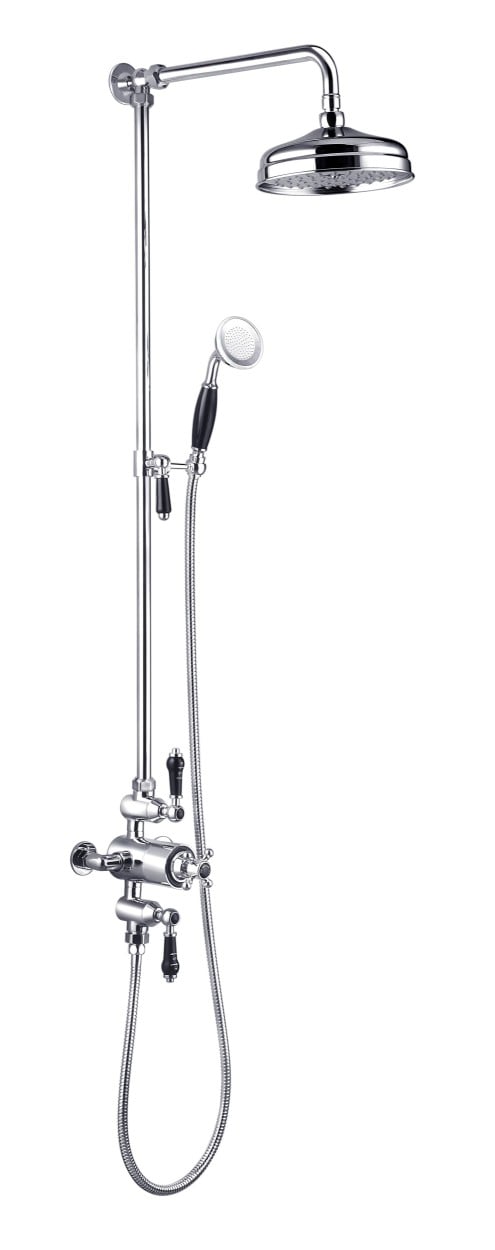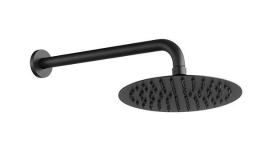
The rainfall showerhead has become the defining aesthetic element of the premium shower experience, featured prominently in hotel renovation specifications, luxury residential developments, and high-end bathroom showroom displays. Yet the engineering differences between a genuinely high-performance rainfall head and an inexpensive visual approximation are substantial, and the failure of a poor-quality unit within the first twelve months of installation in a hotel room is a costly reputational and maintenance problem. This guide provides the technical specification framework that B2B buyers should use when evaluating rainfall showerhead quality.
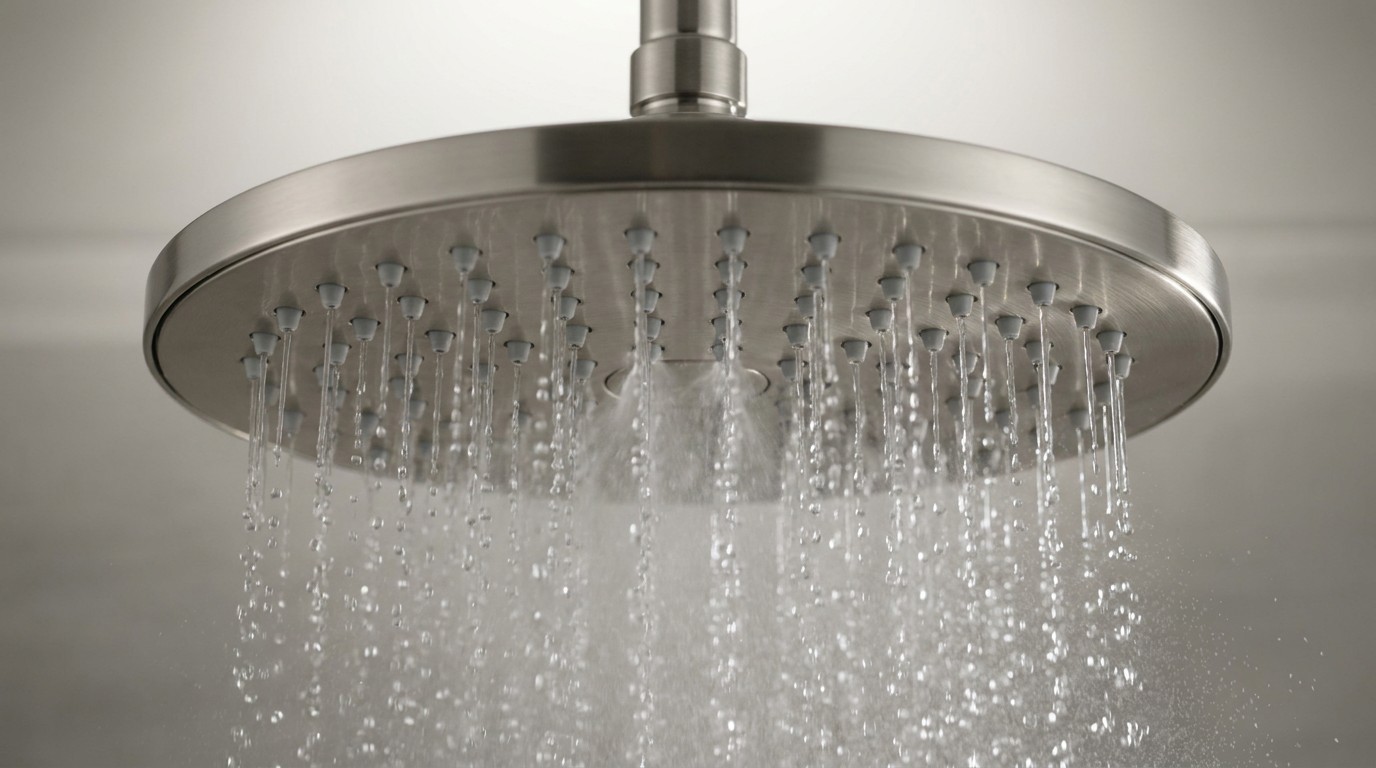
The defining performance characteristic of a rainfall showerhead is the evenness of water distribution across the full face of the head. A 300mm square head that delivers water only from the outer ring of nozzles—due to inadequate internal manifold design—creates a perception of weak, uneven flow regardless of the stated flow rate. High-quality designs use a spider-web or grid internal manifold that distributes water evenly to every nozzle position, ensuring that the full face area contributes to the rainfall pattern.
The nozzle material is equally important. Silicone nozzles—individually moulded and set into the face plate—perform significantly better than single-piece rubber inserts in hard water areas. Individual silicone nozzles can be flexed by hand to break away calcium scale deposits without tools, a feature that dramatically reduces limescale maintenance in hard water markets like the UK, Germany, and Australia. Specify silicone nozzles as a mandatory requirement for any project in a hard water service area.
The face plate of a rainfall showerhead must withstand constant thermal cycling between ambient temperature and 65°C hot water supply. Thin ABS plastic face plates are prone to warping over time, which misaligns the nozzle rows and creates an uneven spray pattern. Stainless steel (SUS304) face plates maintain dimensional stability across temperature cycles and do not corrode. Solid brass face plates are the premium option, appropriate for high-specification hospitality environments where the head must maintain its surface finish and flatness across a ten-year service cycle.
A 300mm round rainfall head filled with water and operating at normal flow weighs approximately 1.5 to 2.5 kg. The ceiling arm supporting it is typically 200 to 400mm long. The arm must withstand not only the static load of the head but also the dynamic forces of users adjusting the head angle or accidentally applying lateral pressure. The arm body should be solid brass, not hollow thin-wall tube, with a ceiling plate anchoring arrangement that transfers load to a wall stud or ceiling joist rather than relying on hollow plaster board fixings alone.
For commercial hotel applications, specify the descaling maintenance interval explicitly with your supplier. A silicone-nozzle head in a moderately hard water area (200-300 mg/L TDS) will typically require a vinegar soak descale every 6 to 12 months to maintain optimal flow. A head with fixed brass or ABS nozzles in the same water conditions may require replacement rather than descaling after 2 to 3 years.
The rainfall showerheads supplied with Xindong's K115 and K116 Thermostatic Shower Kits feature stainless steel face plates, individual silicone nozzles, and solid brass arm connections. Both round and square configurations are available in chrome and brushed nickel. For large hospitality projects requiring consistent batch supply, Xindong provides documented specification sheets confirming nozzle count, face plate dimensions, arm load ratings, and flow rate at standard operating pressure.
Established 1999 · 30,000+ sqm factory · 65+ patents · Monthly capacity 200,000+ sets · ISO 9001 certified. Contact: [email protected] | www.cn-xindong.com
 Hot News
2026-10-17
2026-10-16
2026-10-15
2026-10-14
2026-10-13
2026-10-12

The company, founded in 1999 and located in Yuhuan,specializes in taps, thermostatic shower valves and shower kits. With over 30,000 sqm of space and 380+ employees, we hold numerous certifications and 65+ patents.
 EN
EN