Most range decisions between single-lever and dual-handle kitchen taps get made on a catalogue page: one looks modern, the other traditional, and the price gap is a few dollars. The decision that actually costs money happens three years later, when a consumer calls the retailer because the tap drips, or because their mother cannot turn the hot handle with wet hands.
They are not styling variants of the same product: different valve architectures, different failure modes, different service economics. Here is how to specify between them.
A single-lever kitchen mixer carries one ceramic disc cartridge, normally 35 mm or 40 mm, that handles both flow and temperature. Moving the lever up opens the valve; moving it sideways shifts the ratio of hot to cold. One hole in the worktop, one cartridge, one body.
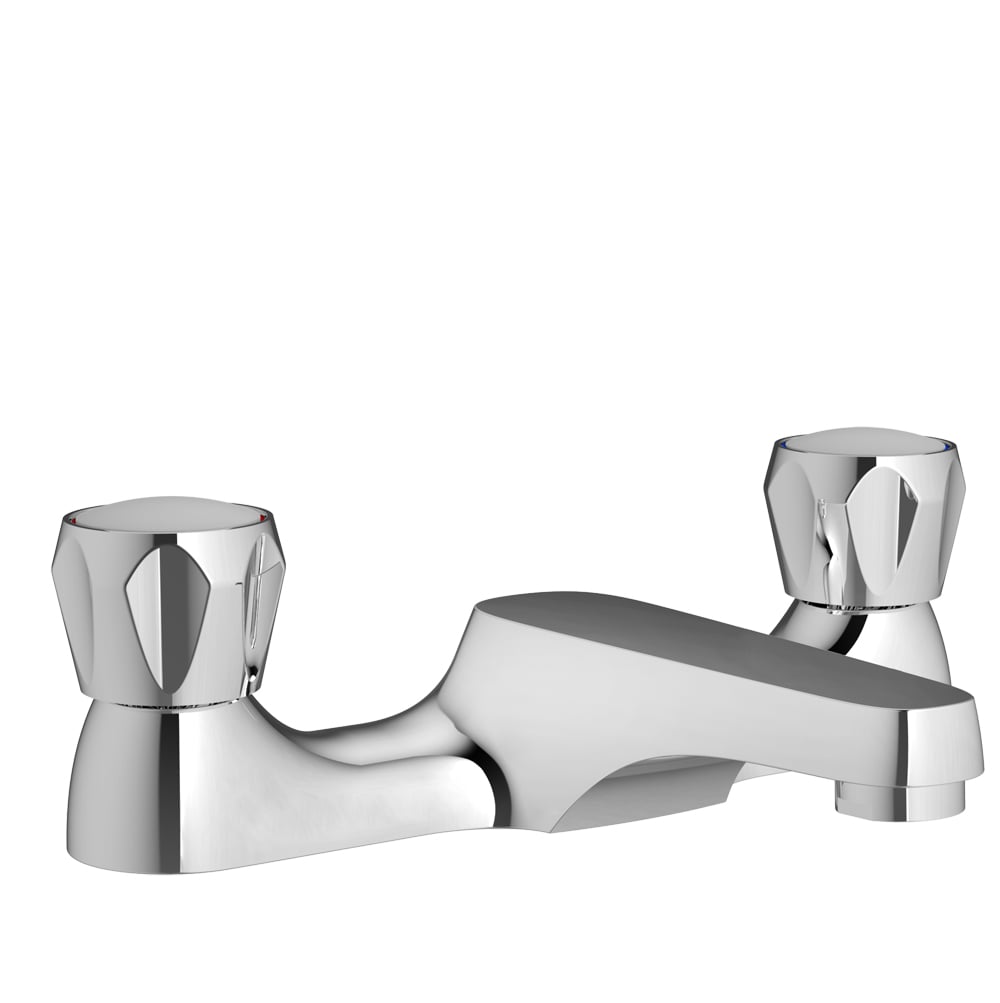
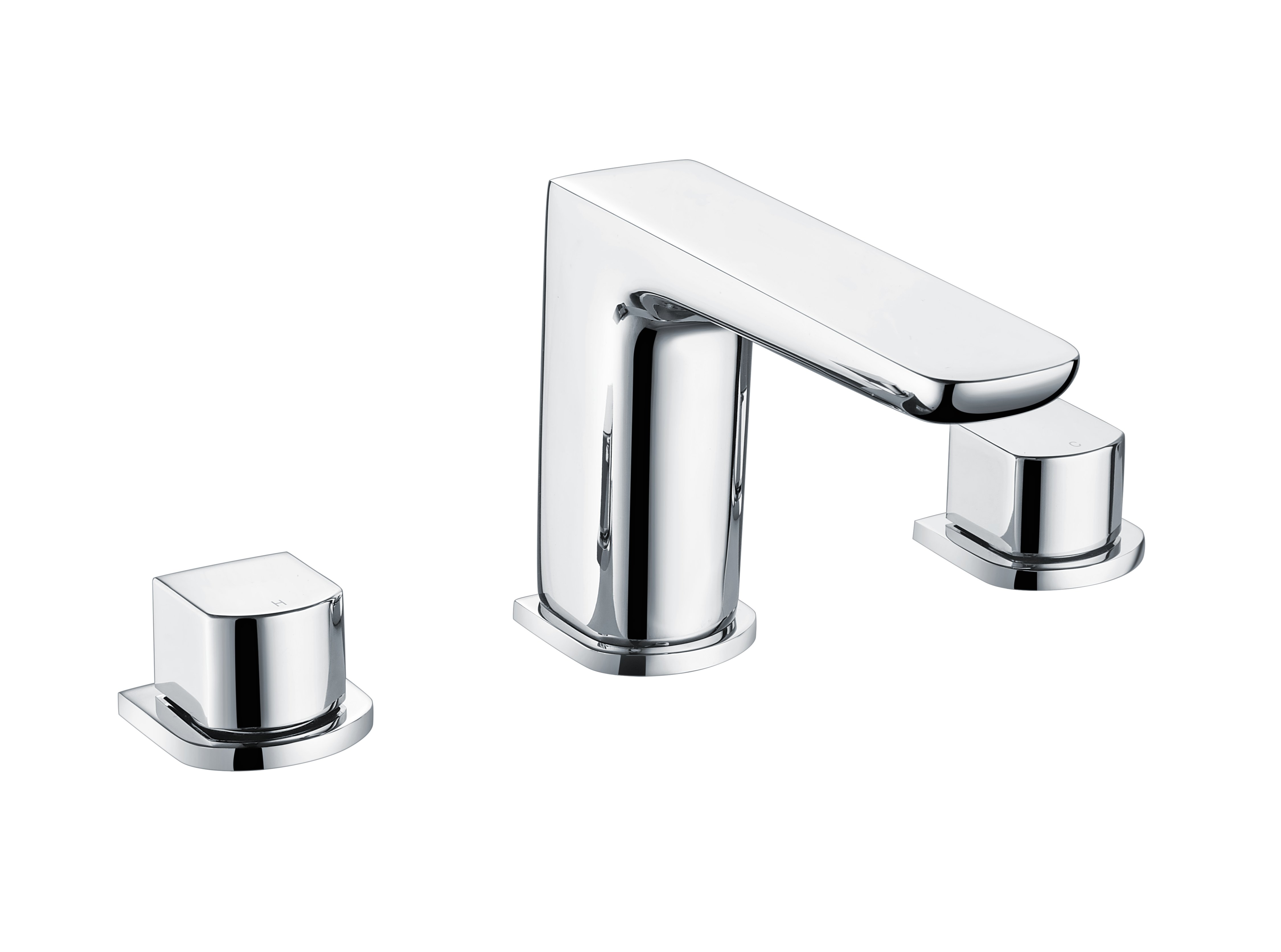
A dual-handle tap splits the job in two: separate hot and cold valve heads feed a shared spout. Traditional models use compression valves with rubber washers; modern versions use quarter-turn ceramic heads. Two or three holes in the worktop, two independent valves, one spout.
Both can meet European performance standards, but not the same one. Mechanical mixers are tested to EN 817; individual single taps and combination taps to EN 200; spouts and flow straighteners to EN 246. Check that each test report matches the product type, not just the brand on the cover.
Single-lever wins on speed. One hand sets flow and temperature together, which is why it dominates domestic kitchens. The trade-off is precision: the usable temperature band is narrow, and a nudge with a saucepan can move the mix from comfortable to hot. Good cartridges have a defined dead-band and a smooth transition; cheap ones feel vague in the middle and stiff at the ends.
Dual-handle wins on repeatability. Each valve returns to a known position, so a cook filling a large pot can set a consistent hot flow without hunting. The trade-off is coordination: two hands, two adjustments, and no single "safe" position — the hot side is fully hot as soon as it opens.
Flow is set by the aerator or flow regulator (EN 246), not the handle. If your market expects 6–12 litres per minute at 3 bar, specify the aerator.
This is where the choice becomes a market decision rather than a design preference.
A single lever works with one hand, a wrist or the back of a hand — useful with soapy fingers, and materially better for older users or anyone holding a child. EN 817 includes operating torque requirements precisely because a tap that needs force to move is a product failure, not a user failure.
Dual handles demand grip and sequence. For some users that is a barrier. For others it is an advantage: in care settings and commercial kitchens, being able to shut off the hot supply at the tap, independently and without tools, is a safety feature rather than an inconvenience.
Wear patterns differ because the load differs.
In a single-lever mixer, one cartridge absorbs every movement of every user. Its ceramic plates slide under spring pressure, lubricated mainly by water. Grit, limescale and installation debris score them; the first symptom is usually a spout drip, then a stiff lever, then temperature drift. Cycle count matters, but water quality matters more: a cartridge that lasts a decade on soft water can stiffen in two years on hard water.
In a dual-handle tap, the load is divided. Compression valves wear at the washer and seat — cheap parts, frequent replacement, and a familiar drip. Ceramic quarter-turn heads last far longer but fail abruptly when debris jams a plate, and they fail on one side only, which consumers sometimes misread as a pressure problem.
Two field causes sit behind most warranty claims: supply lines not flushed before connection, so solder and swarf reach the cartridge; and sustained pressure above 5 bar, which stresses seals. A flow regulator and a note about fitting a pressure-reducing valve solve more complaints than a premium cartridge.
For a single-lever tap, maintenance is one operation: isolate, remove the handle, unscrew the retaining ring, pull the cartridge, fit the correct replacement, reassemble. The job lives or dies on part identification. A 35 mm cartridge is not interchangeable with a 40 mm one, spline counts differ, and the locating lugs must align or the lever will operate backwards. Print the cartridge part number on the instruction sheet and on a label inside the cabinet-facing body.
For a dual-handle tap, maintenance is incremental: one head is serviced while the other keeps working, which makes the repair feel proportionate. Compression valves can often be re-seated; ceramic heads are swapped whole. Stock both, because the two halves of the same tap can wear at different rates.
The importer's leverage is the service kit: two or three cartridge references usually cover most of a kitchen range. Stock them, list them on the product page, and your distributor stops improvising with whatever is on the van.
Criterion |
Single-lever Mixer |
Dual-handle Tap |
Holes Required |
1 |
2 or 3 |
Valve Architecture |
One 35/40 mm ceramic cartridge |
Two heads, ceramic or compression |
Temperature Control |
One-hand blending, less repeatable |
Independent, repeatable, two hands |
First Failure Mode |
Spout drip, stiff lever |
One-side drip or seized head |
Standards Reference |
EN 817, EN 246 |
EN 200, EN 246 |
Best Fit |
Family kitchens, new build |
Period property, care, commercial |
For a mainstream range, single-lever covers most domestic demand and is easier to stock. Dual-handle earns its place where the aesthetic is traditional, independent isolation matters, or the buyer is replacing like-for-like without re-drilling.
Whichever you choose, the drinking-water contact materials must be documented. WRAS approval is the practical gate for the UK; NSF/ANSI 61 and NSF/ANSI 372 cover wetted components and lead content for North America; EN 1717 governs backflow protection where a spray or hose is involved. Ask for the certificate by model and finish — brushed nickel and chrome are different processes, and a certificate for one does not automatically cover the other.
Xindong builds both architectures on shared cartridge platforms, including the T1029N single-lever kitchen mixer in brushed nickel, so a distributor can hold one spare-parts box across a mixed range.
Prepared by the technical team at Zhejiang Xindong Sanitary Ware Co., Ltd., a kitchen and basin mixer tap manufacturer in Zhejiang, China. The team supports importers, distributors and retailers with cartridge matching and after-sales parts planning at www.cn-xindong.com.
 Hot News
2026-10-29
2026-10-28
2026-10-27
2026-10-26
2026-10-25
2026-10-24

The company, founded in 1999 and located in Yuhuan,specializes in taps, thermostatic shower valves and shower kits. With over 30,000 sqm of space and 380+ employees, we hold numerous certifications and 65+ patents.
 EN