In seismically active regions, the primary goal of building design is life safety, but for MEP (Mechanical, Electrical, and Plumbing) engineers, business continuity and property protection are equally critical. During an earthquake, the ground motion and subsequent structural displacement can shear rigid piping systems, leading to catastrophic flooding that often causes more financial damage than the seismic event itself.
Zhejiang Xindong Sanitary Ware Co., Ltd., an expert in high-performance valves and connectors since 1999, understands that in seismic design, flexibility is the key to resilience. This article discusses the technical strategies for implementing earthquake-resistant plumbing and why specific component choices can save a building’s infrastructure.
Plumbing systems typically fail during earthquakes for two reasons:
1. Differential Movement: As a building sways, different sections (such as the foundation versus the superstructure) move at different rates and in different directions. Rigid pipes crossing these "seismic joints" are subjected to immense shear forces.
2. Inertial Forces: The mass of the water within the pipes, combined with the acceleration of the quake, creates dynamic loads that can pull hangers from the ceiling or snap joints.
To mitigate these risks, modern building codes (such as ASCE 7 and the International Plumbing Code) require specific seismic bracing and the use of flexible components.
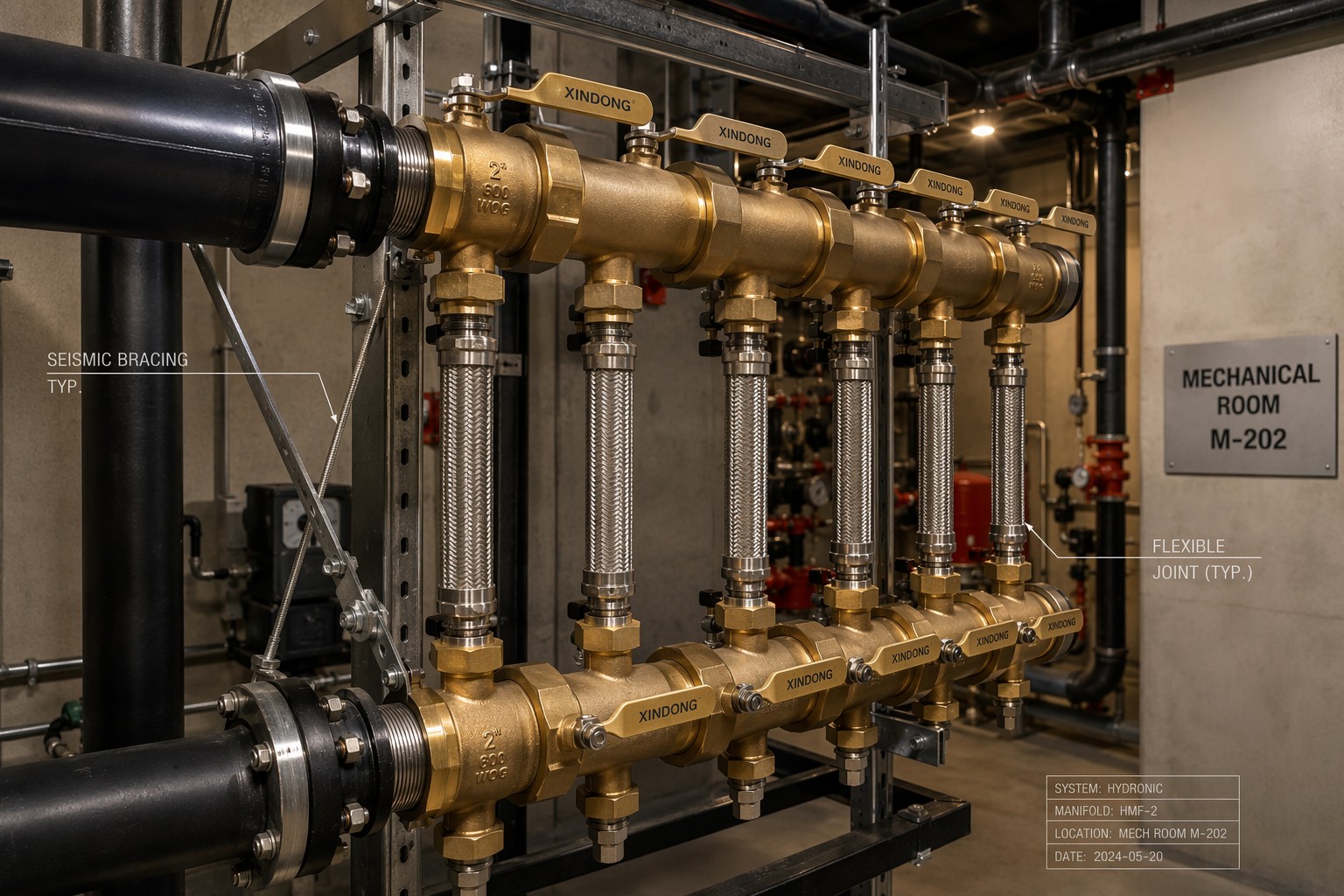
Flexible connectors act as the "shock absorbers" of the plumbing system. By replacing rigid connections at critical junctions, they allow for multi-axial movement without compromising the seal.
1. Braided Stainless Steel Connectors
For connections to appliances like water heaters, boilers, and commercial kitchen equipment, braided stainless steel connectors are essential. The inner core provides the pressure rating, while the outer stainless steel braid prevents the hose from expanding and offers high tensile strength against shearing.
2. Flexible Expansion Loops
In large-scale commercial piping, "U" or "V" shaped flexible loops are installed where pipes cross building expansion joints. These assemblies utilize flexible braided hoses and elbows to accommodate movement in all three planes (X, Y, and Z).
3. Transition Point Flexibility
One of the most vulnerable areas is where the main water line enters the building. A rigid transition from the buried municipal line to the building’s internal riser is a common point of failure. Installing a high-durability flexible connector at this entry point is a standard requirement in Seismic Design Categories (SDC) C through F.
In the event of a pipe burst, the ability to isolate sections of the building rapidly is the only way to prevent massive water damage.
• Seismic Shut-off Valves: In gas systems, earthquake-activated shut-off valves are standard. For water systems, we recommend the strategic placement of automated isolation valves linked to the building’s seismic monitoring system or fire alarm panel.
• Accessible Zonal Isolation: Every floor and every major branch should have high-quality, easily accessible isolation valves. Xindong’s brass ball valves are engineered with reinforced stems and high-torque handles to ensure they remain functional even after years of installation, providing reliable shut-off during emergencies.
• Valves at Seismic Joints: Isolation valves should be placed on either side of a seismic expansion joint. This allows facility managers to shut down the specific section that is most likely to have suffered damage while keeping the rest of the building's water supply operational.
Zhejiang Xindong Sanitary Ware Co., Ltd. produces a wide range of valves and connectors that meet the rigorous demands of modern infrastructure. Our R&D process involves:
1. Material Strength: We use high-grade brass and stainless steel with superior ductile properties, ensuring that our valve bodies can withstand stress without cracking.
2. Pressure and Fatigue Testing: Our flexible connectors undergo rigorous pressure testing to ensure they exceed the requirements for high-rise commercial applications.
3. Certifications for Global Markets: With CE, WRAS, and ACS certifications, our products are trusted by B2B specifiers across Europe, Australia, and the Americas for use in safety-critical installations.
Seismic safety in plumbing is about managing movement. By integrating flexible connectors at transition points and placing robust isolation valves strategically throughout the facility, MEP engineers can transform a rigid, vulnerable system into a resilient one. In the face of an earthquake, these technical choices are the difference between a minor service interruption and a total loss of infrastructure.
For technical specifications on our seismic-ready valves and connectors, visit [Xindong Sanitary Ware](https://www.cn-xindong.com).
 Hot News
2026-10-17
2026-10-16
2026-10-15
2026-10-14
2026-10-13
2026-10-12

The company, founded in 1999 and located in Yuhuan,specializes in taps, thermostatic shower valves and shower kits. With over 30,000 sqm of space and 380+ employees, we hold numerous certifications and 65+ patents.
 EN
EN