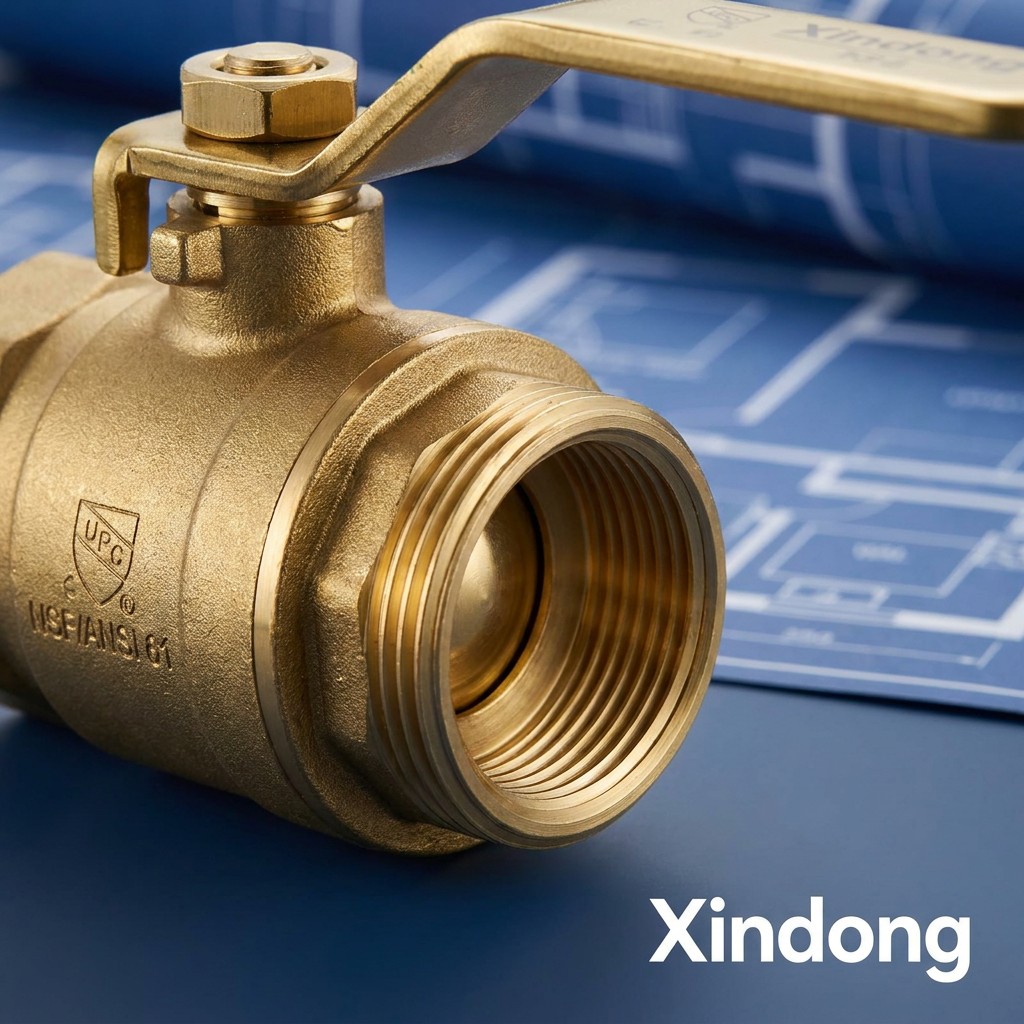
Entering the North American plumbing market is a significant milestone for any manufacturer, but it comes with a rigorous set of regulatory hurdles. For B2B buyers, distributors, and engineers in the United States and Canada, "quality" is not just a subjective term—it is defined by a series of mandatory certifications.
At Zhejiang Xindong Sanitary Ware Co., Ltd., we understand that navigating the alphabet soup of certifications like UPC, NSF/ANSI 61, and NSF/ANSI 372 can be daunting. However, these standards are the bedrock of safety and reliability in the North American infrastructure. In this article, we’ll break down why these certifications are non-negotiable and how they impact your sourcing strategy.
The Uniform Plumbing Code (UPC), maintained by IAPMO (International Association of Plumbing and Mechanical Officials), is the primary plumbing code adopted in many jurisdictions across the United States. When a product carries the cUPC (Canadian and US) mark, it signifies that the product meets both US and Canadian requirements.
Why it matters for B2B buyers:
• Legal Compliance: In most US states, it is illegal to install plumbing fixtures that do not meet the local plumbing code. Selling non-certified products exposes distributors and contractors to massive legal liabilities and insurance denials.
• Interchangeability: UPC-certified products are tested for dimensional accuracy, ensuring they fit standard North American pipe sizes and threading (such as NPT or G-thread variations).
• Structural Integrity: The code tests for pressure resistance, burst strength, and mechanical longevity.
While the UPC focuses on how a product works, NSF/ANSI 61 focuses on what a product is made of. This standard establishes minimum health effects requirements for the chemical contaminants and impurities that are indirectly imparted to drinking water from components used in drinking water systems.
The Technical Reality:
Plumbing components, especially those made of brass or plastics, can leach chemicals into the water. NSF/ANSI 61 testing involves rigorous "soak tests" where the product is submerged in water for extended periods, and the water is then analyzed for hundreds of potential contaminants, including lead, heavy metals, and organic compounds.
For an engineer or a municipal project manager, specifying NSF/ANSI 61 certified valves is the only way to ensure the water remains safe for consumption once it passes through the faucet or valve.
The "Reduction of Lead in Drinking Water Act" changed the definition of "lead-free" in the US. Today, to be considered lead-free, the weighted average lead content of the wetted surfaces of pipes, fittings, and fixtures must be no more than 0.25%.
NSF/ANSI 372 is the specific standard used to verify compliance with this low-lead requirement. It is often paired with NSF 61, but it focuses exclusively on the lead content.
Why Xindong Chooses Lead-Free Brass:
At Xindong, we utilize high-quality, lead-free brass (such as C46500 or CW724R) specifically engineered for the North American market. This ensures that our B2B partners can supply government projects, schools, and residential developments with full confidence that they meet federal lead-free mandates.
In the world of B2B procurement, EEAT (Experience, Expertise, Authoritativeness, and Trustworthiness) is vital. A supplier that proactively invests in these certifications demonstrates:
• Expertise: Deep knowledge of the target market's legal framework.
• Trustworthiness: A commitment to user safety over "cutting corners."
• Authoritativeness: A proven track record of passing some of the world's most difficult laboratory tests.
As a leading manufacturer with over 65 patents and advanced laboratory testing equipment, Zhejiang Xindong Sanitary Ware Co., Ltd. doesn't just meet standards—we exceed them. Our production facility in Yuhuan, Zhejiang, is equipped with high-precision testing rigs that simulate the exact conditions required for UPC and NSF certification.
Whether you are a wholesaler looking for a reliable OEM partner or a project engineer designing a large-scale commercial development, sourcing from a certified manufacturer like Xindong reduces your risk and ensures the longevity of your installation.
Conclusion
UPC and NSF/ANSI 61/372 are not just optional "badges." They are the gatekeepers of the North American market. For any business looking to establish a sustainable presence in the US, compliance is the first step toward building a reputation for quality.
Looking for a partner that understands North American standards? Contact Xindong today to learn more about our certified range of brass valves and faucets.
Zhejiang Xindong Sanitary Ware Co., Ltd. – Your Trusted Partner in Precision Engineering.
 Hot News
2026-10-17
2026-10-16
2026-10-15
2026-10-14
2026-10-13
2026-10-12

The company, founded in 1999 and located in Yuhuan,specializes in taps, thermostatic shower valves and shower kits. With over 30,000 sqm of space and 380+ employees, we hold numerous certifications and 65+ patents.
 EN
EN