If you’ve ever heard a loud "thump" or vibration in a building’s walls after a faucet is closed, you’ve experienced Water Hammer. In high-rise residential or commercial buildings, where water pressures are high and plumbing runs are long, water hammer is more than just a noise nuisance; it is a serious threat to the plumbing infrastructure.
In this guide, Zhejiang Xindong Sanitary Ware Co., Ltd. explores the physics of water hammer and the engineered solutions B2B buyers should implement to protect their systems.
Scientifically known as hydraulic shock, water hammer occurs when a moving fluid is forced to stop or change direction suddenly.
When a fast-closing valve (like those in sensor faucets, washing machines, or dishwashers) shuts off, the momentum of the water is converted into a pressure wave. In a high-rise building, this wave can travel through the pipes at speeds exceeding 1,000 meters per second, creating a force that can rattle pipes, blow out seals, and even burst joints.
• Higher Static Pressure: To get water to the 30th floor, the base pressure must be very high. This higher pressure increases the energy of any shockwave.
• Long Pipe Runs: Longer pipes allow for more momentum to build up in the water column.
• Mechanical Velocity: High-rise buildings often use high-velocity pumps and fast-acting solenoid valves, both of which are primary triggers for hydraulic shock.
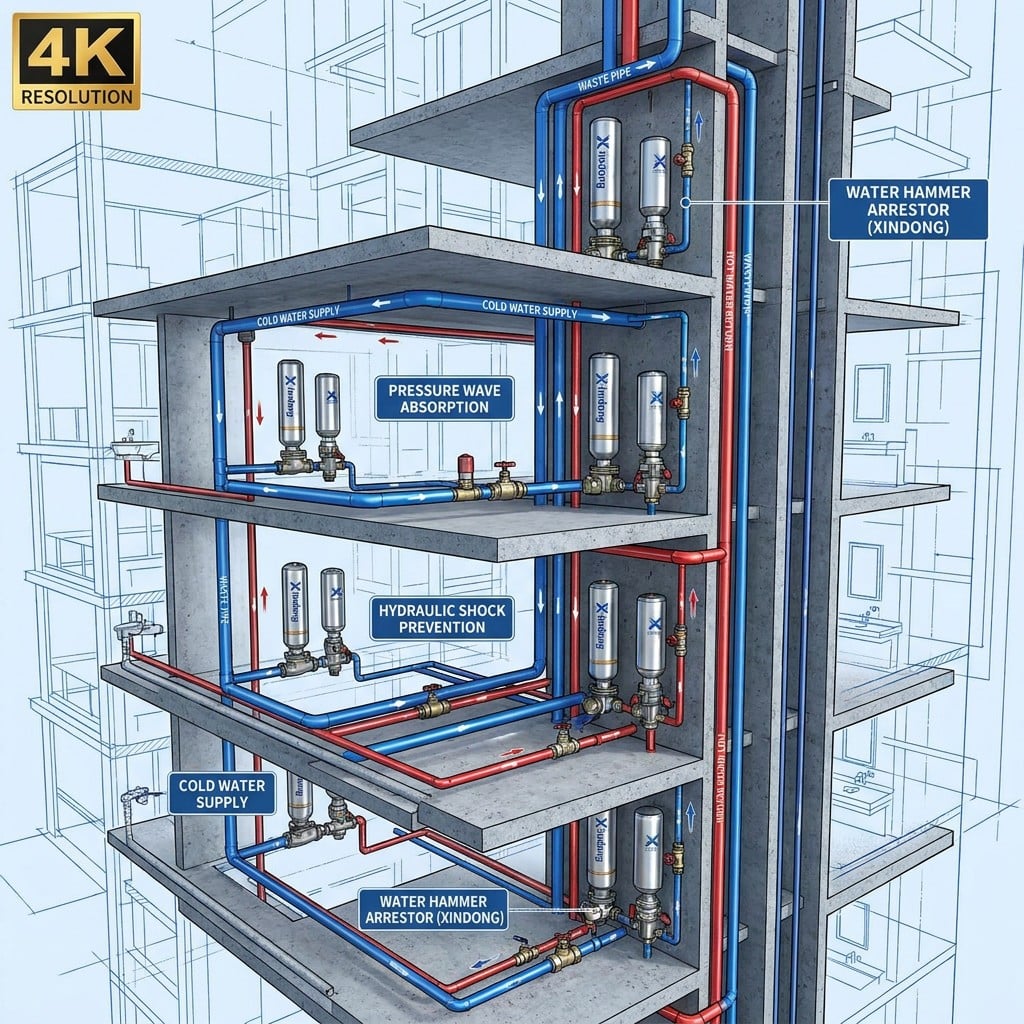
A water hammer arrestor is essentially a shock absorber for your plumbing. It consists of a chamber with a pressurized air cushion separated from the water by a piston.
• How it works: When the pressure wave hits, the piston moves against the air cushion, compressing it and safely absorbing the kinetic energy of the water.
• Strategic Placement: Arrestors must be installed as close as possible to the quick-closing valves. At Xindong, we recommend integrating arrestors into the supply lines of all high-traffic commercial faucets.
The design of the faucet or valve itself can mitigate water hammer.
• Slow-Closing Mechanisms: Faucets designed with "soft-close" cartridges or sensors that gradually reduce flow before full shut-off can prevent the sudden momentum change.
• Pressure Reducing Valves (PRVs): Installing PRVs at various stages of a high-rise building ensures that no fixture is exposed to excessive pressure, reducing the baseline energy of any potential water hammer.
Water hammer is cumulative. A system that "thumps" today might not fail for months, but the constant stress will eventually lead to metal fatigue and joint failure.
For B2B buyers and building managers, specifying Xindong's high-pressure rated valves and ensuring the installation of properly sized arrestors is an essential part of "Preventative Maintenance."
Water hammer is a controllable phenomenon. Through a combination of smart system design, pressure regulation, and the use of high-quality engineered components from a manufacturer like Xindong, you can ensure a quiet, safe, and long-lasting plumbing system in even the tallest skyscrapers.
Based in the manufacturing hub of Yuhuan, Xindong specializes in high-performance brass valves and sanitary ware. Our engineering team works closely with B2B clients to provide solutions for complex plumbing challenges, ensuring that every project—from luxury hotels to high-rise apartments—operates at peak efficiency.
 Hot News
2026-10-17
2026-10-16
2026-10-15
2026-10-14
2026-10-13
2026-10-12

The company, founded in 1999 and located in Yuhuan,specializes in taps, thermostatic shower valves and shower kits. With over 30,000 sqm of space and 380+ employees, we hold numerous certifications and 65+ patents.
 EN
EN