Private-label plumbing products and custom-specification valves represent a growing segment of B2B procurement from Chinese manufacturers. For distributors, branded plumbing wholesalers, and specification-led buyers, understanding how OEM and ODM arrangements work in practice—including IP protection, tooling ownership, sampling lead times, and minimum order quantities—is essential to making an informed sourcing decision.
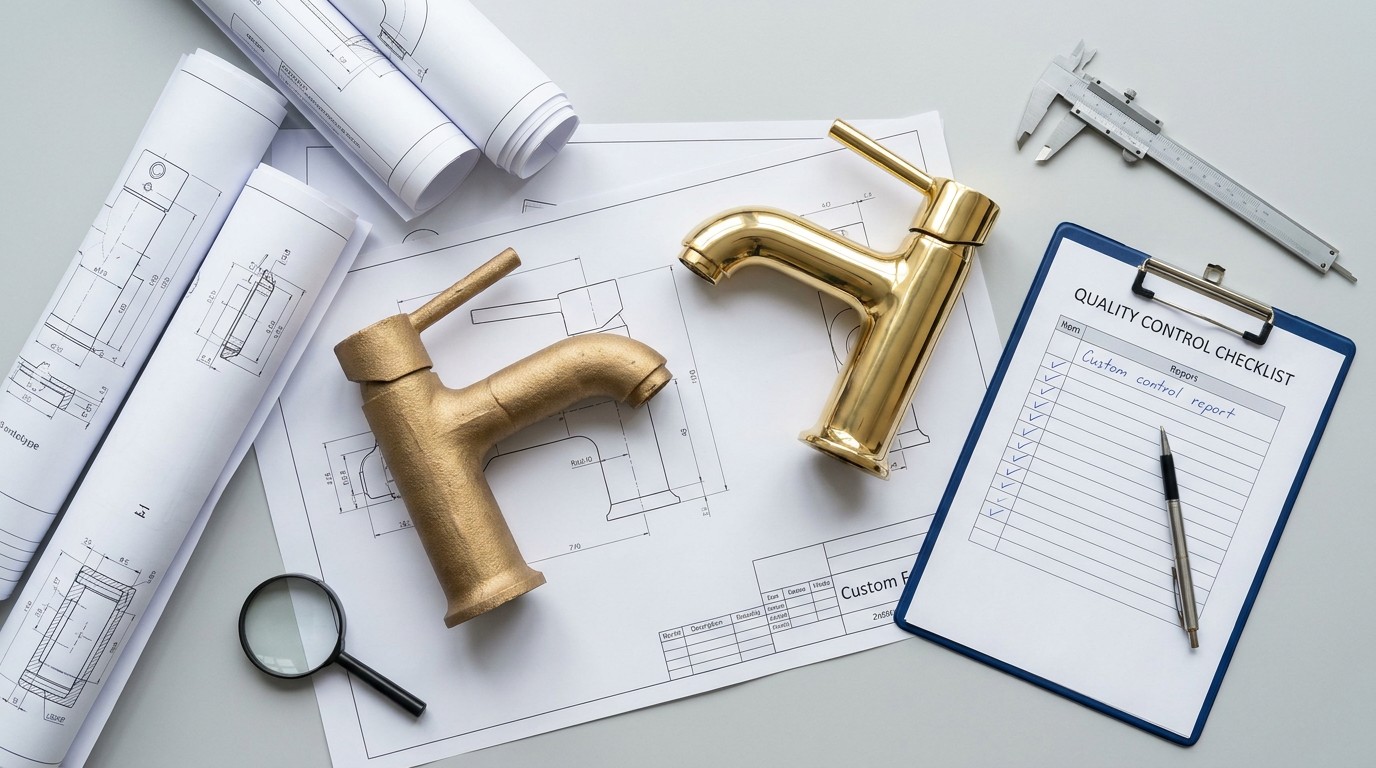
In a strict OEM (Original Equipment Manufacturer) arrangement, the buyer owns the product design: engineering drawings, CAD models, and specific material callouts are provided by the buyer, and the manufacturer produces the product exactly to those specifications. The buyer typically owns the moulds and tooling, and the manufacturer is essentially a contract production facility.
In an ODM (Original Design Manufacturer) arrangement, the manufacturer owns the product design and the buyer selects from existing designs or requests modifications within the manufacturer's existing tooling. The buyer applies their own branding—logo, packaging, documentation—to a product the manufacturer has already engineered. ODM is faster and less capital-intensive: no tooling investment is required if modifications stay within existing mould boundaries. OEM delivers higher differentiation but requires full tooling investment, longer development lead times, and deeper technical collaboration.
For a genuinely custom brass tap or valve body requiring a new gravity die-cast or forged mould, tooling costs typically range from USD 3,000 to USD 15,000 depending on component complexity and cavity count. A single-cavity mould for a basic tap body sits at the lower end; a multi-cavity tool for a complex thermostatic valve block sits at the upper end. Tooling lead time is typically eight to twelve weeks from approved 3D design to first sample.
Buyers should negotiate and document tooling ownership explicitly in the contract: who owns the physical mould, where it is stored, and under what conditions it can be relocated to another manufacturer. In China, tooling ownership disputes are the most common source of supply chain disruption for foreign buyers. A reputable manufacturer will have no objection to formalising tooling ownership in writing.
For ODM modifications (finish changes, logo engraving, handle shape adjustments), a physical prototype can typically be produced within two to four weeks using existing tooling with modified trims or inserts. For full OEM new tooling, the prototype timeline is eight to twelve weeks.
A structured validation process should include a 3D-printed or CNC-machined prototype for dimensional verification before tooling is cut; a T1 sample (first tool shot) for fit and function testing; and a pre-production sample (PPS) from the actual production line for finish quality and compliance testing. Compressing or skipping any of these stages to save time is the single most common cause of costly production errors on first runs.
When sharing proprietary design files with a Chinese manufacturer, insist on a signed Non-Disclosure Agreement (NDA) and, where designs are patentable, file the relevant patents in China before sharing detailed drawings. China operates a first-to-file patent system, meaning that a manufacturer who files a design patent on your product before you do may legally hold the rights. While reputable manufacturers will not engage in this practice, structural protection through patent registration is always preferable to relying on goodwill alone.
Holding over 65 patents in tap and valve design, with an in-house R&D team and tooling workshops, Xindong Sanitary Ware is equipped to support both ODM customisation from its existing range and full OEM development of new designs. The company routinely works with European and UK importers on branded private-label ranges, providing design feedback, prototype iteration, and production sampling within agreed timelines. All OEM tooling produced at Xindong is formally documented under buyer ownership agreements, and strict NDA protocols are maintained as standard practice.
Established 1999 · 30,000+ sqm factory · 65+ patents · Monthly capacity 200,000+ sets · ISO 9001 certified. Contact: [email protected] | www.cn-xindong.com
 Hot News
2026-10-17
2026-10-16
2026-10-15
2026-10-14
2026-10-13
2026-10-12

The company, founded in 1999 and located in Yuhuan,specializes in taps, thermostatic shower valves and shower kits. With over 30,000 sqm of space and 380+ employees, we hold numerous certifications and 65+ patents.
 EN
EN