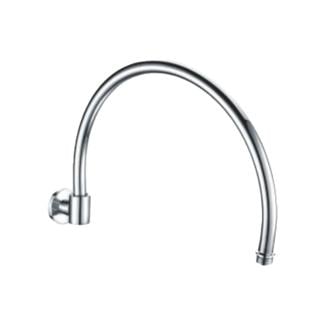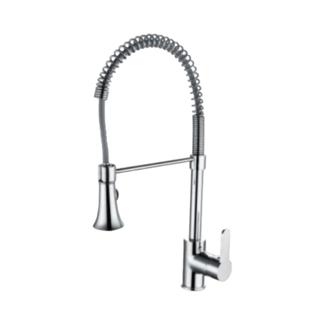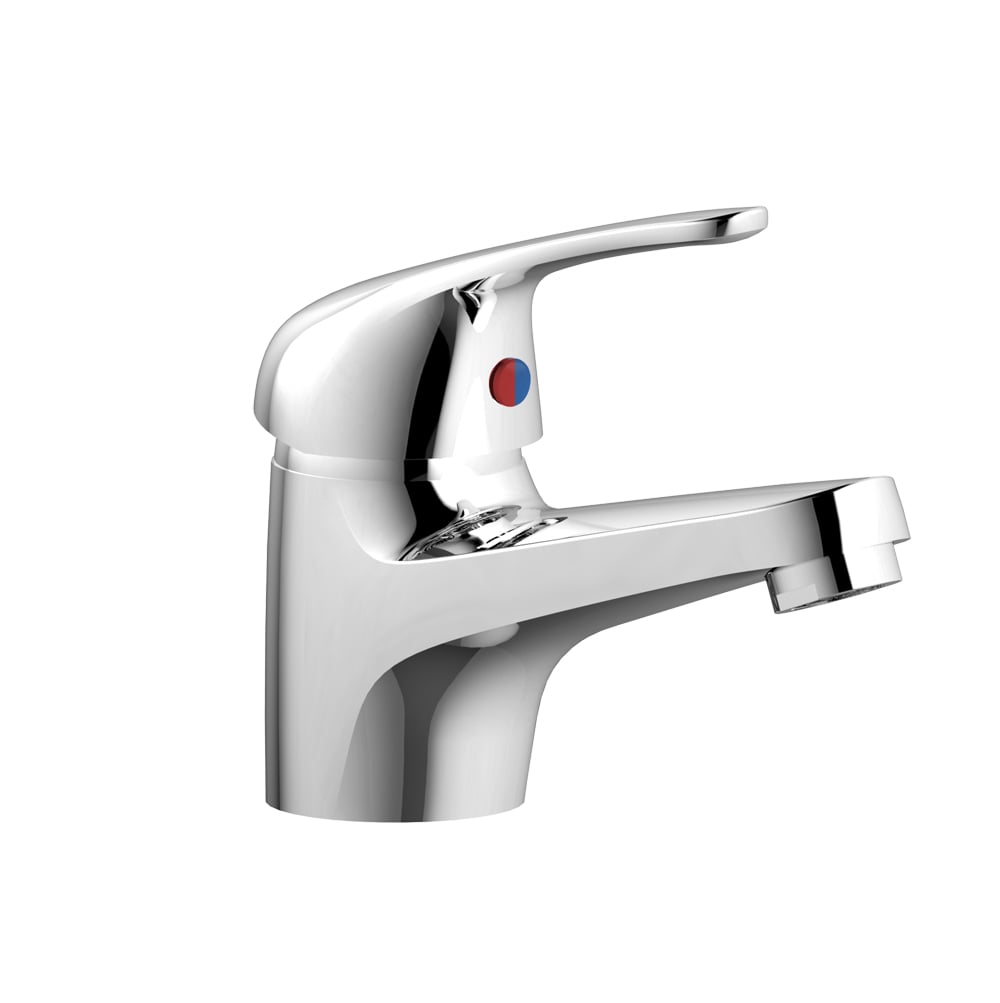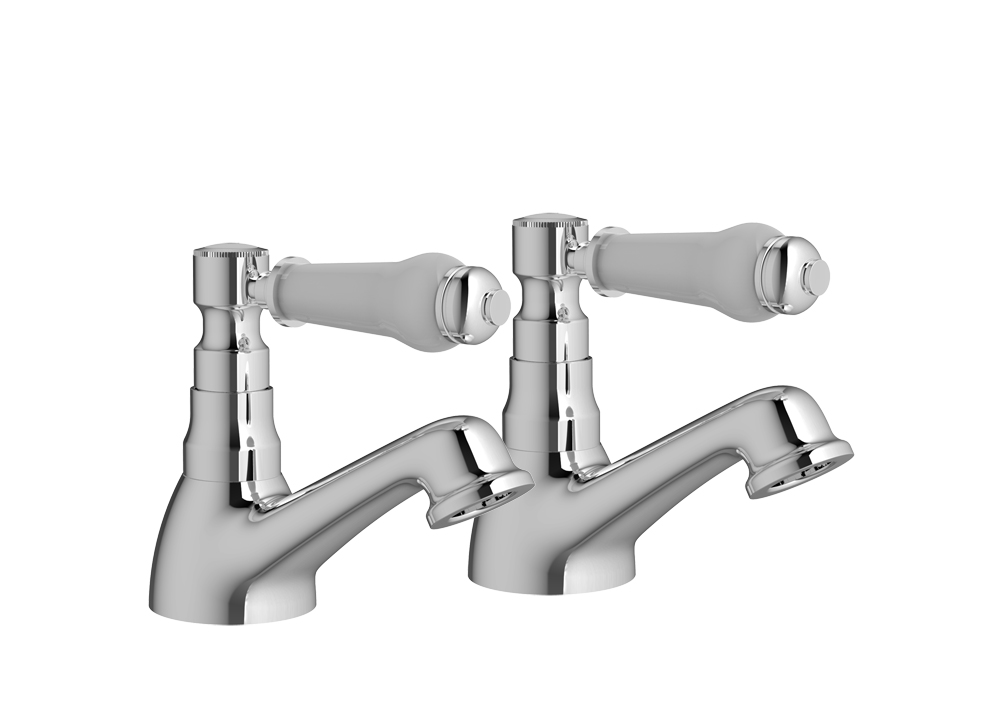
[Product Figure 20: Authentic XINDONG Design & Styling]
For international wholesale plumbing distributors, importing brass valves and fittings from manufacturing hubs like China represents a highly profitable sourcing strategy. However, this global supply chain introduces a critical challenge that can quickly turn into a logistics nightmare: thread compatibility and precision. If an imported brass valve arrives with threads that are slightly off-pitch, shallow, or cut to incorrect geometric angles, they will not couple properly with local piping systems. At best, this leads to immediate leaks during installation; at worst, it causes thread stripping, high-pressure blowouts, and severe water damage. For plumbing wholesalers and importing businesses, verifying thread precision is an essential quality control (QC) discipline.
To protect their investments and maintain high customer satisfaction, importers must understand the technical differences between global thread standards and implement standardized inspection protocols. Sourcing from a reputable, precision-focused partner like Zhejiang Xindong Sanitary Ware Co., Ltd (https://www.cn-xindong.com) is the ultimate safeguard. With a 30,000 sqm plant, 380+ employees, and over 25 years of manufacturing excellence, Zhejiang Xindong implements strict thread gauge QC standards on every valve we produce. In this guide, we explain how wholesale distributors can successfully verify thread precision on imported brassware.
The first step in thread verification is understanding the geometric and dimensional differences between the three main plumbing thread standards used worldwide:
• G Thread (BSPP - British Standard Pipe Parallel): Conforming to ISO 228-1, G threads are parallel (straight) and maintain a constant diameter along their entire length. They feature a 55-degree thread angle and require an O-ring, washer, or thread sealant to create a watertight seal. This is the dominant standard in Europe, South America, and Asia.
• NPT Thread (National Pipe Tapered): Conforming to ANSI/ASME B1.20.1, NPT threads are tapered at an angle of 1°47' (about 1.78 degrees). They have a 60-degree thread angle and seal by metal-to-metal wedging as the male and female threads are tightened. This is the mandatory standard for North American markets.
• R/Rc Thread (BSPT - British Standard Pipe Tapered): Conforming to ISO 7-1, BSPT threads are tapered like NPT but feature a 55-degree thread angle, making them physically incompatible with NPT threads despite having similar dimensions.
Attempting to force a G thread brass valve wholesale component into an NPT pipe connection, or vice versa, will inevitably result in thread damage and immediate leakage. Importers must explicitly specify the required thread type and pitch when placing orders with an NPT thread valve supplier.
Wholesale plumbing distributors should implement a formal thread verification protocol using professional plumbing thread gauge QC standards. Importers should utilize these four essential tools:
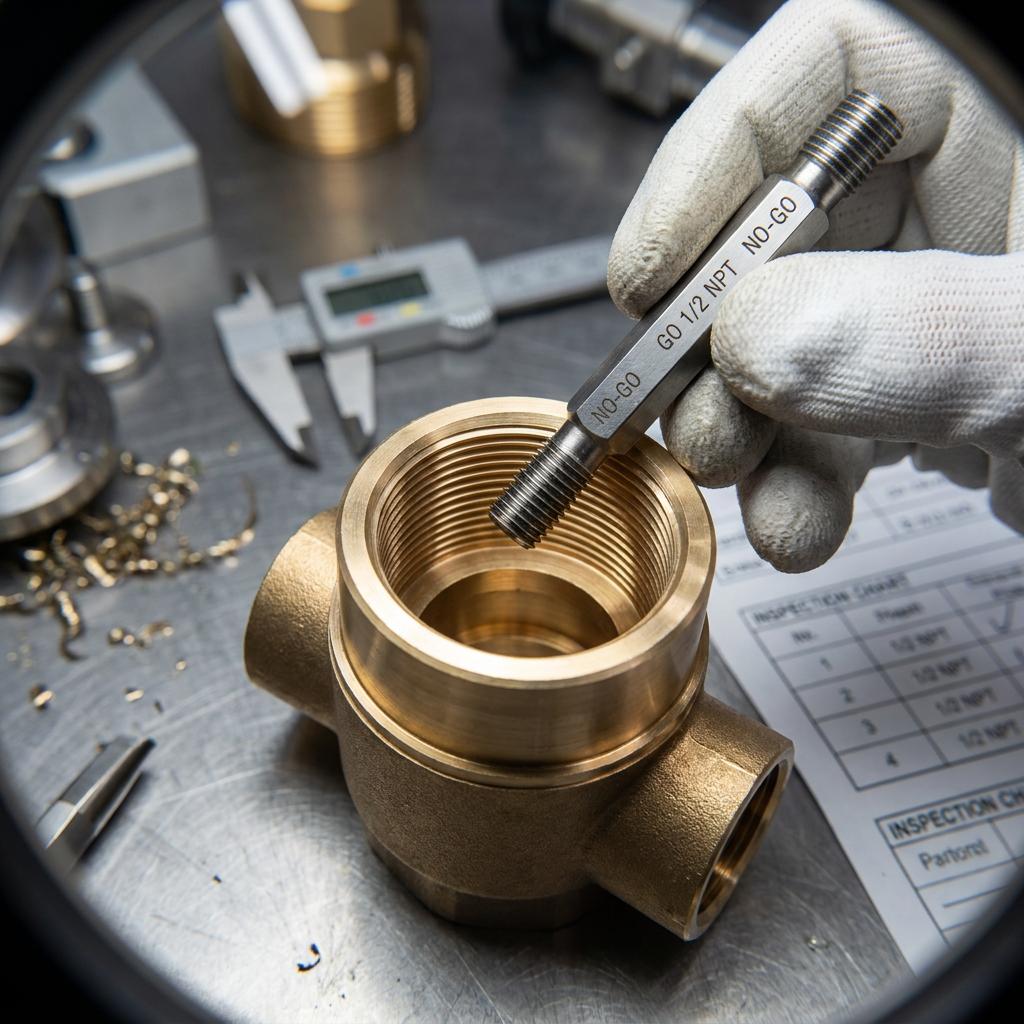
• Thread Plug Gauges (Go / No-Go): Used to inspect internal threads. The 'Go' gauge must screw smoothly into the valve by hand, verifying that the thread size is not too small. The 'No-Go' gauge must not enter more than 1.5 to 2 turns, ensuring that the internal diameter is not too large.
• Thread Ring Gauges (Go / No-Go): Used to inspect external threads. Similar to plug gauges, the 'Go' ring must thread fully onto the male connection, and the 'No-Go' ring must quickly bind, ensuring correct external pitch and diameter.
• Thread Pitch Gauges: A set of small steel blades with saw-toothed profiles matching specific pitches (e.g., 14 TPI, 11 TPI). Placing the correct profile against the thread teeth allows quick visual verification of the pitch and thread angle.
• Optical Profile Projectors: High-precision importers and tier-1 manufacturers use optical projectors to cast a magnified silhouette of the thread profile onto a screen, measuring the exact thread angle, depth, and crest radius down to the micrometer.
Even when a valve is manufactured to the correct standard, slight variations within the allowable tolerance range can cause installation issues. Thread deviation can occur due to cutting tool wear on CNC machines, improper tooling calibration, or insufficient quality control. If a manufacturer runs their threading dies for too long without replacement, the resulting threads will become blunt, rough, or slightly oversized.
When importing valves, distributors should perform random batch sampling. If more than 1% of the sample batch fails the 'Go / No-Go' test, the entire shipment should be put on hold. Zhejiang Xindong minimizes tool wear and thread variation by utilizing high-precision automatic CNC centers equipped with imported carbide threading inserts. Our tooling is systematically monitored and calibrated every 500 operations to ensure absolute dimensional consistency.
With a massive 30,000 sqm plant and a team of 380+ highly skilled professionals, Zhejiang Xindong is dedicated to providing absolute thread accuracy. Our QC department maintains a comprehensive library of calibrated master thread gauges matching all major international standards (G, BSP, NPT, Metric).
Every single batch of our high pressure NPT thread valve supplier products or European-standard G thread brass valve wholesale supplies undergoes rigorous in-process inspections and post-production audits. We trace raw materials and monitor CNC machining parameters in real-time, resulting in threads that are exceptionally smooth, sharp, and perfectly aligned, guaranteeing trouble-free installations on any commercial job site.
When partnering with a Chinese brass valve manufacturer, wholesalers should include the following checklist in their purchasing agreements:
• Specify the exact standard: Do not just say '1/2 inch valve.' Specify '1/2 inch BSPP (ISO 228-1) G' or '1/2 inch NPT (ASME B1.20.1).'
• Request material and thread test certificates: Ensure the manufacturer provides certified thread inspection reports using calibrated Go/No-Go gauges.
• Verify thread surface quality: Visually inspect for burrs, tool marks, or deformed threads that can tear plumbing tape or damage pipe joints.
• Confirm gauge calibration frequency: Ask how often the factory calibrates their thread gauges against traceable national standards.
By sourcing from Zhejiang Xindong Sanitary Ware Co., Ltd, wholesale plumbing distributors secure a partner committed to absolute technical precision. Visit https://www.cn-xindong.com to explore our extensive range of high-precision brass valves and secure top-tier fluid control solutions for your market.
Zhejiang Xindong Sanitary Ware Co., Ltd is an established, world-class OEM/ODM manufacturer specializing in premium faucets, thermostatic shower sets, and brass valves since 1999. Operating a state-of-the-art 30,000+ sqm manufacturing facility with 380+ highly skilled employees and over 65 patented designs, we provide rigorous QC testing and compliance certifications (WRAS, CE, ACS) for global B2B distributors near major maritime ports.
Email Inquiry: [email protected] | Official Portal: www.cn-xindong.com
 Hot News
2026-10-17
2026-10-16
2026-10-15
2026-10-14
2026-10-13
2026-10-12

The company, founded in 1999 and located in Yuhuan,specializes in taps, thermostatic shower valves and shower kits. With over 30,000 sqm of space and 380+ employees, we hold numerous certifications and 65+ patents.
 EN
EN