In complex plumbing systems, particularly in hospitals, hotels, and care homes, maintaining the integrity of water supplies is a significant health concern. One often-overlooked risk is cross-contamination within a thermostatic mixing valve (TMV). If not properly designed and maintained, a TMV can become a bridge that allows hot water to flow into the cold water line, or vice versa.
In this article, we examine the engineering behind preventing cross-contamination and the features that make Zhejiang Xindong Sanitary Ware Co., Ltd. valves a safe choice for critical infrastructure.
Cross-contamination occurs when there is a pressure imbalance between the hot and cold water inlets. For example, if the hot water pressure is significantly higher than the cold, hot water can force its way past the mixing chamber and "backflow" into the cold water pipes.
This leads to several issues:
• Bacterial Growth: Warm water in cold lines creates the perfect environment for Legionella and other waterborne pathogens.
• Temperature Instability: Other fixtures in the building will receive warm water from the cold tap, causing confusion and potential safety risks.
• Energy Waste: Hot water is being pushed into cold lines, wasting energy from the water heater.
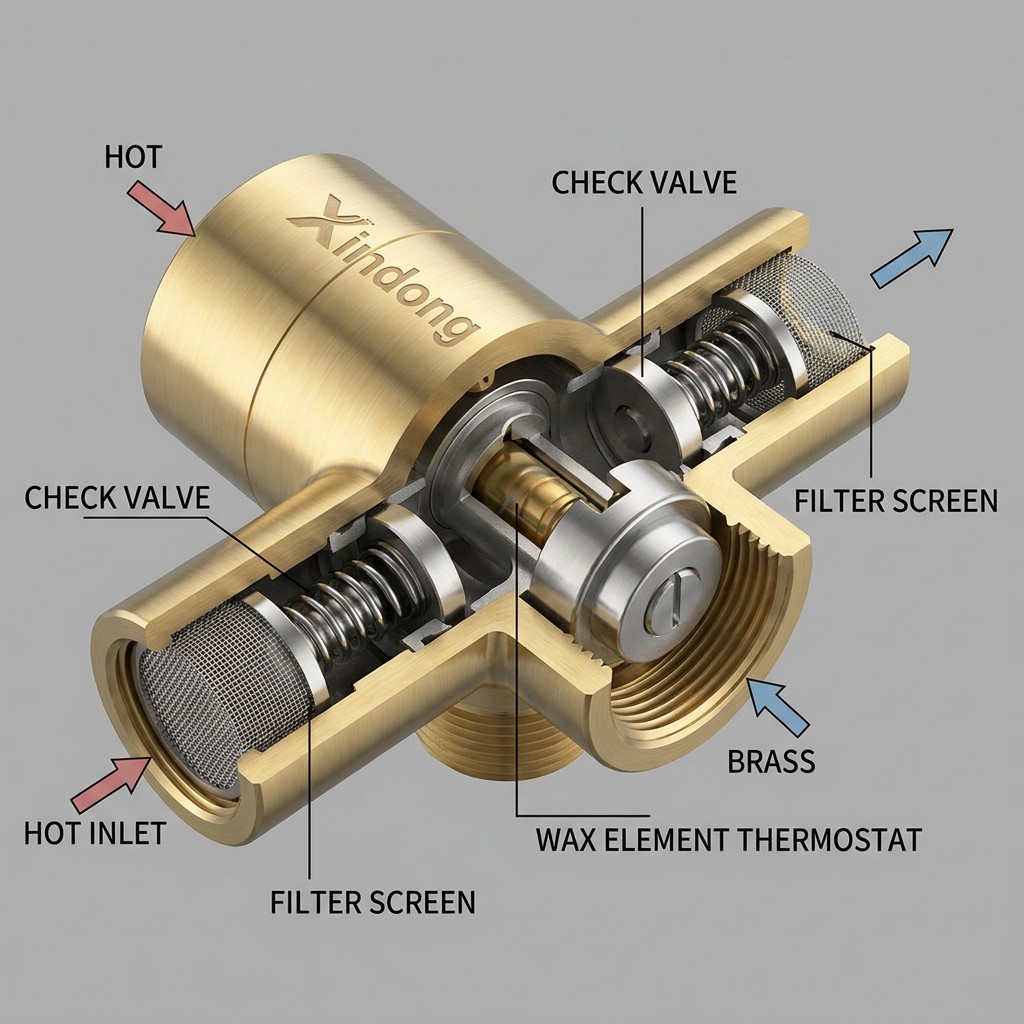
The most effective way to prevent backflow is the use of integral check valves (also known as non-return valves). These are one-way valves built directly into the hot and cold inlets of the TMV.
At Xindong, our TMVs are designed with high-quality, spring-loaded check valves. These components ensure that water can only flow in one direction—towards the mixing chamber—even if there is a sudden drop in pressure on the supply side.
Debris in the plumbing system (such as solder, grit, or scale) is the primary cause of check valve failure. If a small piece of debris gets caught in the check valve seat, it will stay partially open, allowing backflow.
To prevent this, high-quality TMVs should include:
• Integral Strainers: Fine mesh screens that catch debris before it enters the valve mechanism.
• Easy-Access Maintenance: Design features that allow maintenance teams to clean the strainers without disconnecting the entire valve.
In healthcare settings, TMVs must be able to withstand regular thermal disinfection—flushing the valve with very hot water to kill bacteria. A well-engineered valve must maintain its structural integrity and its backflow prevention capabilities even when exposed to these extreme temperatures.
To ensure long-term protection against cross-contamination:
1. Specify Valves with Integral Components: Ensure the TMV has both check valves and strainers built-in.
2. Regular Maintenance: Schedule annual checks to ensure the check valves are operating correctly and the strainers are clear.
3. Correct Sizing: An oversized TMV can lead to erratic pressure fluctuations, increasing the risk of backflow. Consult with the Xindong technical team for correct sizing based on flow rates.
Preventing cross-contamination is a fundamental requirement of modern plumbing safety. By choosing TMVs with robust integral check valves and strainers, and by adhering to strict maintenance protocols, B2B buyers can protect both the plumbing system and the end-users.
Based in Yuhuan, China, Xindong is a leader in the design and manufacture of high-precision thermostatic mixing valves. Our products are engineered with safety as the primary goal, incorporating advanced backflow prevention and filtration technologies to meet the most demanding international standards.
 Hot News
2026-10-17
2026-10-16
2026-10-15
2026-10-14
2026-10-13
2026-10-12

The company, founded in 1999 and located in Yuhuan,specializes in taps, thermostatic shower valves and shower kits. With over 30,000 sqm of space and 380+ employees, we hold numerous certifications and 65+ patents.
 EN
EN