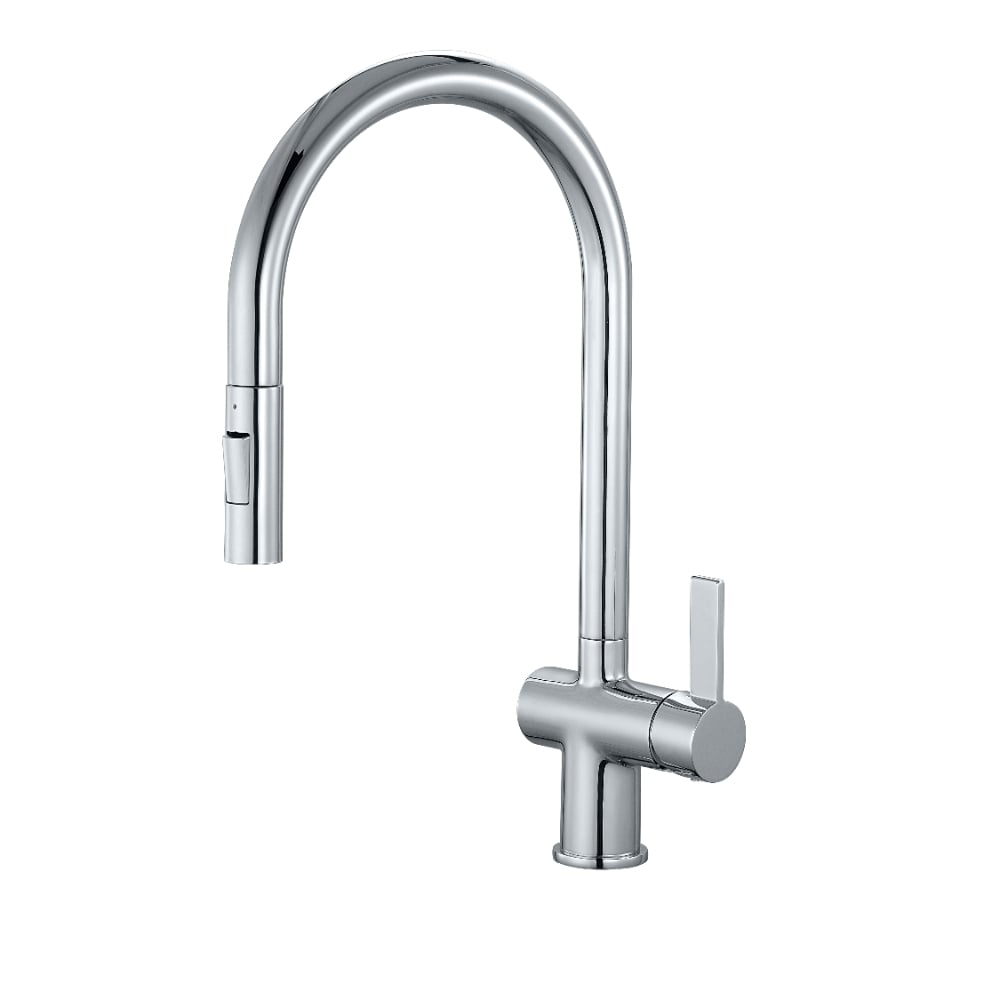
A freestanding bath shower mixer is the one bathroom product that cannot be value-engineered after the fact. Once the screed is down and the tiles are fixed, the position of the supply pipes, the waste and the fixing plate are locked in. Get them wrong and no amount of specification on the mixer itself will rescue the installation.
This article sets out the decisions that have to be made at first fix, based on the freestanding models in the Xindong range (T7268, T1968, T3168, T2368 and related floor-standing mixers), and the failure patterns we see when distributors and contractors order too late in the programme.
A freestanding mixer is not fixed to a wall or a deck. It stands on a single base plate and depends entirely on what happens underneath it. Three elements must align within a few millimetres: the hot and cold supply pipes, the waste outlet, and the threaded rods or bracket that hold the mixer upright.
In a timber floor the usual approach is a joist-level recess with a plywood or tile-backer plate, drilled to the base pattern and sealed before tiling. In a concrete slab the pipes are usually cast in or chased and then made good. In both cases the base plate must sit on a flat, rigid, waterproofed surface; a freestanding mixer standing on an uneven tile will lean, and a lean is visible from across the room.
Hot and cold need to arrive under the base in a way that allows the mixer body to drop onto them without side load. Flexible tails are convenient but they kink if the void is shallow; rigid copper or PEX with elbows gives a cleaner drop. Leave enough slack to connect the tails before the mixer is finally set, and keep the tails clear of the waste run so that a future service visit does not mean lifting the bath.
Isolation valves belong under the floor, accessible through a hatch or a removable panel. A freestanding mixer without isolation is a maintenance liability: any cartridge work means draining the property.
The waste outlet is the item most often moved late, and the one that ruins the layout. In a freestanding installation the waste usually runs in the floor void to a soil or waste pipe, and the fall must be continuous. If the waste has to travel horizontally, allow for a shallow trap and check that the bath's own waste and overflow can still connect.
Where the bath sits away from a wall, the waste run can be long. Confirm the route with the plumber before the base position is marked, not after.
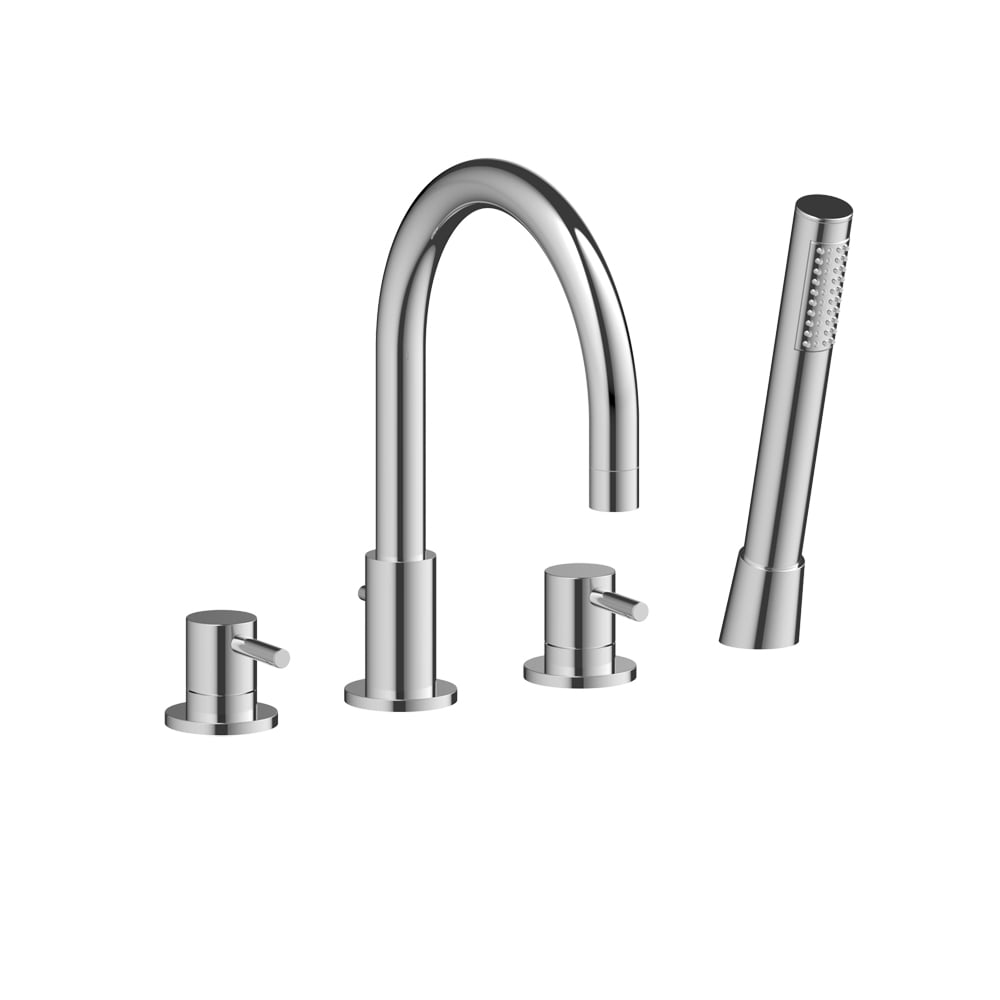
The range splits into two families. A freestanding bath shower mixer, such as the T7268 or T3168, carries a handset and hose on a cradle, so it serves both filling and rinsing. A freestanding bath mixer, such as the T3265, has a spout only and is used where a separate shower or a ceiling-mounted outlet handles washing.
The decision affects the footprint: a shower mixer needs clearance on the handset side and a hose that will not tangle with the bath edge. In a tight alcove, a bath-only mixer with a swivel or fixed spout is often the better engineering choice, with a wall-mounted handset bracket elsewhere.
Spout height above the bath rim determines whether a bucket fits under it and whether water splashes over the edge. A higher spout looks elegant but throws water further; a lower spout is more controlled but less practical for filling large vessels. On a bath with a wide rim, check the spout reach against the internal rim line so the water lands inside the bath, not on the rim.
The handset cradle height matters for two reasons: comfortable reach from standing outside the bath, and hose length. A hose that hangs to the floor will sit in water and collect dirt.
Floor-standing mixers live in a wet, frequently cleaned zone. Chrome remains the default for contract work because it is easy to match and easy to replace. PVD brushed nickel, gun metal, brushed brass and matt black are increasingly specified for residential projects, and they hold up well provided the cleaning regime avoids abrasive pads and acidic descalers.
For hotel and rental projects, specify a finish that can be touched up or replaced as a unit rather than a bespoke plating that cannot be matched in five years.
For a distributor or contractor enquiry, the useful information is: bath type and rim height, floor construction, whether the waste runs in the floor or to a wall, required finish, and whether a handset is needed. With those five points a supplier can shortlist from the range immediately rather than sending a catalogue.
Freestanding mixers are a small part of the order value but a large part of the call-back risk. Getting the first fix right is cheaper than any warranty claim.
 Hot News
2026-11-24
2026-11-22
2026-11-21
2026-11-20
2026-11-19
2026-11-18

The company, founded in 1999 and located in Yuhuan,specializes in taps, thermostatic shower valves and shower kits. With over 30,000 sqm of space and 380+ employees, we hold numerous certifications and 65+ patents.
 EN