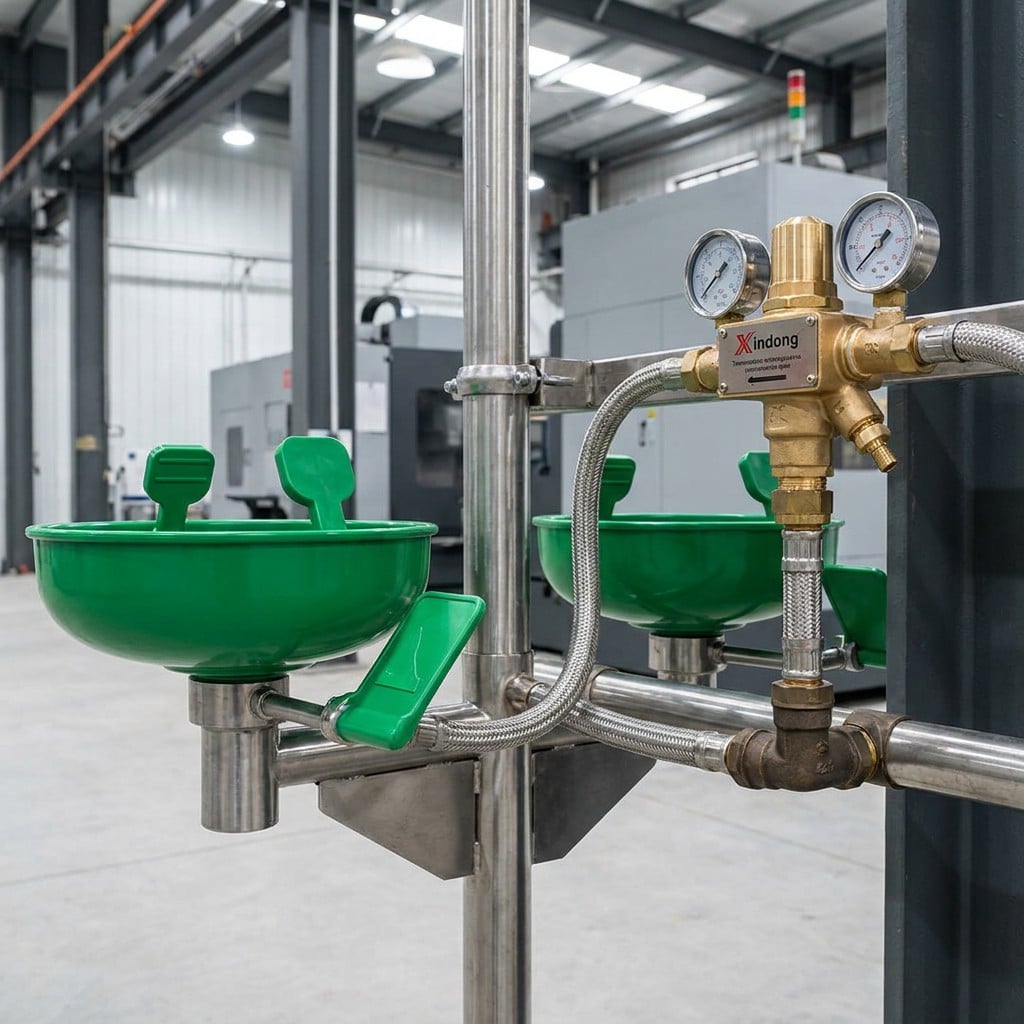
U industrijskim područjima gdje su kemijske prskalice ili opasni prašini svakodnevni rizik, hitna stanica za pranje očiju posljednja je linija obrane od trajnog ozljede očiju. Iako se mnogo pažnje posvećuje vidljivosti i pristupačnosti tih stanica, najkritičnija komponenta često je skrivena iza panela: termostatski ventil za zagrijavanje.
U Zhejiang Xindong Sanitary Ware Co., Ltd., mi smo specijalizirani za dizajn i proizvodnju visokokvalitetnih tempernih ventila koji napajaju ove jedinice koje spašavaju živote. Za službenike za sigurnost i inženjere objekata razumijevanje nijansi kontrole temperature nije samo pitanje usklađenosti, već je i pitanje sigurnosti ljudi.
Američki nacionalni standard za hitne opremu za pranje očiju i tuširanje (ANSI/ISEA Z358.1) globalna je mjerila sigurnosti. U njoj se zahtijeva da voda koju isporučuje stanica za pranje očiju mora biti "topa".
Što je vlažna voda?
Topla voda je definirana kao voda između 16 °C i 38 °C (60 °F - 100 °F).
Ako je voda prehladna (pod 16°C): Žrtva može doživjeti toplinski šok, što je čini nemogućim ostati pod vodom za potrebno vrijeme ispiranja od 15 minuta. Hlada voda također može usporiti kemijsku reakciju, no često uzrokuje da se korisnik prijevremeno povuku, ostavljajući zagađivače u oku.
Ako je voda prevremena (preko 38°C): Vrućina može ubrzati kemijske reakcije s tkivom oka ili uzrokovati toplinske opekotine, što pogoršava ozljedu.
Zbog tog uskog sigurnosnog prozora standardni ventil za mešanje nije dovoljan. Za održavanje konstantne temperature, bez obzira na fluktuacije u vodovodima, potreban je visokokvalitetni termostatski temperirani ventil.
Xindong-ovi ventili za temperiranje dizajnirani su za specifične, visoke zahtjeve industrijske prve pomoći. Naši ventili imaju nekoliko nepotrebnih sigurnosnih sustava:
1. za Ultrabrz termostatski odgovor
Naši ventili koriste napredne termoaktore na bazi parafina. Ove komponente otkrivaju promjene temperature u milisekundama i odmah prilagođavaju mješavinu tople i hladne vode. To sprečava "izbijanje topline" koje se može dogoditi ako netko drugdje u zgradi spusti vodu iz WC-a ili uključi strojeve za visoku toplinu.
2. - Što? Prolaz hladne vode
U slučaju kvara u napajanju toplom vodom, ventil Xindong je dizajniran tako da omogući pun protok hladne vode do stanice za pranje očiju. Iako je hladna voda neugodna, ona ipak može isperiti kemikalije.
3. Slijedi sljedeće: Posljedica odlaganja vruće vode
S druge strane, ako hladna voda ne radi, ventil će u nekoliko sekundi potpuno isključiti toplinu. To sprečava žrtvu da se opekle nepremiješane vruće vode, što je kritičan način neuspjeha u inferiornim ventilima.
Za voditelje nabavki izazov je u usklađivanju troškova s apsolutnim zahtjevima pouzdanosti.
Skrivene cijene loših ventila
U slučaju neispravnog temperiranja ventila može se pojaviti "kalcijumska korozija" ili unutarnja korozija, zbog čega se termostatski element može zaputi. Ako se provjeri sigurnost i otkrije da stanica za ispiranje očiju isporučuje vodu izvan toplog raspona, postrojenje može se suočiti s velikim novčanim kaznama i trenutnim zatvaranjem pogođene zone.
Xindong je jamstvo kvalitete
Svaki ventil koji napušta naše postrojenje testiran je u laboratorijima kako bi se osiguralo da ispunjava ANSI Z358.1 standard. Obezbeđujemo potpunu sledljivost i tehničku dokumentaciju za svaku jedinicu, podupirući naše B2B partnere tijekom sigurnosnih revizija i inspekcija osiguranja.
Dizajniranje sigurnosne stanice zahtijeva cjelovit pristup. Osim ventila, inženjeri moraju uzeti u obzir:
1. za Plitak: Stanica za ispiranje očiju zahtijeva najmanje 1,5 litara u minuti (0,4 GPM). Klapci Xindong dizajnirani su tako da održavaju visoku proputnost čak i pri niskom pritisku.
2. - Što? U skladu s člankom 3. stavkom 2. točkom (a) ovog članka, za sve proizvode koji se upotrebljavaju u proizvodnji vode za ispiranje očiju, potrebno je utvrditi da su oni u skladu s člankom 3. točkom (a) ovog članka.
3. Slijedi sljedeće: Rutinski testovi: ANSI zahtijeva tjedno aktiviranje stanica za ispiranje očiju. Naši ventili su izgrađeni od izdržljive keramičke i DZR mesing komponente da se nosi česte biciklizma bez nošenja.
Sigurnost nije mjesto za skraćivanje uglova. Točnost temperiranja može biti razlika između uspješnog oporavka i invaliditeta koji će promijeniti život. U Zhejiang Xindong Sanitary Ware Co., Ltd, mi ozbiljno shvatamo ovu odgovornost. Naša posvećenost izvrsnosti inženjeringa osigurava da kada se povuci pomoćna polja, voda je uvijek sigurna, uvijek vlažna i uvijek spremna.
Za tehničke specifikacije o Xindongovim termostatskim temperatornim ventilima i rješenjima za sigurnost u hitnim slučajevima, posjetite [ sljedeći članak ](https://www.cn-xindong.com).
 Vruće vijesti
2026-10-17
2026-10-16
2026-10-15
2026-10-14
2026-10-13
2026-10-12

Tvrtka, osnovana 1999. godine i smještena u Yuhuanu, specijalizirana je za slavine, termostatske tuš ventilatore i komplete za tuširanje. S više od 30.000 kvadratnih metara prostora i 380+ zaposlenika, posjedujemo brojne certifikate i 65+ patenata.
 EN
EN