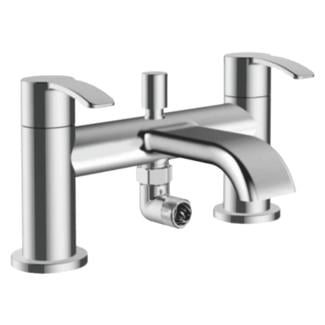
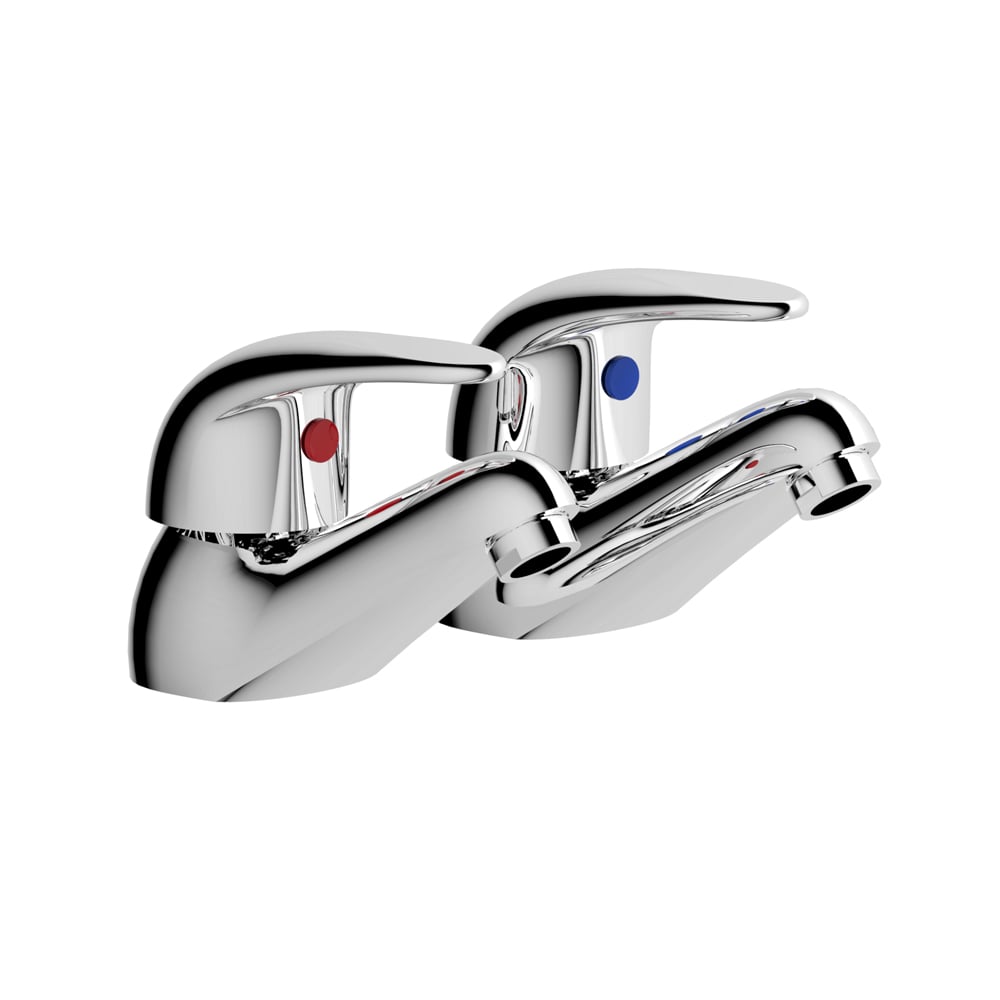
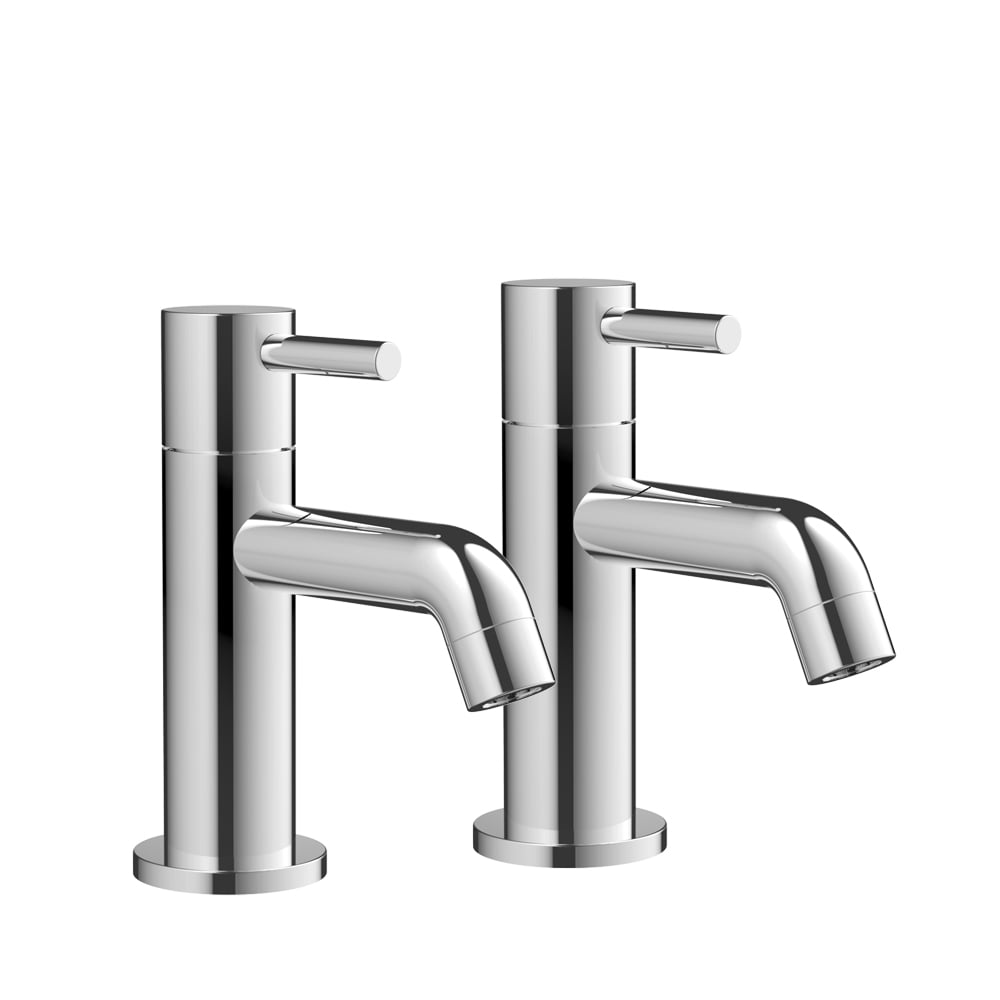
A burst outdoor faucet is rarely discovered in summer. It is discovered in January, when a facility manager opens the valve and finds the wall soaked, the floor icy and the nearest shut-off buried behind storage. For commercial grounds — office campuses, schools, hospitals, industrial plants and multi-building facilities — the outdoor wall hydrant is a small fitting with a disproportionately large failure cost. This guide covers how freeze-resistant sillcocks actually work, how to size them, and how to specify them so they survive winters and vandals alike.
A frost-proof wall hydrant looks like an ordinary hose bib, but its shut-off mechanism is not at the front — it is at the back, deep inside the warm building envelope.
Intra longum brasseum tubum baculus situs est, qui a manubrio operativo in ore extensus est ad valvulam prope interiorem tubi extremum. Cum hydramte claudis, aqua in ea interiori sede effluere desinit. Brevis columna aquae, quae in ore visibili et in anteriori parte tubi remanet, deinde per apertum os effunditur — quia hydramta ita installata est ut os leviter deorsum inclinetur — nihilque in parte visibili relinquitur quod glaciare possit.
Haec una designi idea duos praecipuos installationis regulas explicat:
Longitudo hydrantis debet superare spissitudinem parietis. Sedes clausurae debet in loco collocari qui semper manet supra punctum congelationis. Si shank est nimis brevis, sedes in cavitate frigida parietis sita est et hydrans *non* est omnino frost-proof. Fabricantes offerunt longitudines nominales a circiter 4 pollicibus (100 mm) usque ad 12 pollices (300 mm) et ultra, ut specifier possit parietis structuram aptare. Regula practica: mensurate totam spissitudinem parietis et eligite hydrantem cuius shank est saltem 2 pollices (50 mm) longior.
Hydrantes frost-free solum in parietibus calefactis operantur. Si in garage non calefacto, in pariete plantae non isolata, aut in frigido portico montantur, extremum "calidum" aeque frigidum est ac exterior. In his locis alia strategia requiritur — valvula interior isolationis cum exteriori riser non pressurizato et exsiccato — non simpliciter sillcock longior.
A hose iacens in a puddle, a chemical sprayer or a maintenance tank connected to the spout can create a cross-connection that siphons contamination back into the potable supply. This is precisely why wall hydrants intended for hose connection carry backflow protection. In North America, look to standards such as ASSE 1019, which covers wall hydrants with backflow protection (with ASSE 1011-type hose-connection vacuum breakers as the related protection layer); in other markets, national plumbing codes and backflow standards such as EN 1717 apply. Where codes demand it, specify a hydrant with an integral vacuum breaker so the protection cannot be removed or forgotten.
Since potable-water lead limits tightened, fittings in the US market must meet the lead-free definition (a maximum 0.25% weighted average lead content on wetted surfaces under the Safe Drinking Water Act, with certification schemes such as NSF/ANSI 61 and NSF/ANSI 372, and state rules such as California's AB 1953). A commercial hydrant is a potable-water point of use, so confirm your supplier's brass is a compliant lead-free or low-lead alloy and can provide the documentation. Outside North America, confirm the potable-contact approvals for your destination market.
On commercial grounds, an unlocked hose bib is an open tap for theft, vandalism and accidental flooding. Specify:
Hydrantes glacie-liberi generis globi praebent fluxum plenum una conversione ad quadrantem, positionem apertam/clausam manifestam, et pauciores partes quae attritantur quam in antiquis structuris compressionis. Pro aequipe facultatis quae decenas hydrantum curat, facultas ut statim cognoscatur "clausum" — et ut systema exhauriatur manente manubrio leviter aperto in positione definita ad hiemem parandam in quibusdam structuris — merito specificanda est.
Cogita quid hydrans reapse alat. Impletio ianitoria, lavatio vehiculorum et irrigatio agrorum volumen postulant, non solum pressionem. Verifica coefficientem fluxus hydrantis (Cv / Kvs) potius quam supponere omnes effluvia 3/4" eundem fluxum praebere, et considera hydrantes cum duplici effluvio ubi duo tubi saepe utuntur. Specifica filetta tuborum ad consuetudinem localem adaptata (p. ex. filetta standardis tuborum hortensium aut filetta normarum nationalium) ut tubi maintenance sine adapteribus coniungantur.
Designum sine pruina periculum minuit valde; non autem officium operatoris tollit. Procedura sensata per hydrantem exterius in omni tempore anni:
Antequam hiems veniat: solve et exhala omnes tubos; tubus adhaerens aquam in spout retinet et designum exhalans suum frustratur.
Claude hydrantem et confirma ut spout plene exhaleatur.
Isola ad valvulam interiorem, ubi haec exstat, et exhala ramum — hoc etiam tubos post hydrantem protegit.
Serrae aut clavi manubrium contra usum non auctorizatum.
In vere: aperi lente, inspice fluxum et percolationes ad penetrationem parietis, et confirma ut interruptor vacui non stillat.
Pro regionibus valde frigidis, mensurae additae adhibentur: isolatio rami interioris, tractus caloris in casibus dubiis, et valvulae isolationis interioris quae permittunt ut ascensus exterior plene exhaleatur, non autem sub pressione maneat.
Cum specificas hydrantes per campus aut per totum portfolium, standardiza. Una familia modello — idem manubrium operativum, idem clavis, idem altitudo spout, idem finitio — significat unum kitum partium reservarum, unam notam instructionis et unam routinem hibernationis pro toto patrimonio. Decerne finitionem pro durabilitate et aesthetica (laton brassicum chromatum est commerciale norma; resistit corrosioni et videtur ut "gradus facilitatis"), et annota locum, longitudinem shank et structuram parietis pro omni hydrante in log facilitatis, quia hoc log permittit futuro aequipo manutentionis ut hydrantem recte substituat sine nova mensura parietis.
In Xindong, outdoor and utility brassware — including heavy-duty wall hydrants, hose connections, and radiator valves — is manufactured in our own plant with full pressure testing; our engineers can advise on shank lengths, lockable handle options, and lead-free alloy compliance for your project’s market. We have been making brass valves and fittings since 1999, and we still believe the fittings you never think about are the ones that deserve the most specification care.
Sourcing outdoor hydrants for a project or facility upgrade? Send your wall build-up details and quantity to [[email protected]](mailto:[email protected]) or enquire via the [website](https://www.cn-xindong.com/) — we will confirm the correct lengths, options, and documentation for your market.
*Xindong Engineering Team — Zhejiang Xindong Sanitary Ware Co., Ltd. (Est. 1999, Yuhuan, Zhejiang, China).*
 Nuntii Calidi
2026-10-23
2026-10-22
2026-10-21
2026-10-20
2026-10-18
2026-10-17

Compania, fundata in annum 1999 et sita in Yuhuan, specializatur in robinetii, valves docce thermostaticas et in instrumenta docce. Cum spatio plus 30,000 metrorum quadratorum et cum 380+ operariis, multas certificationes et 65+ patentes tenemus.
 EN
EN