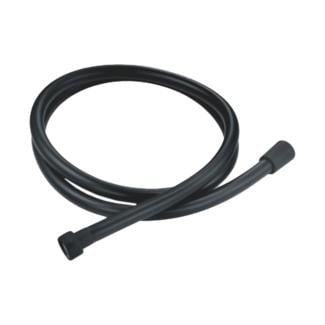
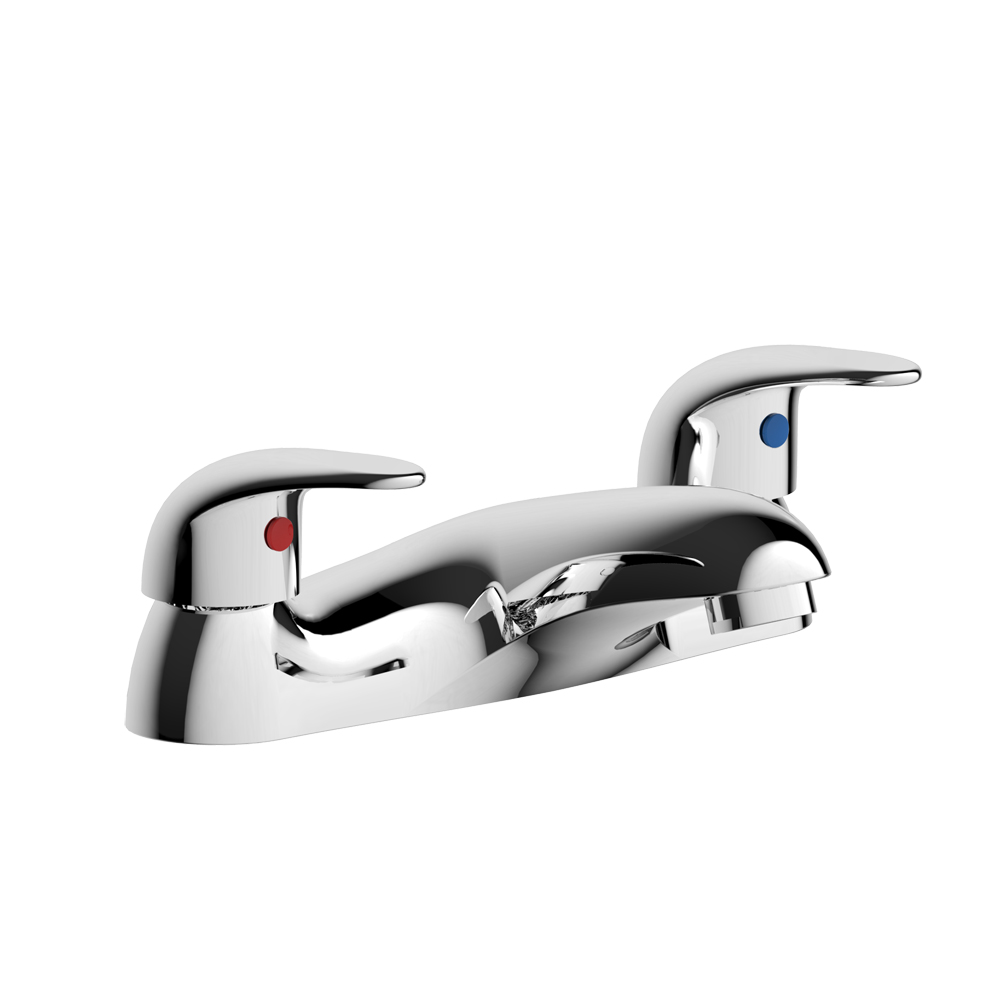
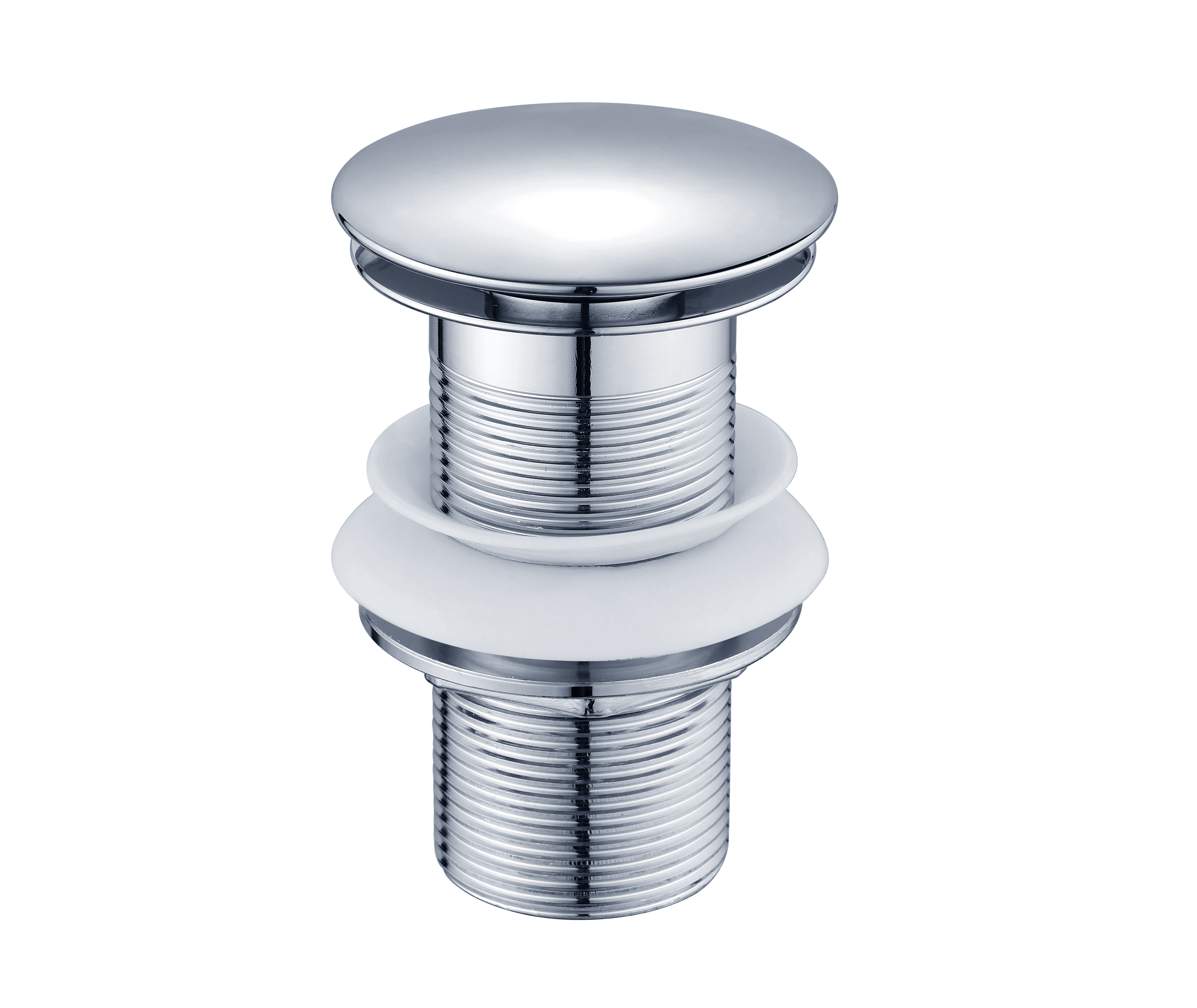
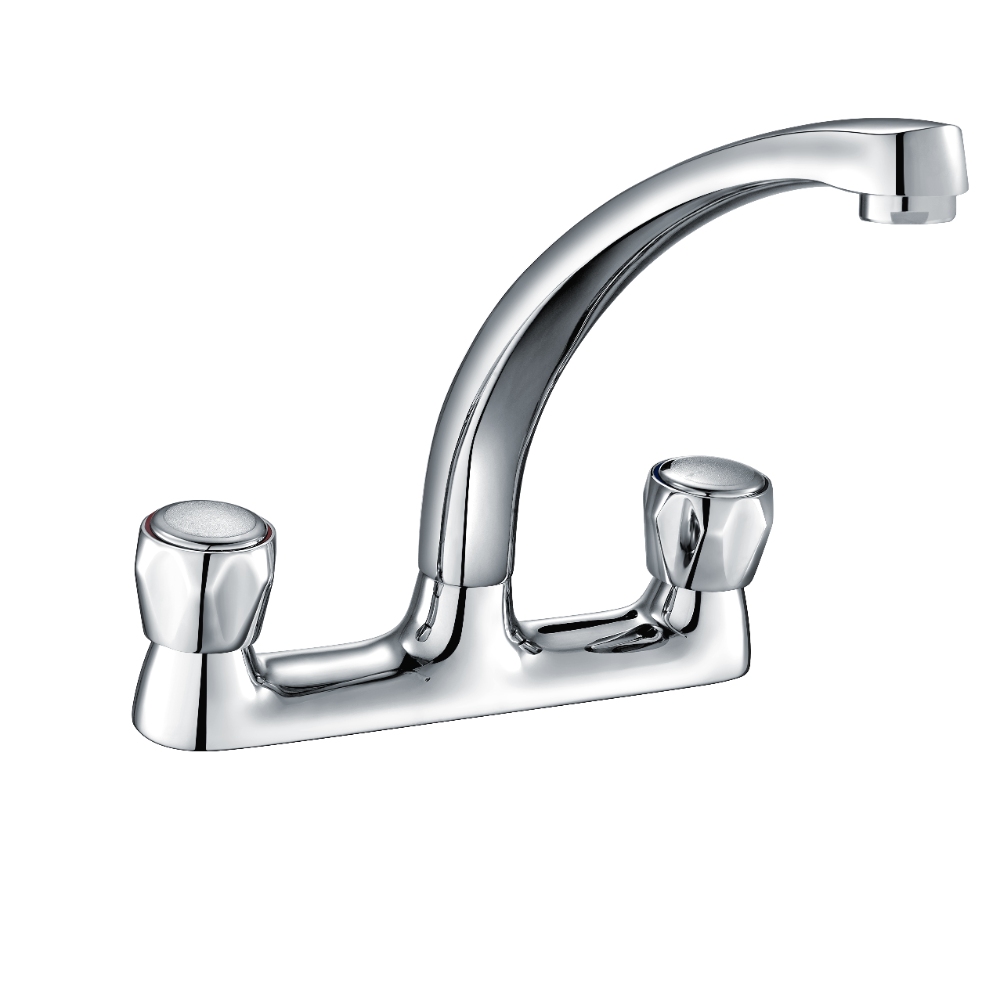
Three-hole layouts are unforgiving. A single-hole mixer nudged 10 mm left or right goes unnoticed; a three-hole set either drops into its holes or it does not, and once the stone is drilled the decision is permanent. Most three-hole problems we are asked to solve are not manufacturing faults but coordination faults between the ceramic or stone supplier, the joiner and the tap drawing.
This guide covers the dimensions that matter on a three-hole basin mixer and a deck-mounted bath filler, how to sequence the drilling, and how to match flow rates when a hand shower joins the same deck.
The familiar figure is 200 mm between centres, derived from long-standing European practice for a 35 mm central spout hole flanked by two 30 mm handle holes. It is habit rather than law; the market range runs 180–230 mm. Retailers in Southern Europe stock 210 mm sets; some UK heritage ranges sit at 190 mm.
Quidquid est numerus, is in schedula forandi tabulati ponendus est cum tolerentia ±1 mm, ad marginem datatum referens, non ad frontem armarii. In tabulatis lapideis, forare ex parte faciei cum foratore centrali et lamina directiva; in tabulatis ceramicis, foramen in statu formae constituitur, ideo descriptio roscati ante sectionem formae emittenda est. Haec ordo — descriptio, deinde forma aut templum, deinde foratio — est unica efficacissima ratio ut 200 mm interstitium 205 mm foraminibus non occurrat.
Elementum |
Dimensio typica |
Nota |
Foramen spout |
35 mm |
Quaedam gravia corpora fusoria 38 mm exigunt |
Foramen manubrii |
30 mm |
32 mm in maioribus manubris levarum |
Centra foraminum |
200 mm (intervallum 180–230) |
Datum ab extremitate posteriori, ±1 mm |
Spissitudo Teguli |
10–40 mm |
Cauda 20 mm ultra hoc excedere debet |
Manus clearance ad oram scyphi |
40 mm minimum |
Praevenit laesionem articulorum |
Spout protrusio praeter centrum scyphi |
60–80 mm |
Determinat punctum in quo aqua cadit |
Frequens defectus in triplici foramine est shank brevis nimis. Tabula ex lapide fusili crassa 30 mm, cum washer, back nut et tail nut, requirit shank filetatum minimi 60 mm, ut spatium relinquatur ad connexionem infra. Specifica densitatem tabulae in ordine et postula longitudinem shank per scriptum; hic terminus "standard" nihil significat.
Tabulae tenuis inversum creant problema: tabula ex accipitro crassa 1.5 mm flectitur sub manubrio levaris et solvit sigillum. Placula subsidens 100 mm ex ligno ply crasso 6 mm aut ex accipitro onerem distribuit prope nihil.
Accessus quoque magni momenti est: partes inferiores (tails) et baculus evacuationis sub tabula sunt positi; ergo triplicis foraminis dispositio in lapide crasso 40 mm supra arcam parvam est insidiosa pro servitio. Specifica tails 500 mm aut tabulam posteriorem removibilem.
Handles flank the spout, hot on the left as seen by the user. Beyond that, three things decide whether the set looks considered or assembled from leftovers.
First, handle projection must clear the bowl rim. A lever that overhangs the basin by 20 mm will be knocked by every user who leans forward; 40 mm of clearance is comfortable. Second, the spout outlet should land 60–80 mm past the bowl centre so water hits the slope of the bowl rather than the waste. Third, the axis of the handles should be parallel to the deck edge, not to the wall — on a splayed vanity these two lines diverge, and the handles look crooked even when they are not.
For a deck-mounted bath filler, add the diverter. Its knob sits on the spout body and must be reachable from the standing position at the side of the bath, not from behind the taps. On a 120 mm deck the diverter will foul the wall — check the section drawing.
Un mixer pour lavabo et un robinet de baignoire sont des appareils hydrauliques différents partageant la même norme. La norme EN 817 régit les vannes mécaniques de mélange et leur comportement sur toute la plage de pression de fonctionnement ; la norme EN 246 régit le régulateur de débit ou l’aérateur qui fixe le débit fourni. Un mixer pour lavabo équipé d’un régulateur de 5 l/min et un robinet de baignoire délivrant 20–24 l/min à 3 bar sont tous deux conformes — ils accomplissent simplement des tâches différentes.
Si l’appareil n’est pas correctement apparié, la plainte est toujours la même : la baignoire met une éternité à se remplir, ou l’eau gicle du lavabo. Deux règles :
Ubi tabula thermostaticam habet, EN 1111 perfusionis mixtionem definit, cum strictioribus conditionibus ad claudendum et ad stabilitatem temperaturae quam in manualem duorum manubriorum apparatus. Tabulae thermostaticae etiam strainers et valves de reversione accessibiles exigunt; praeterea forniture calidae et frigidae aequilibratae esse debent — imparitas forniture est causa communis cur tabula thermostatica balnei frigida maneat ad fluxum parvum.
Omnis tabula cum foramine ducis manualis potestalem connexionem transversam creat: caput in aquam balnei demitti potest. EN 1717 hanc periculum classificat et dispositivum protectivum idoneum exigit; in praxi hoc significat ordinem valvarum de reversione in diverter aut in introitu, quod pro categoria verificatum est, necnon tubum qui non submergitur. Non supponas diverter esse dispositivum de reversione nisi folium dati id affirmet.
Hoc ede ad suppeditatorem lapidis aut ceramicae, ad artificem lignariam et ad plumbarium loci simul:
Three-hole work rewards the boring disciplines: a released drawing, a stated thickness, a checked datum. Everything else is finish.
---
**About the author**
Zhejiang Xindong Sanitary Ware Co., Ltd. manufactures three-hole and single-lever brass basin mixers, wall-mounted basin mixers and kitchen mixer taps in Yuhuan, Zhejiang, China, supplying OEM and ODM programmes worldwide. Technical enquiries: [email protected] | +86-0576-87499008.
 Nuntii Calidi
2026-11-05
2026-11-04
2026-11-03
2026-11-02
2026-10-29
2026-10-28

Compania, fundata in annum 1999 et sita in Yuhuan, specializatur in robinetii, valves docce thermostaticas et in instrumenta docce. Cum spatio plus 30,000 metrorum quadratorum et cum 380+ operariis, multas certificationes et 65+ patentes tenemus.
 EN