Legionella gets the headlines, the regulations and most of the risk-assessment budget. That focus is understandable: legionellosis is a notifiable, potentially fatal hazard with a mature body of guidance behind it. But the organisms that cause the most stubborn, longest-running problems in hospital and care-facility water systems are often not Legionella at all. They are the opportunistic premise plumbing pathogens — *Pseudomonas aeruginosa*, the non-tuberculous mycobacteria (NTM), and the free-living amoebae that shelter them.
The World Health Organization's *Guidelines for Drinking-water Quality* treats these as a management problem distinct from Legionella, because they behave differently and respond to different controls. Legionella is largely a temperature and aerosol problem. *P. aeruginosa* and NTM are biofilm problems — and biofilm is a plumbing-design outcome, not a water-treatment outcome.
*Pseudomonas aeruginosa* is a Gram-negative opportunist that thrives in wet, nutrient-poor microenvironments at ambient temperature. It is a recognised cause of healthcare-associated infection in augmented-care and intensive-care settings — ventilator-associated pneumonia, bloodstream infection, and wound or urinary tract infection. Outbreaks are repeatedly traced back to the water system: taps, washbasin outlets, aerators, drains, shower heads and, importantly, the wet internal surfaces of the fittings between the supply pipe and the outlet.
Non-tuberculous mycobacteria — principally the *Mycobacterium avium* complex and rapidly growing species such as *M. abscessus* and *M. chelonae* — are markedly more resistant to chlorine and other disinfectants than most bacteria, largely because of their lipid-rich, hydrophobic cell wall. They colonise biofilms, survive where residual disinfectant is low, and are associated with pulmonary infection in immunocompromised patients and those with underlying lung disease.
Both organisms share one habitat: the biofilm coating the inner surfaces of the plumbing system, plus the amoebae grazing on it.
Guidance such as the UK's **HTM 04-01** (*Safe water in healthcare premises*), **HSE L8** and **HSG274 Part 2**, the US **ASHRAE Standard 188** and **ASHRAE Guideline 12**, and CDC water-management toolkits all converge on the same physical drivers:
The last metre is where most of the risk concentrates.
**Outlet aerators** are a well-documented reservoir. The fine mesh traps organic matter, dries only intermittently, and creates a large surface area in a warm, wet niche. Guidance for augmented-care areas increasingly favours removable, cleanable or entirely aerator-free outlets — a laminar flow straightener is far easier to decontaminate than a mesh insert.
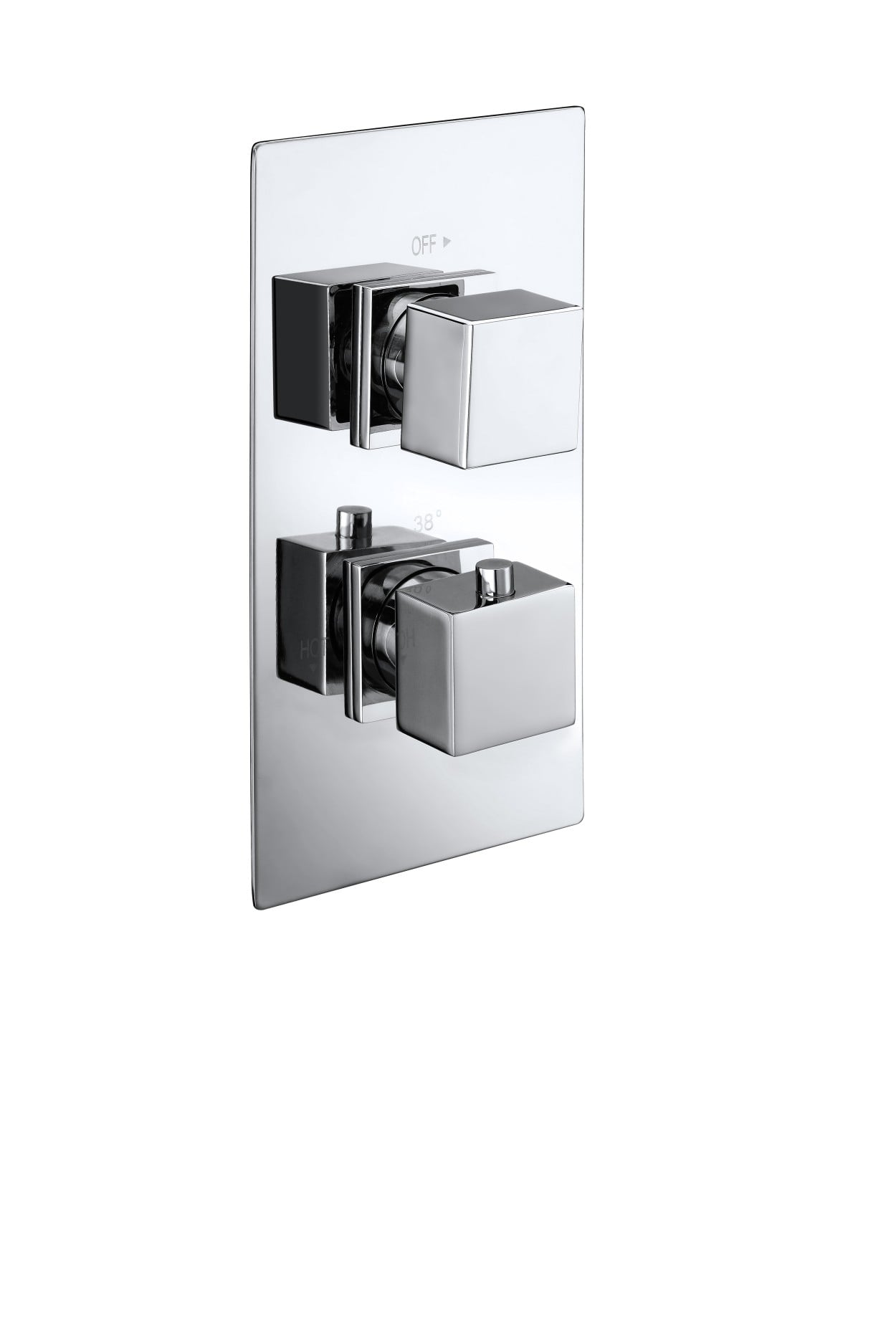
**Thermostatic mixing valves and their internal galleries.** A TMV is a chamber in which hot and cold water mix across a large internal surface at exactly the temperature band that favours growth. A well-designed valve can be dismantled, cleaned and disinfected; a poorly designed one has recesses that no amount of flushing will reach. Specify valves approved to **BS EN 1111** or **BS EN 1287** that can be serviced without removing the body from the wall.
**Elastomers and seals.** Lower-grade EPDM can leach nutrients and support biofilm. Where drinking-water contact is critical, specify compounds with a material approval appropriate to the market rather than generic commercial grades.
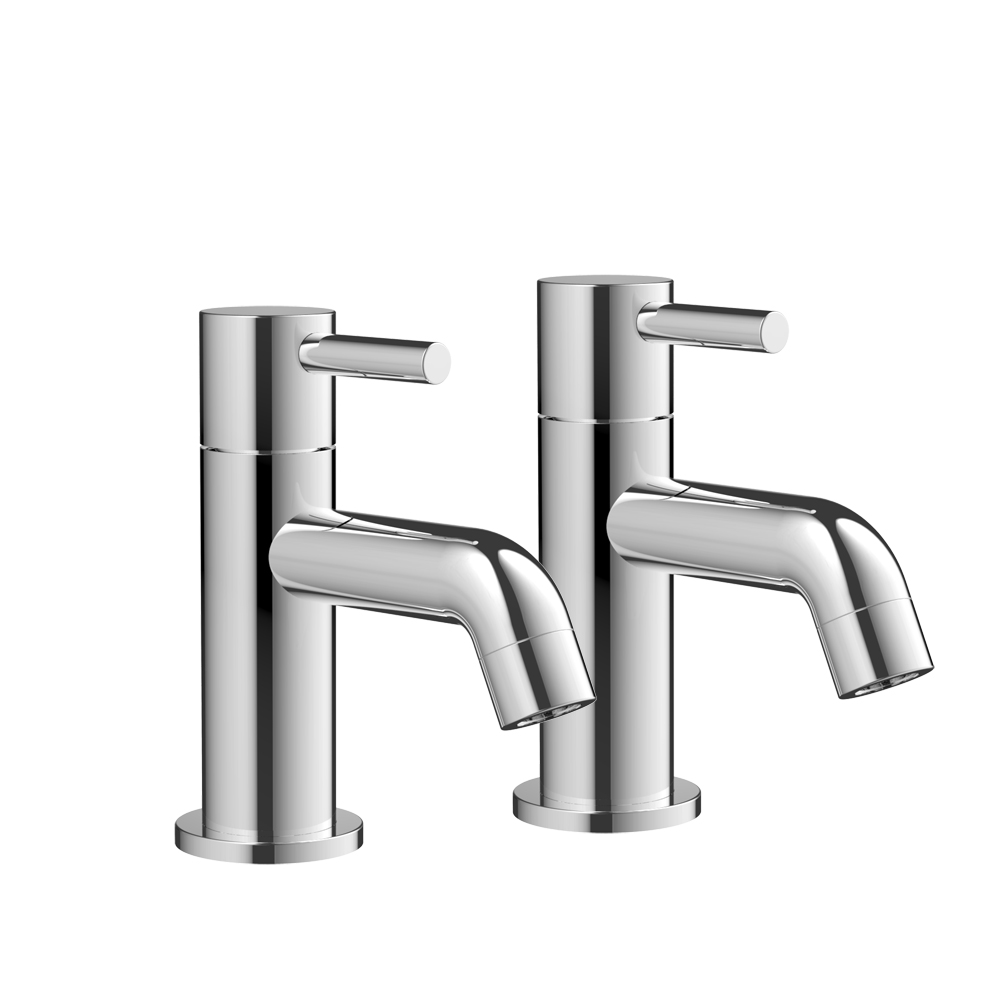
**Brassware with unnecessary dead volume** — long spout tails, oversized internal bores, isolating valves that never see flow — quietly creates stagnation zones inside the fixture itself.
**Measure at the outlet, not just at the plant.** Record temperature and flow at the furthest and least-used fixtures on each loop.
**Walk the pipework for dead legs.** Any branch that takes an unreasonably long time to run warm, or that is fed by an oversized tee, is a candidate for removal or scheduled flushing.
**Audit every aerator.** Count them, list them, and decide which can be removed outright.
**Flush to a written schedule.** All outlets, including those in store rooms, on a documented cycle — with records.
**Check material approvals, not just product claims.** Ask for the certificate number, the issuing body and the manufacturing site named on it.
**Specify for disassembly.** Choose valves and outlets that can be dismantled, cleaned and, where necessary, thermally disinfected.
Zhejiang Xindong Sanitary Ware Co., Ltd. has manufactured brass valves, thermostatic shower valves, taps and fittings from its Yuhuan, Zhejiang facility since 1999. Development work for healthcare and care-sector customers is driven by the questions their infection-control and compliance teams actually ask: can the outlet be cleaned, is the internal geometry simple enough to flush, which markets does the certificate cover, and does the factory address on it match the one on the shipping documents? We hold TMV2, TMV3 and WRAS approvals across parts of our thermostatic range, and we supply the material and conformity documentation our customers need for their own submissions.
Legionella compliance is necessary but not sufficient. If your water-safety plan stops at temperature and flushing, *P. aeruginosa* and NTM will find the surfaces you left behind — the aerator, the valve gallery, the dead leg, the rough bore. Specifying fittings that are cleanable, low-dead-volume and supported by the material approvals relevant to your market is one of the few risk controls fixed at design stage that keeps working for the life of the building.
 Hot News
2026-10-05
2026-10-04
2026-10-03
2026-10-02
2026-10-01
2026-09-30

The company, founded in 1999 and located in Yuhuan,specializes in taps, thermostatic shower valves and shower kits. With over 30,000 sqm of space and 380+ employees, we hold numerous certifications and 65+ patents.
 EN
EN