As the construction industry moves toward a "circular economy," the choice of materials is coming under intense scrutiny. Architects, sustainability consultants, and developers are no longer just looking at initial costs; they are conducting comprehensive Life-Cycle Assessments (LCA) to understand the environmental impact of a building from construction to demolition.
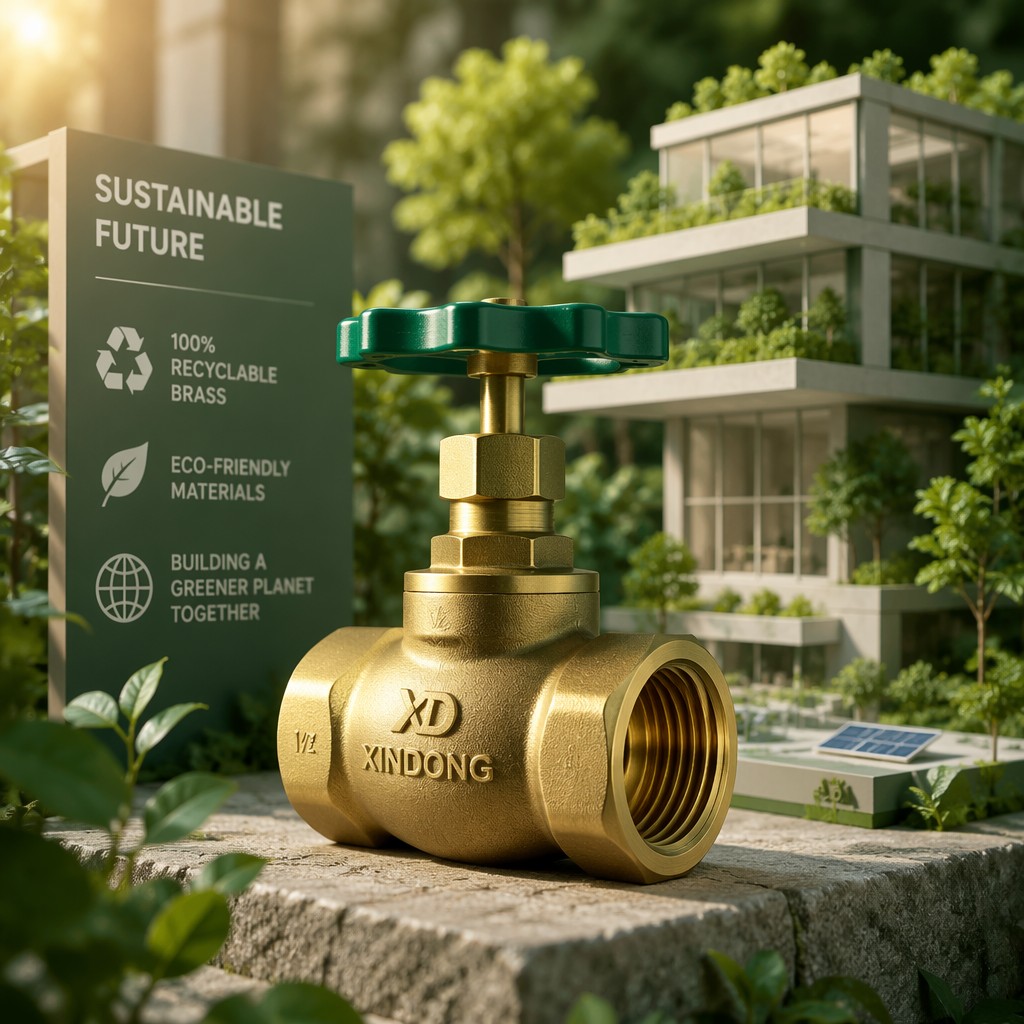
In the plumbing sector, a significant debate exists between plastic (PEX, PVC) and metal (Brass, Stainless Steel). While plastic offers low initial costs, brass—specifically 100% recyclable brass—offers a "Circular Advantage" that plastic simply cannot match.
Brass is a unique material in that it can be recycled an infinite number of times without losing its mechanical properties. According to industry data, nearly 90% of all brass alloys are recycled.
For a LEED (Leadership in Energy and Environmental Design) or BREEAM certified project, using brass fixtures contributes to the "Materials and Resources" credits. Unlike plastic, which is often down-cycled into lower-quality products or ends up in landfills, a brass valve by Xindong at the end of its 30-year life can be melted down and turned back into a high-precision valve.
A critical component of sustainability is longevity. A product that lasts 30 years is inherently more sustainable than one that must be replaced every 10 years.
• Plastic Vulnerabilities: Plastic pipes and valves are susceptible to UV degradation, chemical leaching, and thermal stress. Over time, they can become brittle and prone to failure.
• The Brass Strength: Xindong’s brass valves are engineered for high-pressure and high-temperature environments. Their mechanical stability ensures that the plumbing system remains intact for the lifetime of the building, reducing the carbon footprint associated with maintenance and replacement.
Sustainability is not just about the environment; it’s about the health of the occupants. While some older plastics were criticized for leaching chemicals into the water supply, modern high-quality brass has also evolved.
Zhejiang Xindong Sanitary Ware Co., Ltd. has invested heavily in Lead-Free Brass technology. By removing lead from the alloy, we ensure that our valves meet the most stringent global health standards, making them the ideal choice for green buildings focused on indoor environmental quality.
While the melting point of brass is higher than that of plastic, the overall carbon footprint of brass must be viewed through the lens of recycling. Producing brass from scrap requires significantly less energy than refining primary copper and zinc.
Xindong integrates sustainable practices into its manufacturing process, including:
• Scrap Recovery: 100% of the brass shavings and offcuts from our CNC machines are captured and returned to the foundry.
• Energy-Efficient Forging: Modern induction heating reduces energy consumption during the shaping process.
For MEP engineers and architects, the choice of plumbing materials is a statement of values. While plastic may offer short-term savings, 100% recyclable brass provides long-term value, superior performance, and a clear path toward a circular economy.
Xindong is proud to be a partner in the global green building movement, providing the high-quality, recyclable hardware that makes sustainable architecture possible.
Discover our sustainable plumbing solutions at [Xindong Sanitary Ware](https://www.cn-xindong.com).
 Hot News
2026-10-17
2026-10-16
2026-10-15
2026-10-14
2026-10-13
2026-10-12

The company, founded in 1999 and located in Yuhuan,specializes in taps, thermostatic shower valves and shower kits. With over 30,000 sqm of space and 380+ employees, we hold numerous certifications and 65+ patents.
 EN
EN