 EN

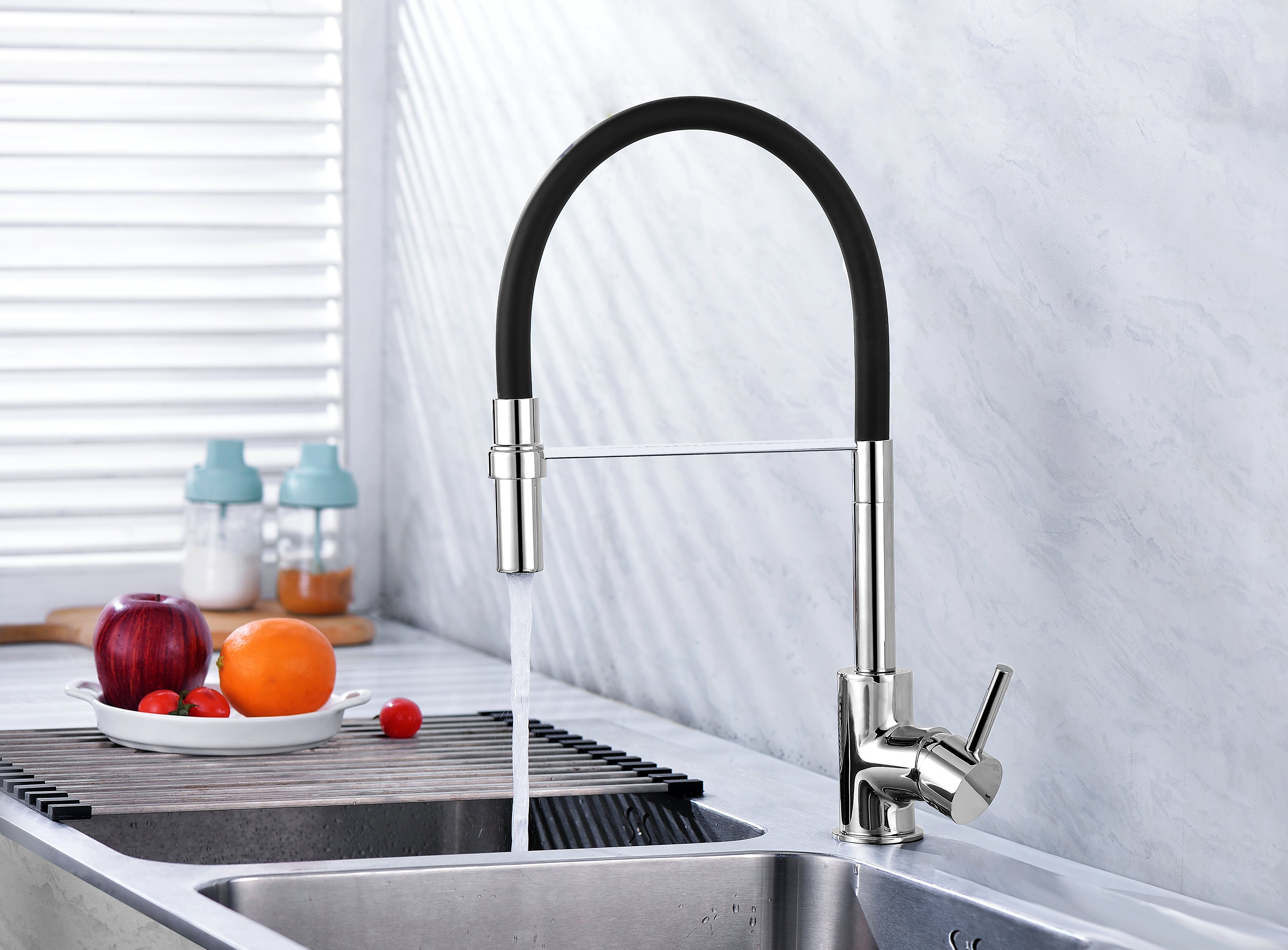
Public canteens serve hundreds of meals daily, and maintaining rigorous hygiene standards is non-negotiable. The equipment behind every food service operation must withstand constant use while meeting strict sanitation requirements. Kitchen faucets are among the most frequently touched surfaces in any commercial food preparation area, making their design and functionality critical to overall kitchen safety. Easy-clean kitchen faucets have become essential infrastructure in modern public canteens, directly supporting both operational efficiency and health compliance.

Kitchen faucets designed with easy-clean features minimize pathogen harboring spots and reduce the time staff must spend on maintenance. Traditional models often feature crevices, threaded areas, and complex nozzle designs that trap food particles, grease, and bacteria. Modern easy-clean kitchen faucets eliminate these hidden spaces with smooth surfaces, removable aerators, and simplified construction. This design philosophy transforms kitchen faucets from potential contamination sources into hygienic tools that actively support food safety objectives in public canteen environments.
Hygiene Standards and Food Safety Compliance
Meeting Regulatory Requirements Through Design
Public canteens operate under stringent food safety regulations that mandate equipment cleanliness as a foundational control measure. Health inspectors specifically evaluate kitchen faucets for their ability to be thoroughly sanitized without harboring hidden bacteria. Easy-clean kitchen faucets meet these regulatory expectations because their streamlined design permits complete access during cleaning cycles. Caulk-free installation, seamless nozzle construction, and removable components in quality kitchen faucets ensure inspectors find no questionable deposits or biofilm accumulation during audits.
The relationship between easy-clean kitchen faucets and regulatory compliance extends beyond surface appearance. Cross-contamination prevention depends on staff confidence that all surfaces touching food or food-contact items have been properly sanitized. When kitchen faucets feature hard-to-reach areas or complicated designs, staff cannot verify complete cleanliness, creating compliance risk. Conversely, transparent easy-clean kitchen faucets and models with visible spray patterns allow rapid visual confirmation that sanitation protocols have succeeded, supporting both safety and documentation requirements.
Pathogen Control and Prevention Mechanisms
Bacteria, viruses, and other pathogens proliferate in warm, moist environments with organic residue—conditions that traditional kitchen faucets provide. Faucet handles and aerator screens become ideal microbial reservoirs when kitchen faucets lack proper drainage, design smoothness, or material selection. Easy-clean kitchen faucets interrupt this pathogen lifecycle through multiple mechanisms: water drainage design prevents standing moisture, smooth materials resist bacterial biofilm formation, and simplified geometry eliminates dead spaces where pathogens hide. Public canteens choosing easy-clean kitchen faucets with antimicrobial surface coatings gain additional protection against norovirus, hepatitis A, and other foodborne illness agents.
The mechanical action of cleaning itself becomes more effective with easy-clean kitchen faucets because staff can apply sanitizing solutions without fearing product entrapment in inaccessible areas. High-temperature water flows more uniformly through simplified nozzles on modern kitchen faucets, ensuring thermal sanitization reaches all surfaces. This functional advantage means public canteens spend less chemical volume and labor time achieving equivalent sanitation outcomes compared to facilities using traditional kitchen faucets.
Operational Efficiency and Staff Productivity
Reducing Maintenance Time and Labor Cost
Kitchen staff in busy public canteens juggle constant pressure to prepare food quickly while maintaining safety standards. Easy-clean kitchen faucets directly reduce the time burden of equipment maintenance, freeing staff for productive food preparation activities. A complex traditional faucet model might require twenty to thirty minutes of detailed disassembly, cleaning, and reassembly during a shift; equivalent cleaning on easy-clean kitchen faucets takes five to ten minutes using simple brush access and flowing water. Multiply this efficiency across multiple faucets and multiple daily cleaning cycles, and labor savings become substantial across a canteen's annual operating budget.
The simplicity of easy-clean kitchen faucets also reduces training requirements for new kitchen staff. Employees quickly understand how to operate and maintain models with intuitive controls and obvious cleaning access points. Traditional kitchen faucets often confuse new workers because hidden adjustment mechanisms and non-obvious disassembly paths require lengthy instruction. This training efficiency helps public canteens onboard staff faster during high-turnover seasons, maintaining consistent hygiene practices even as personnel changes occur.
Downtime Prevention and Reliability Impact
When kitchen faucets fail in a public canteen serving hundreds of customers daily, the operational disruption cascades quickly. Hand-washing stations become unavailable, backup faucets are pressed into service beyond capacity, and food safety protocols face immediate stress. Easy-clean kitchen faucets constructed from robust materials with simplified internal geometry experience fewer failures because they lack the delicate components that fail in complex traditional models. Removable aerators can be cleaned thoroughly without requiring professional service calls; simplified handles reduce mechanical wear; streamlined tubing resists mineral deposit buildup that causes leaks in conventional kitchen faucets.
This reliability advantage translates to measurable business impact for public canteens. Facilities using easy-clean kitchen faucets report fewer emergency repairs, longer intervals between complete unit replacement, and reduced dependence on equipment maintenance technicians. The simplified design also means replacement parts for easy-clean kitchen faucets remain in stock more readily, supporting rapid repairs when issues do occur. Staff can often perform minor troubleshooting on modern easy-clean kitchen faucets without external expertise, maintaining hand-washing and food preparation stations during peak service periods.
Cost-Benefit Analysis and Long-Term Value
Initial Investment Versus Operating Expense Reduction
Easy-clean kitchen faucets typically carry a slightly higher upfront purchase price compared to basic traditional models, a factor that sometimes deters budget-conscious public canteen administrators. However, this initial cost differential disappears within the first twelve to twenty-four months of operation when labor savings, reduced chemical consumption, and lower maintenance frequency are calculated. A public canteen upgrading ten faucet stations to easy-clean kitchen faucets might invest five to eight thousand dollars initially but recover that investment through reduced staff time devoted to cleaning alone. Additional savings from fewer emergency repairs and extended equipment lifespan amplify the financial benefit beyond the direct calculation.
The economic case for easy-clean kitchen faucets strengthens further when considering regulatory compliance. Facilities using inadequate equipment risk citations from health inspectors, leading to mandatory remediation expenses, potential temporary closures, or public reputation damage. Easy-clean kitchen faucets eliminate this compliance risk category almost entirely, providing implicit insurance value. Insurance providers sometimes offer modest premium reductions for public canteens demonstrating superior equipment standards through easy-clean kitchen faucets and similar upgrades.
Sustainability and Resource Conservation
Modern easy-clean kitchen faucets incorporate water-efficient aerator technology that reduces consumption without sacrificing cleaning effectiveness. Public canteens consuming thousands of gallons monthly see measurable utility bill reduction when all kitchen faucets feature aerators limiting flow to 1.5 gallons per minute. Easy-clean kitchen faucets designed with optimal nozzle geometry also reduce the water volume needed during sanitization cycles because improved spray patterns deliver cleaning solution more effectively to target surfaces. Over a decade of operation, a single easy-clean faucet station can conserve hundreds of thousands of gallons of water in a busy public canteen.
The environmental benefit of easy-clean kitchen faucets extends to chemical usage reduction as well. Because these faucets permit more thorough cleaning with lower volumes of sanitizing agents, public canteens decrease their chemical footprint and associated disposal costs. Staff can transition toward less harsh, more environmentally friendly cleaning solutions when working with easy-clean kitchen faucets because the design itself contributes to sanitation outcomes. This alignment with modern sustainability expectations also strengthens the public canteen's reputation with environmentally conscious customers and inspecting authorities.
FAQ
What makes a kitchen faucet easier to clean than traditional models?
Easy-clean kitchen faucets feature smooth, seamless surfaces with minimal crevices, removable aerators for thorough inspection, simplified handle mechanisms, and improved water drainage geometry. Traditional kitchen faucets often include threaded connections, complex nozzle designs, and non-removable components that trap food particles and bacteria. Quality easy-clean kitchen faucets also use corrosion-resistant materials that prevent mineral buildup, eliminating hidden spaces where contamination accumulates. These design differences allow staff to achieve complete sanitization in a fraction of the time required for conventional faucet models.
How do easy-clean kitchen faucets improve food safety in canteens?
Kitchen faucets represent a high-risk surface in food preparation environments because they contact both clean water and human hands throughout service hours. Easy-clean kitchen faucets interrupt pathogen transmission pathways by preventing biofilm formation on smooth surfaces, ensuring effective thermal and chemical sanitization, and eliminating hidden reservoirs where harmful bacteria survive. Staff using easy-clean kitchen faucets can perform hand-washing with greater confidence that they are not transferring contamination from faucet surfaces to clean hands. This reliability makes easy-clean kitchen faucets essential infrastructure for meeting strict public health requirements in canteen operations.
Can easy-clean kitchen faucets reduce operating costs for public canteens?
Yes, easy-clean kitchen faucets deliver measurable cost savings through multiple channels: reduced labor for maintenance and sanitization, lower frequency of emergency repairs and replacement, decreased chemical and water consumption, and avoided compliance violations. Although initial purchase price may be higher than basic models, the total cost of ownership over five to ten years strongly favors easy-clean kitchen faucets in high-volume commercial settings. Public canteens with multiple faucet stations serving hundreds of daily customers see the fastest return on investment, sometimes recovering initial expenditure within one to two years of operation.