L’error més car en un bany no és una griferia ratllada. És un forat de 38 mm fet a 12 mm de distància del centre en un plafó de pedra que va trigar sis setmanes a arribar. La posició del forat és irrecuperable en pedra, marginal en material compost i impossible en porcellana vítria. El diàmetre, en canvi, és quelcom que es pot planificar — i si es cometeix un petit error, de vegades es pot resoldre.
Emptores saepe postulant "foramen 35 mm" quia miscitor habet cartucciam 35 mm. Hoc est numerus rectus pro plurimis miscitoribus lavabuli monocochlearibus, inter quos sunt corpora lavabuli standard ex aere, sed ratio unam sententiam meretur: foramen debet libere transire partem filetatae caudae et sedem annuli O, non cartucciam intra corpus. In fere omnibus miscitoribus lavabuli cum cartuccia 35 mm, cauda mensuratur 32–34 mm, itaque foramen 35 mm dat spatium liberum 1–1.5 mm quod necessarium est ut cera sigillans aequaliter comprimatur.
Magnitudo cartucciae |
Diameter exterior typica caudae |
Diametros foraminis |
Notae |
35 mm |
32–34 mm |
35 mm (+0.5 / 0) |
Miscitor lavabuli monobloc standard; maior pars specificatorum domesticorum |
40 mm |
37–39 mm |
40 mm (+0.5 / 0) |
Corpora maioris magnitudinis, fluxus superioris, quidam miscitores super tabulatum et ad bidetum; confirmare oportet per schemata suppeditantis |
40 mm, variantes corporum profundorum |
40–41 mm |
42 mm |
Check before drilling — this is where "40 mm" assumptions fail |
Two further dimensions matter more than most installers expect. First, deck thickness: a standard fixing kit suits 0–40 mm of material, and thicker stone needs an extension kit or a longer shank, not a bigger hole. Second, underside clearance: on ceramic, look for the overflow channel, reinforcing ribs and the hollow between the bowl and the deck. A hole that is perfect from above can break into a cavity below and leave the fixing nut with nothing to clamp.
Also check the product's declared installation dimensions. A basin mixer tested to EN 817 has a defined body, spout reach and mounting arrangement; the drawing tells you the minimum distance from the hole centre to the back edge and to the bowl, and that distance is not negotiable for spout clearance.
Vitreus china et porcellana sunt dura, fragilia et inexorabilia. Perfora ea cum corona diamantina electroplata vel sinterata, sub aqua, ad velocitatem parvam. Nulla comparatio utilis cum corona pro muris; carbide lacerat glazuram et propagat rimas.
Parametri practici qui operantur in plurimis substratis:
Substratum |
Fossor |
Celeritas |
Refrigerans |
Risc principal |
Vitreus china / porcellana |
Corona diamantina, margine continuo |
400–700 rpm |
Inundatio aquae aut argillacea arcula |
Spallatio exitus, stellatae rimae glazurae |
Marmor / lapidem calcareum |
Corona diamantina, molli ligamine |
600–900 rpm |
Aqua |
Combustio caloris, fractura marginis |
Granitum / quartz artificiale |
Nucleus diamantinus, vinculum durum |
400–600 rpm |
Aqua |
Tactio lenta, glazura nuclei |
Superficies solida / compositum acrylicum |
Serra forans carbida vel diamantina |
800–1 200 rpm |
Aer vel nebula |
Furca fusae, adhaesio ad exitum |
Gel-coated cast marble |
Fine-tooth hole saw |
600–800 RPM |
Aer |
Gel-coat fracture, visible white ring |
Three rules reduce chipping more than any bit upgrade:
Start at an angle. Begin at roughly 45° with the core rim on the marked centre, cut a crescent guide groove, then bring the drill upright. This stops the bit walking across a glazed surface.
Support the exit. Clamp a sacrificial board or a tight-fitting offcut under the hole so the core cannot blow out the last 2 mm of material. On ceramic, drilling 60–70% from the top and completing from underneath virtually eliminates exit spall.
Let the diamonds cut. Pressure does not increase speed on porcelain; it glazes the rim and heats the glaze. Use light, steady feed and flush the swarf. Peck-drill in 3–5 mm increments on thick stone.
Use a template or a guide plate for any hole that carries a visible escutcheon, and mark the centre with a punch or a diamond scribe rather than a pencil, which vanishes under water.
Excessivus. Foramen 1–3 mm plus grandis restitui potest: buccina minuens aut adaptator capitis-formae (40 mm ad 35 mm) in foramine sedet et faciem stringendam restituit. Ultra hoc, flange decorativus aut lamina diffundens interstitium operit et onus diffundit. Numquam mixerem in foramine excessivo centraliza per taeniam, solum silicium aut catenam arrodis — corpus sub onere levis movebitur et sigillum stillabit.
Improprie positus paucis millimetris. In superficiebus solidis et compositis, foramen obturari potest per tappum colore coniunctum et glutinum bicomponente, deinde rursus perfodi post plenam indurationem, dum novum foramen non superimponatur tappo. In lapide, tappus congruens fieri potest sed sub lumine obliquo apparet; plerique specificatores eum tantum sub unitate vanitatis aut retro occultam fixationem accipiunt. In ceramica glazata nulla reparatio structurale fidenda est: foramen impletum crepabit et reparatio apparebit. Lavabrum substitue, aut foramen ad usum dispensatoris saponis aut operculi obturantis reutiliza, si positio permittit.
Too close to the edge or the bowl. Do not simply enlarge. Fit a spreader plate under the fixing nut to distribute clamping load, or change to a model with a smaller base diameter. A crack that starts at a hole edge during tightening will not appear until the first hot-water cycle.
Drilling a basin is a five-minute job with a forty-minute setup. The setup is the part that protects the basin.
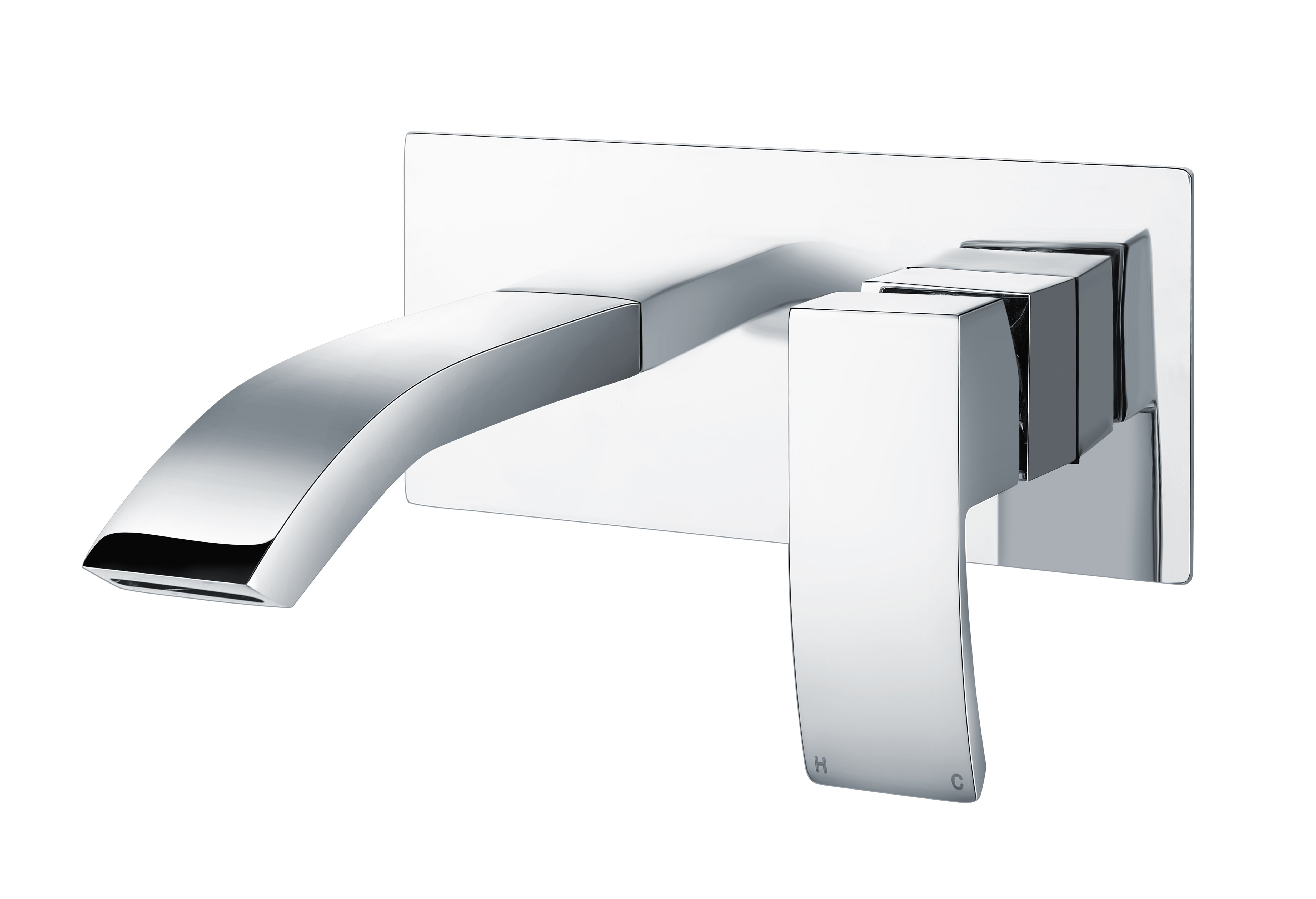
Zhejiang Xindong Sanitary Ware Co., Ltd. manufactures brass basin mixers (T749002, T713002, T8802, T7502, T7102), the wall-mounted basin mixer T730022 and kitchen mixer taps (T1029N) in Yuhuan, Zhejiang, China, and supplies installation drawings with every OEM order. For dimensional queries, contact [email protected] or +86-0576-87499008.
 Nuntii Calidi
2026-11-06
2026-11-05
2026-11-04
2026-11-03
2026-11-02
2026-10-29

Compania, fundata in annum 1999 et sita in Yuhuan, specializatur in robinetii, valves docce thermostaticas et in instrumenta docce. Cum spatio plus 30,000 metrorum quadratorum et cum 380+ operariis, multas certificationes et 65+ patentes tenemus.
 EN