Renovating a Grade II listed Georgian townhouse or a Victorian-era hotel involves a tension few MEP engineers enjoy: the conservation officer demands visual authenticity down to the cross-head handle profile, while the building control officer insists on thermostatic mixing valves that meet modern safety standards. For decades, these requirements felt mutually exclusive. Today, that tension is resolvable—if you know how to specify the right hardware.
Heritage bathroom specifications carry two non-negotiable demands. The visible components—escutcheons, handles, spouts, and exposed pipework—must faithfully reproduce the original period aesthetic. Behind the wall or beneath the basin, however, the plumbing must comply with contemporary standards: TMV2 or TMV3 thermostatic mixing valves for anti-scald protection, WRAS-approved backflow prevention, and flow rates that meet Part G water efficiency requirements.
The good news is that precision brass manufacturing has caught up with conservation demand. CNC-machined brass valve bodies can now house modern ceramic disc cartridges and thermostatic elements inside casings styled to match Victorian, Edwardian, Art Deco, or mid-century profiles. The trick lies in understanding where the cosmetic layer ends and the functional layer begins.
For shower applications in listed buildings, a concealed thermostatic valve is often the optimal solution. The wall plate and control handles remain visible and can be specified in period-appropriate finishes—unlacquered brass, polished nickel, or antique bronze—while the mixing chamber sits recessed behind the wall. Leading manufacturers offer TMV2-certified concealed valves with separate temperature and flow controls, allowing MEP engineers to satisfy both heritage and safety requirements in a single component.
Specify valves with integral service stops and accessible filter cartridges. In older buildings with legacy pipework, debris ingress is a genuine risk; a valve that can be flushed and serviced without cutting open the wall saves your client thousands over the building's lifecycle.
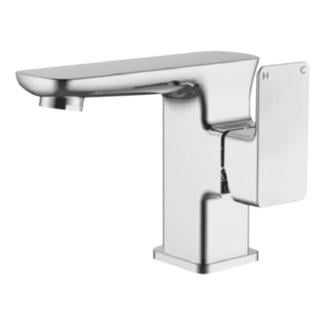
Traditional compression-washer taps were the standard when many listed buildings were constructed, but they introduce maintenance headaches and inconsistent temperature control. Modern bridge-style or pillar-mounted basin mixers with quarter-turn ceramic disc cartridges maintain the visual language of period brassware while eliminating drips, reducing maintenance callouts, and enabling precise flow control. Look for mixers that can accept a TMV-approved thermostatic cartridge as an integrated option—this allows you to meet NHS D08 or equivalent anti-scald requirements without adding a secondary in-line TMV.
Heritage specifications typically demand brass—not chrome-plated zinc alloy or plastic-bodied alternatives. Solid brass bodies (DZR or standard brass to BS EN 12165) offer the weight, patina development, and longevity that conservation officers expect. Crucially, brass also supports the precision machining tolerances required for modern cartridge integration. A well-made brass valve body with a PVD or electroplated finish in nickel, bronze, or unlacquered brass will satisfy conservation requirements for decades.
For UK and European heritage projects, ensure thermostatic mixing valves carry WRAS approval and TMV2 or TMV3 certification as appropriate. In healthcare-adjacent heritage buildings, TMV3 may be mandatory. For the broader EU market, ACS (France) or equivalent national approvals may apply. Suppliers offering a full suite of certifications—WRAS, CE, ACS, and NSF/Lead-free—simplify multi-jurisdiction heritage projects.
No two heritage projects are identical, and off-the-shelf catalog products sometimes fall short. When a conservation officer requests a specific handle profile, an unusual spout reach, or a custom finish that isn't commercially available, an OEM-capable manufacturer becomes essential. Look for a supplier with in-house CNC machining, casting capability, and an established R&D team. Zhejiang Xindong Sanitary Ware Co., Ltd., for example, operates a 30,000-square-meter facility with 65+ design and structure patents and can develop custom brassware to match reference samples, period photographs, or architect specifications—while embedding modern thermostatic and ceramic-disc internals.
Even the best-specified hardware fails if installation is compromised. In historic buildings with un-bonded or galvanized legacy pipework, always specify dielectric isolation unions at brass-to-steel junctions to prevent galvanic corrosion. Where pipework cannot be fully replaced, install inline strainers upstream of thermostatic valves to protect the cartridge from particulate damage. Commission every TMV at the point of use: measure outlet temperature at both maximum hot and cold failure conditions to verify the fail-safe mechanism engages correctly.
Finally, document every valve location, make, model, and commissioning reading in the building's operation and maintenance manual. A future facility manager who inherits a heritage building with undocumented thermostatic valves buried behind period wall panels will not thank you—but one who finds clear O&M documentation will.
Heritage bathroom specification no longer requires choosing between period aesthetics and modern safety. With the right brassware—concealed thermostatic valves, period-styled ceramic-disc mixers, and custom CNC-machined fittings—MEP engineers can deliver bathrooms that satisfy the strictest conservation officers and the most rigorous building control inspectors, both at once.
Zhejiang Xindong Sanitary Ware Co., Ltd. has been manufacturing precision brass valves, thermostatic shower systems, and custom bathroom fittings since 1999. Our products carry WRAS, CE, ACS, and NSF/Lead-free certifications and are exported to over 40 markets worldwide. For OEM/ODM inquiries related to heritage and hospitality projects, contact our engineering team at [www.cn-xindong.com](https://www.cn-xindong.com).
 Hot News
2026-10-17
2026-10-16
2026-10-15
2026-10-14
2026-10-13
2026-10-12

The company, founded in 1999 and located in Yuhuan,specializes in taps, thermostatic shower valves and shower kits. With over 30,000 sqm of space and 380+ employees, we hold numerous certifications and 65+ patents.
 EN
EN