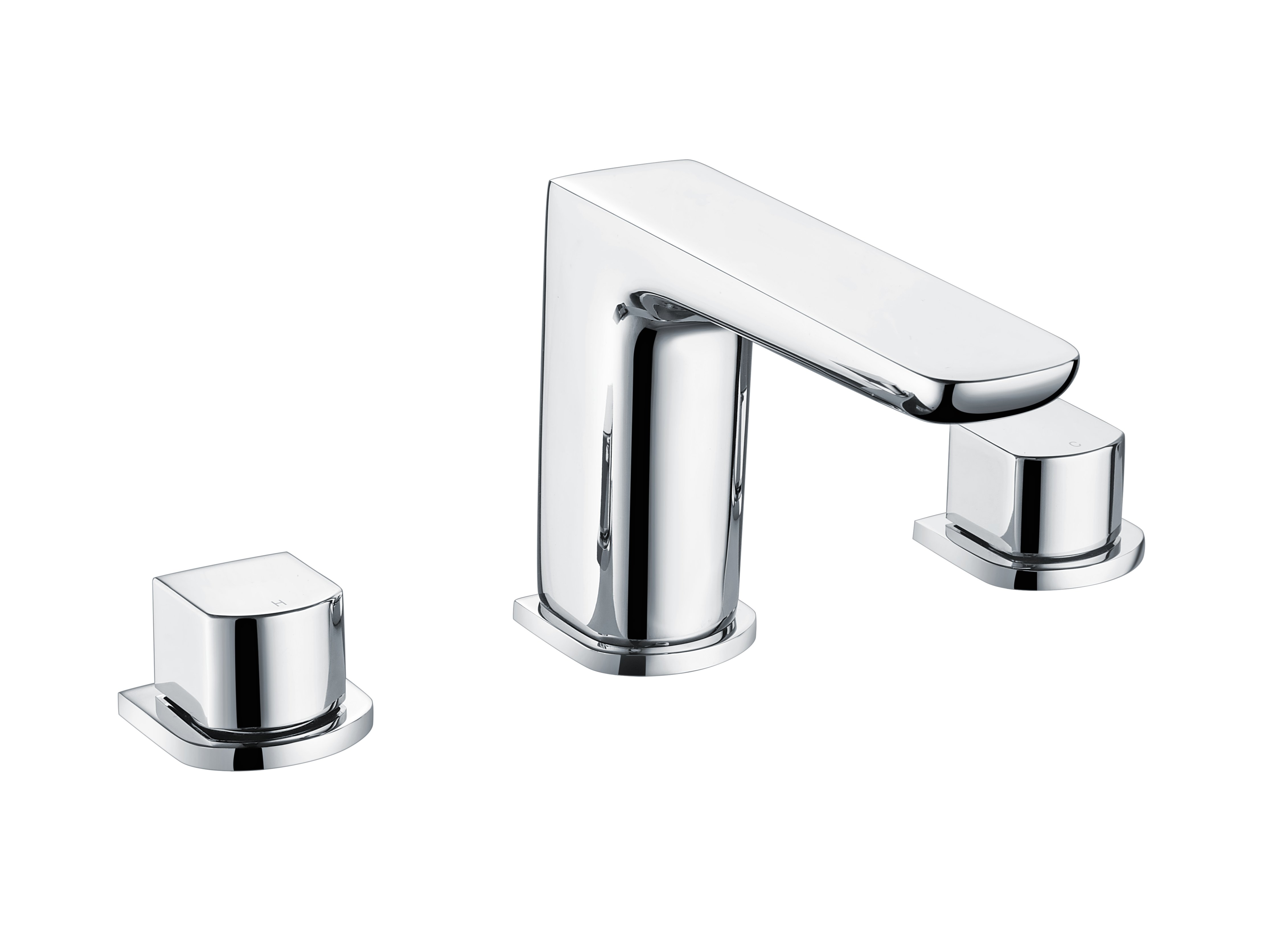
A school shower room is a uniquely hostile environment for plumbing fixtures. It combines the highest occupancy-per-fixture ratio in the building, unsupervised teenagers, chlorinated water, steam, cleaning chemicals, and a near-zero tolerance for either scald injuries or vandalism downtime. Yet shower rooms are also where the cheapest fixtures get specified, because they are "only showers."
The result is a predictable cycle: temperature complaints, scald incidents narrowly avoided, stripped handles, leaking bodies, and a maintenance team that has rebuilt the same shower for the third year running. This article lays out the anti-scald and durability requirements that actually belong in an educational facility specification.
Scald injuries are the starting point. Water at 60°C causes a full-thickness burn in about one second; at 55°C, about 10 seconds; at 49°C, about 5 minutes. Educational facilities serve precisely the users — adolescents in group showers, athletes who turn on water without checking it, and younger children in primary-school washrooms — who are least able to respond fast.
The regulatory baseline, depending on your jurisdiction:
• United States: ASSE 1016 and ASME A112.18.1 govern automatic compensating (thermostatic) valves; many state plumbing codes cap shower delivery at 120°F (49°C) and require thermostatic or pressure-balancing valves wherever a shower is installed. Some states require 110°F (43°C) maximum for child-occupied facilities.
• United Kingdom / Ireland: WRAS-approved TMV2 or TMV3 thermostatic mixing valves at or near the outlet, delivering a maximum blended temperature (commonly 41–43°C for schools) under TMV3 guidance for high-risk users.
• General good practice: a maximum blended delivery of 38–43°C for showering, with fail-safe hot-water shut-off on cold-water failure.
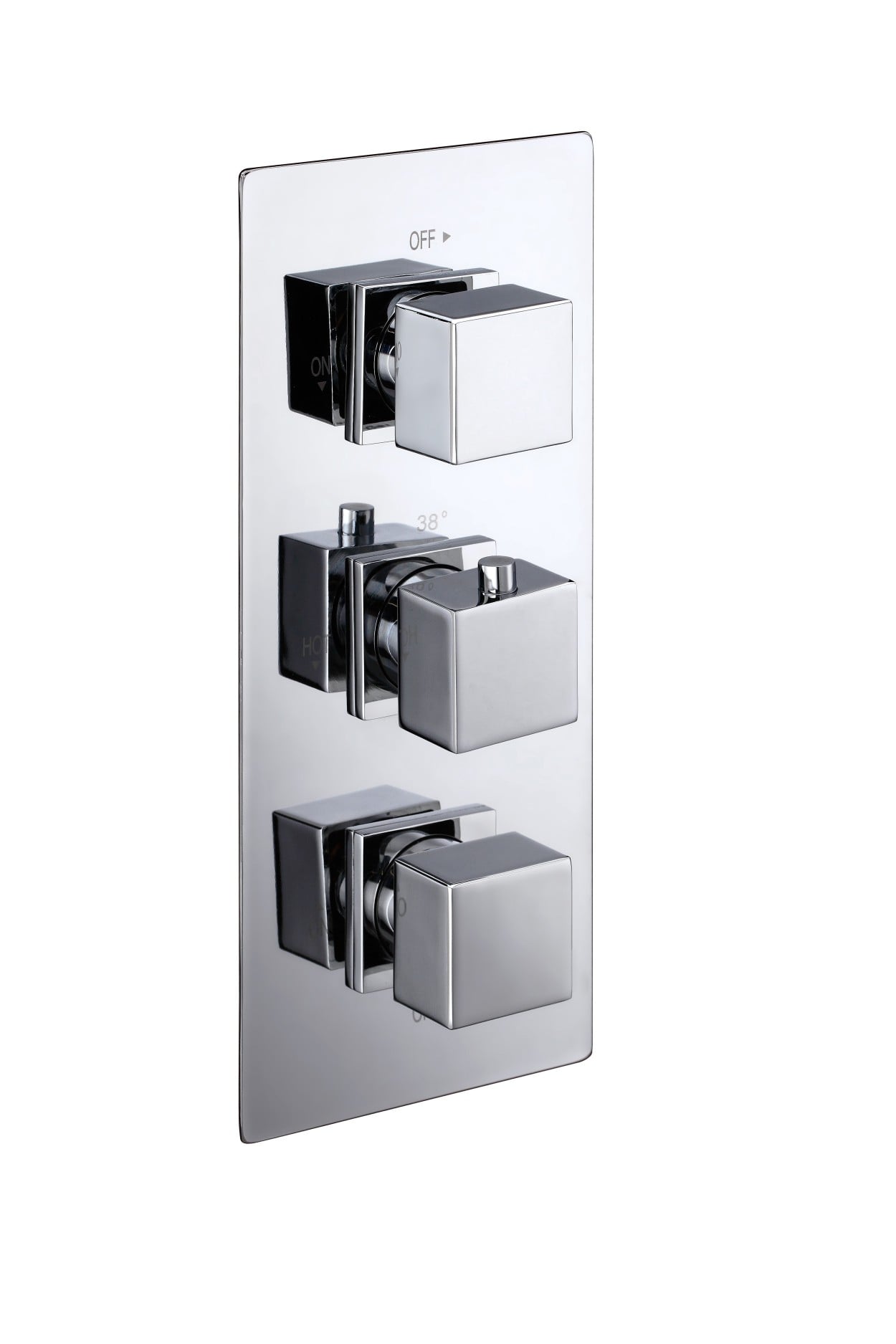
The engineering answer in every jurisdiction is the same: thermostatic (wax-element) control, not a manual mixer and not a pressure-balancing valve alone. A thermostatic valve senses blended outlet temperature and modulates the hot/cold mix continuously; if the cold supply fails, it shuts off hot flow. That behavior — not a "cool" temperature setpoint on a manual handle — is what protects an unsupervised user.
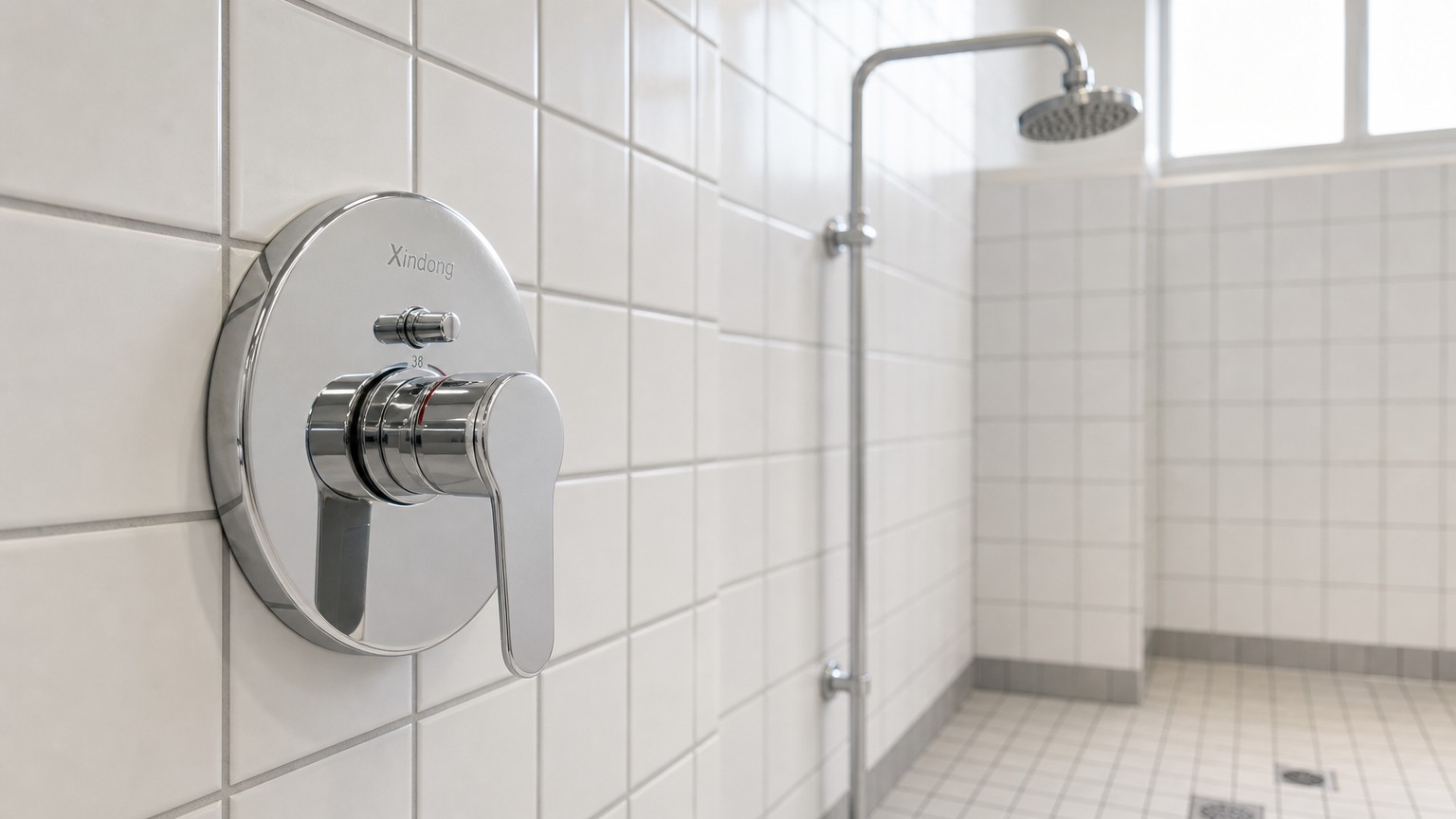
Specify a thermostatic valve with an adjustable but lockable or keyed temperature limit stop, factory-set at or below the code maximum. In gyms and dormitories, the adjustment mechanism must not be reachable with fingers, coins, or a house key — tamper-resistant fixings are a spec line, not an option. Recessed or concealed-body valves hide the adjustment point entirely.
Demand documented fail-safe behavior: hot-water shut-off on cold-water failure, and stable blended temperature within ±2–3°C across the rated flow range. For education projects, ask the manufacturer for third-party verification (WRAS TMV2/TMV3, ASSE 1016 listing) — an untested "thermostatic" claim is not a safety device.
This is where school showers destroy cheap fixtures:
• Brass bodies — zinc alloy (Zamak) bodies crack at the threads under a hanging student and corrode in chlorinated water. Brass is the durability baseline; for aggressive water, specify dezincification-resistant (DZR) brass.
• Concealed or fixed escutcheons — a concealed-body valve leaves only the handle exposed, removing the lever arm students use to tear a valve off the wall.
• Tamper-resistant fixings — security screws or recessed fixings on handle and escutcheon.
• Ceramic or solid-metal internals — ceramic disc cartridges resist grit and repeated cycling; avoid plastic stems and handles in any space used by teenagers.
• Flow control — integral flow limiters (e.g., 9–12 L/min per shower) cut water consumption and reduce the thermal load the heating plant must support.
In school gyms and sports halls, showers run in banks. Two design details matter:
• Manifold or zone blending: a central TMV per shower block (or per riser) serving all bays simplifies temperature management to one setpoint per zone, but keep the blended pipe run short and insulated, and flush the block on a schedule during holidays to prevent stagnation (see our [Legionella risk management guide](legionella-risk-management-thermostatic-mixing-valves.md)).
• Sequencing and pressure balance: group showers with fluctuating demand need valves that hold temperature as neighbors open and close. A thermostatic valve with integral check valves handles this; a plain manual mixer does not — pressure shifts swing the mix from scalding to freezing.
For a real-world durability benchmark, consider what specification experience says a school shower must survive: 500,000+ cartridge cycles, 200 psi hydrostatic test, continuous hot-side exposure at 60–70°C (for TMVs on calorifier-fed systems), and decades of chlorinated water on chrome plating. Specify chrome plating to ISO/EN standards and confirm the body is brass before you sign. Cutting to a zinc-body, plastic-cartridge unit saves perhaps 20% on the fixture and multiplies that in maintenance labor for the life of the building.
The total cost of ownership argument is simple: a school shower room with thermostatic valves needs fewer emergency callouts, fewer repeat repairs, and no scald-incident paperwork. Add water savings from flow limiting and the thermostatic specification pays for itself within the first years of operation — while meeting the code requirements that are already on the books in most jurisdictions.
Zhejiang Xindong Sanitary Ware Co., Ltd. has manufactured brass valves and thermostatic shower systems since 1999 — including WRAS-certified TMV2/TMV3 thermostatic mixing valves and complete thermostatic shower kits (exposed and concealed) used in commercial and institutional projects across 700+ client sites. With 65+ structural patents and in-house laboratory testing, our engineers support school, gym, and dormitory projects with valves specified for tamper resistance, fail-safe operation, and long service life.
1. Maximum blended temperature at or below code limit, set and locked at factory.
2. Fail-safe hot shut-off on cold failure, third-party verified.
3. Brass body, tamper-resistant fixings, concealed option where vandal risk is high.
4. Integral check valves, strainers, and flow limiting.
5. Service isolation and accessible test points for maintenance and Legionella regime compliance.
Run the spec against these five lines and the shower room will outlast the sports program.
About the author: The Xindong engineering team designs and manufactures brass valves, thermostatic shower systems, and institutional fixtures. Contact [[email protected]](mailto:[email protected]) or +86-0576-87499008 for specifications, samples, and project support. Visit [cn-xindong.com](https://www.cn-xindong.com) for the full range.
 Hot News
2026-10-17
2026-10-16
2026-10-15
2026-10-14
2026-10-13
2026-10-12

The company, founded in 1999 and located in Yuhuan,specializes in taps, thermostatic shower valves and shower kits. With over 30,000 sqm of space and 380+ employees, we hold numerous certifications and 65+ patents.
 EN
EN