Every shower project eventually arrives at the same fork: a thermostatic shower valve or a manual mixer. The decision shapes safety, user experience, maintenance costs, and the project budget — and it is too often made on habit rather than analysis. This guide gives specifiers and project engineers a decision framework that survives contact with real buildings.
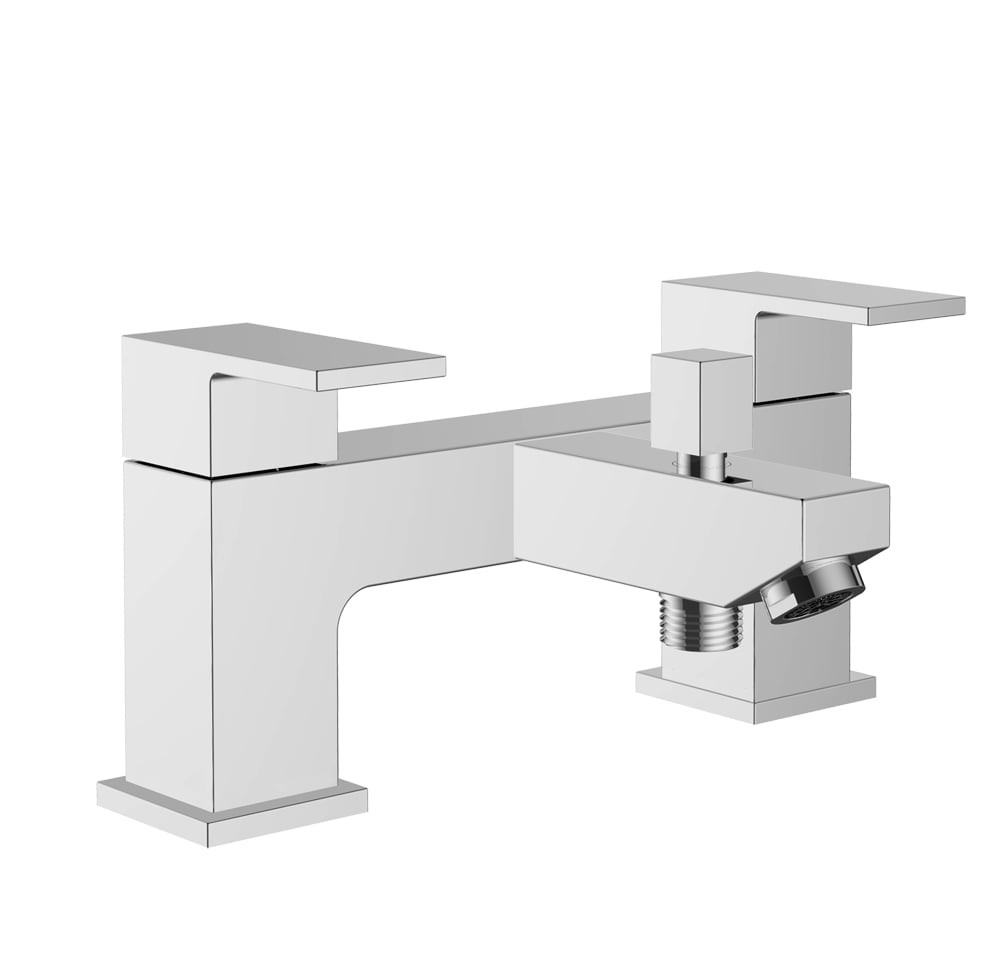
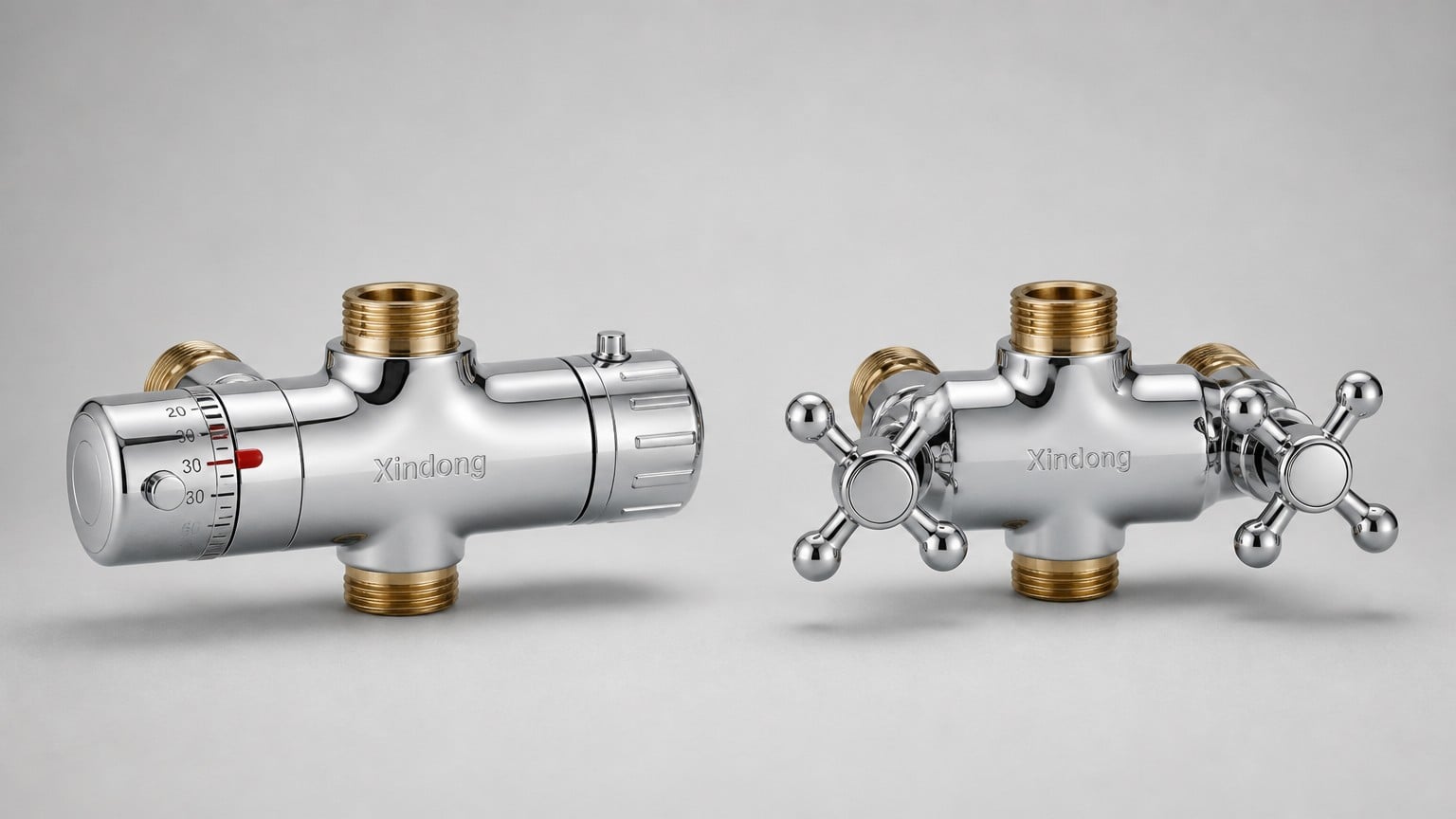
Manual mixer: a single-lever (or two-handle) mixer blends hot and cold according to the handle position, using a pressure-balanced cartridge in better models. The user finds a comfortable temperature by feel; the blend only stays correct while the hot/cold supply pressures and temperatures stay stable. When someone flushes a toilet or another shower opens, the mix shifts — potentially by several degrees in an instant.
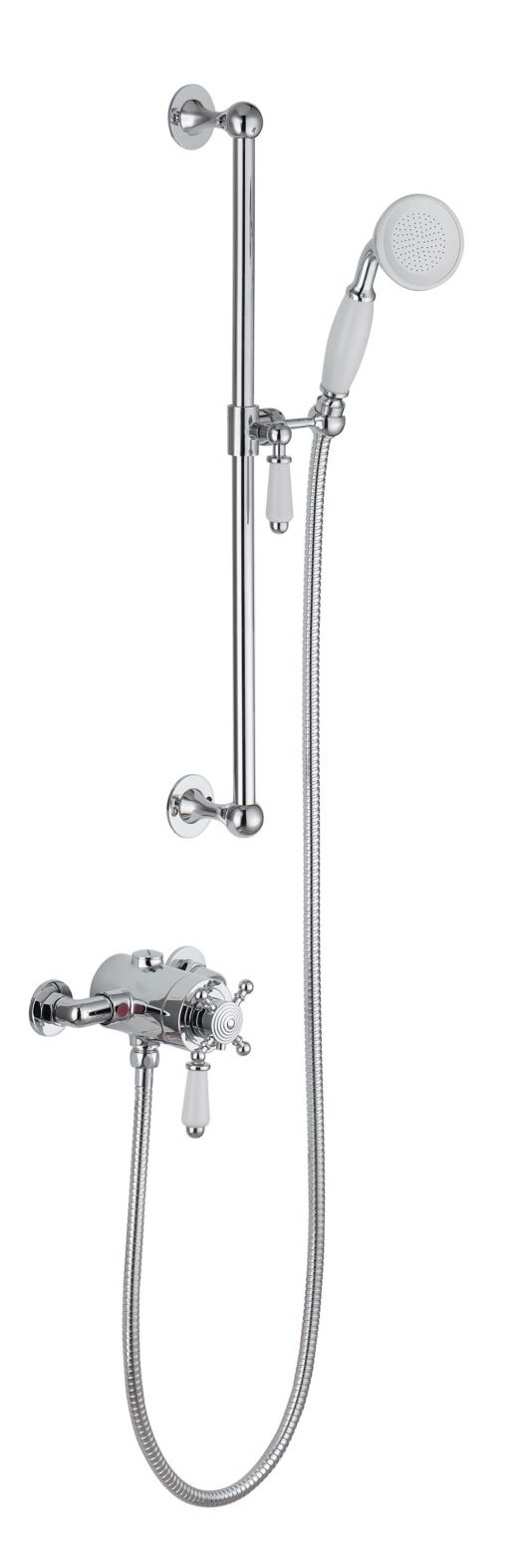
Thermostatic valve: a wax-element thermostat continuously senses the blended outlet temperature and adjusts the hot/cold proportion to hold a setpoint (typically within ±2°C across the rated flow range). Most thermostatic valves also shut off the hot supply if the cold water fails — a genuinely different safety posture from any manual device. In higher-spec units (TMV2/TMV3 verified), this fail-safe behavior is tested and documented.
This is the criterion that resolves most debates. Manual mixers offer no inherent protection: if the cold supply fails, the mixer delivers full hot-water temperature to the user. Thermostatic valves are engineered to prevent exactly that outcome.
• Scald protection: thermostatic valves cap outlet temperature and react within seconds to supply changes; pressure-balanced manuals only equalize pressure, and a balanced cartridge still delivers scalding water if the cold feed fails entirely.
• Code position: most modern codes and guidance documents — ASSE 1016/ASME A112.18.1 in the US, WRAS TMV2/TMV3 guidance in the UK — require thermostatic control for showers in hotels, healthcare, schools, and similar occupied settings. The manual mixer is increasingly confined to residential owner-occupied and low-risk applications.
• Rule of thumb: if the shower serves users who are not in full control of their environment — hotel guests, students, patients, the elderly, children — specify thermostatic. If it is a private residential shower for a known adult user, the manual mixer remains a legitimate, cost-effective choice.
Even where safety is not the deciding factor, stability drives complaints. In a hotel, a 5°C swing when the adjacent room opens a shower produces a complaint call; in a spa, it produces a review. Thermostatic valves hold outlet temperature across:
• Pressure fluctuations from other users and appliances (washing machines, irrigation, other showers).
• Gradual hot-water temperature decay as a cylinder discharges.
• High-flow and low-flow conditions, down to trickle flow.
Manual mixers require the user to re-tune constantly — fine for a solo shower, fatiguing for anyone in a busy system.
The honest version of the comparison:
• First cost: manual mixers are typically 30–60% cheaper at the fixture level, and some are specified purely on that line item.
• Installation: both are available in exposed and concealed (in-wall body) versions. Concealed thermostatic installations need a serviceable valve body with an access panel — plan the panel in the wall design, not as an afterthought.
• System cost: thermostatic valves usually need supply-side balancing and, for some installations, a blended hot supply below 60–65°C at the valve. Manual mixers tolerate a wider range of incoming temperatures — including directly fed instantaneous heaters — with no additional hardware.
• Total cost of ownership: the arithmetic changes once maintenance and complaints are included. A thermostatic valve's replaceable cartridge is the main service item; a manual mixer in a hard-water area eats ceramic cartridges and generates complaint tickets. For commercial duty, most operators find the thermostatic premium pays back within 2–4 years of reduced callouts.
• Thermostatic valves: serviceable by replacing the thermostatic cartridge (a 15–20 minute job with isolation valves). Annual temperature verification is recommended, and TMV-scheme installations require documented testing — a compliance cost to budget for.
• Manual mixers: simpler internals and no calibration requirement, but the same cartridge wear, plus no way to detect drift toward unsafe temperatures.
For facilities teams, the practical question is: can the valve be serviced without draining the building? Specify integral service isolation and replaceable cartridges for both types.
| Application | Recommended | Why |
| Hotels, guestrooms, suites | Thermostatic | Guest safety, complaint-free stability, code/insurance expectations |
| Healthcare, care homes | Thermostatic (TMV3 where required) | Mandatory risk control; documented fail-safe |
| Schools, gyms, dormitories | Thermostatic | Unsupervised users, anti-scald limits, tamper resistance |
| Private residential | Manual or thermostatic | Cost-sensitive; known user; owner preference |
| High-end residential | Thermostatic | Comfort and perceived quality |
| Industrial/utility showers | Manual (rugged) | Simple, cheap, single-user, low risk; ensure no vulnerable users |
Walk the decision in four steps:
1. Who is the user? Any vulnerable or unsupervised user → thermostatic. End of analysis.
2. What does the supply do? Shared risers, fluctuating pressures, or intermittent hot-water storage → thermostatic, for stability alone.
3. What is the budget line? If the difference between thermostatic and manual threatens the whole project, check whether a smaller thermostatic valve or a zone-blending TMV serving multiple showers fits the budget — often it does, at one valve per shower room instead of one per shower.
4. Who maintains it? Confirm the chosen valve has a serviceable cartridge and documented test procedure the FM team can actually perform.
Zhejiang Xindong Sanitary Ware Co., Ltd. manufactures both sides of this comparison — thermostatic shower valves and complete shower kits (including the popular K-series thermostatic kits) plus manual mixers — in brass, with chrome and custom finishes, from our Yuhuan, Zhejiang facility. Since 1999 we have supplied 700+ client sites, hold 65+ structural patents, run in-house laboratory testing, and produce more than 200,000 sets per month. Specifiers can source thermostatic and manual lines from one factory with consistent quality, finishes, and documentation — and OEM teams can develop custom configurations without splitting the program across suppliers.
If the shower is for a known, capable adult in a stable supply, a manual mixer is a defensible choice. For everyone else — and for every commercial project that will be inspected, insured, and audited — specify thermostatic. The price premium buys a documented fail-safe, stable temperatures, and fewer complaint calls; that is the definition of value engineering done correctly.
About the author: The Xindong engineering team designs and manufactures brass shower valves, thermostatic shower kits, and mixing systems for residential and commercial projects worldwide. Contact [[email protected]](mailto:[email protected]) or +86-0576-87499008 for specifications, samples, and OEM development. Visit [cn-xindong.com](https://www.cn-xindong.com) for the full range.
 Hot News
2026-10-17
2026-10-16
2026-10-15
2026-10-14
2026-10-13
2026-10-12

The company, founded in 1999 and located in Yuhuan,specializes in taps, thermostatic shower valves and shower kits. With over 30,000 sqm of space and 380+ employees, we hold numerous certifications and 65+ patents.
 EN
EN