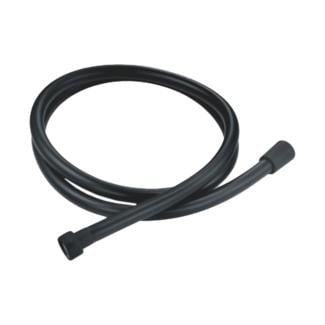
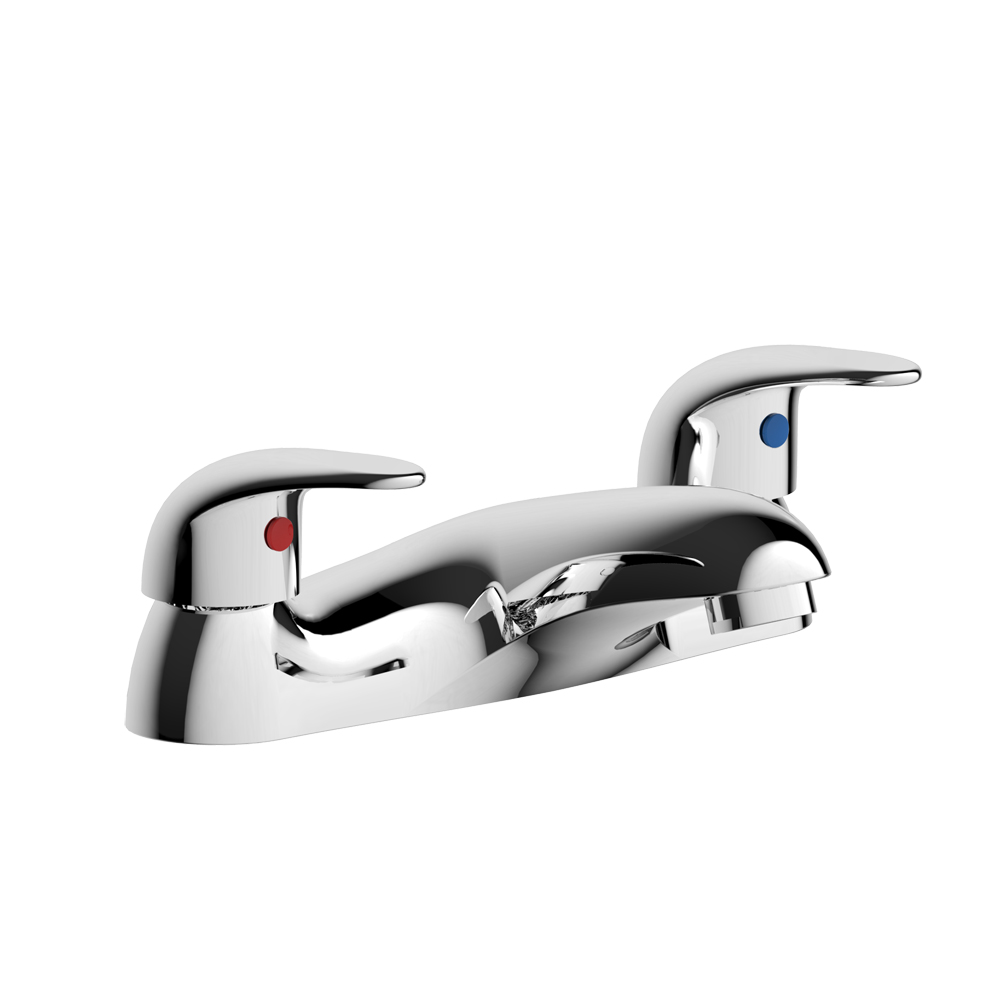
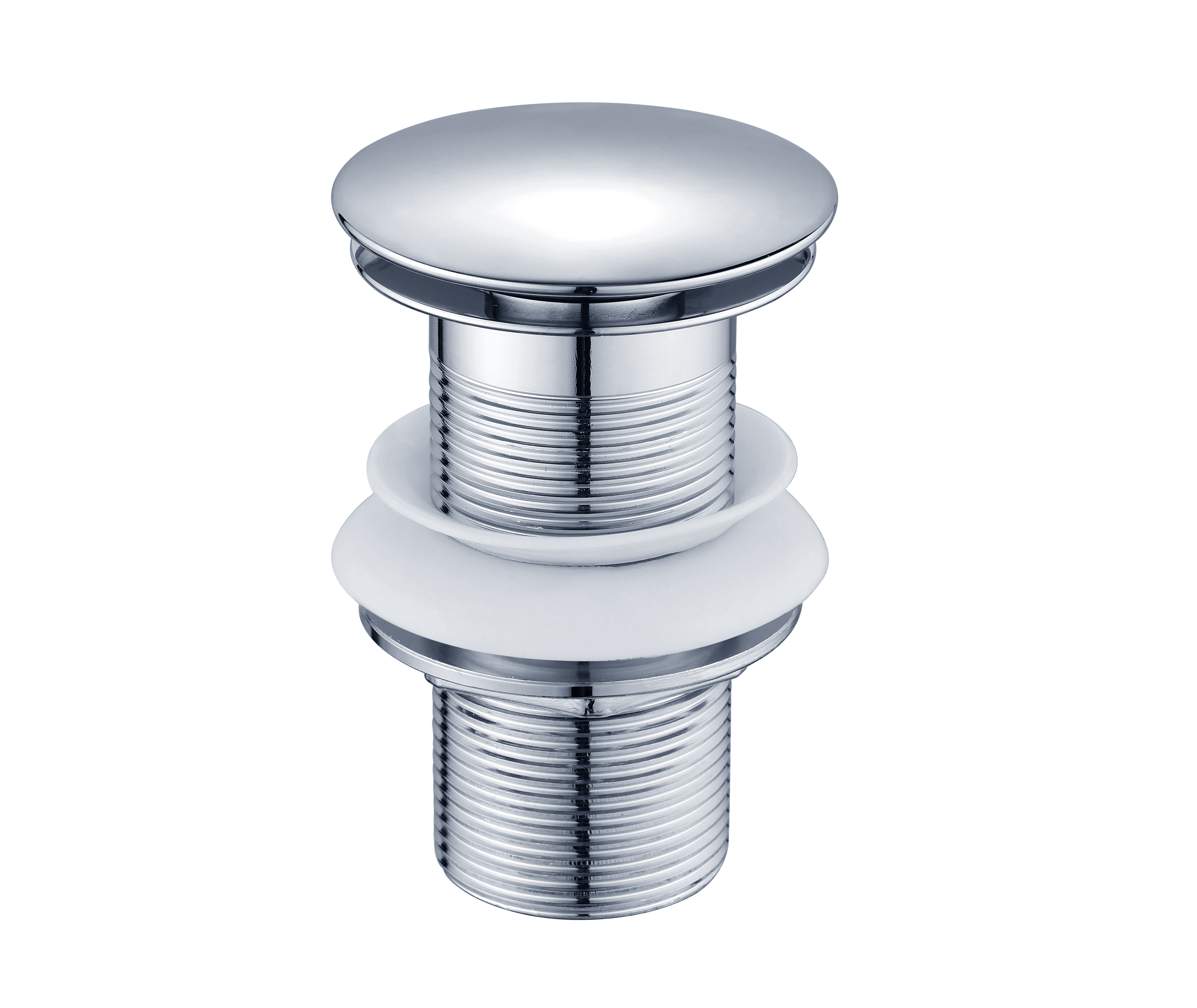
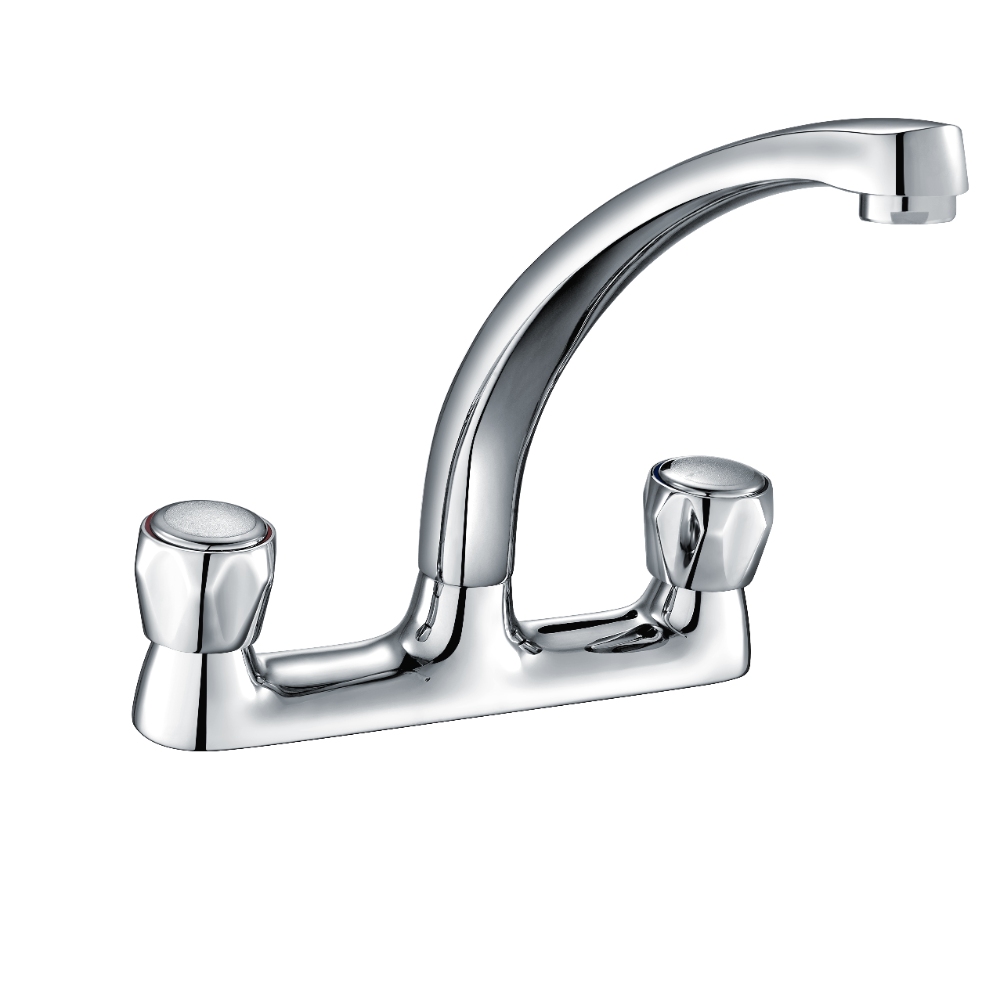
Three-hole layouts are unforgiving. A single-hole mixer nudged 10 mm left or right goes unnoticed; a three-hole set either drops into its holes or it does not, and once the stone is drilled the decision is permanent. Most three-hole problems we are asked to solve are not manufacturing faults but coordination faults between the ceramic or stone supplier, the joiner and the tap drawing.
This guide covers the dimensions that matter on a three-hole basin mixer and a deck-mounted bath filler, how to sequence the drilling, and how to match flow rates when a hand shower joins the same deck.
The familiar figure is 200 mm between centres, derived from long-standing European practice for a 35 mm central spout hole flanked by two 30 mm handle holes. It is habit rather than law; the market range runs 180–230 mm. Retailers in Southern Europe stock 210 mm sets; some UK heritage ranges sit at 190 mm.
Whatever the figure, it belongs on the deck drilling schedule with a ±1 mm tolerance, referenced to a datumed edge rather than the cabinet front. On stone decks, drill from the face side with a core bit and a guide plate; on ceramic, the hole is set at the mould stage, so the tap drawing must be released before the mould is cut. That sequence — drawing, then mould or template, then drill — is the single most effective way to avoid a 200 mm set meeting 205 mm holes.
Element |
Typical dimension |
Note |
Spout hole |
35 mm |
Some heavy cast bodies need 38 mm |
Handle hole |
30 mm |
32 mm on larger lever handles |
Hole centres |
200 mm (range 180–230) |
Datum from rear edge, ±1 mm |
Deck thickness |
10–40 mm |
Shank must exceed this by 20 mm |
Handle clearance to bowl edge |
40 mm minimum |
Prevents knuckle damage |
Spout overhang past bowl centre |
60–80 mm |
Sets the water landing point |
The most common three-hole failure we see is a shank that is too short. A 30 mm cast stone top plus washer, back nut and tail nut needs a threaded shank of at least 60 mm to leave room for the connection below. Specify the deck thickness on the order and ask for the shank length in writing; "standard" here means nothing.
Thin decks create the opposite problem: a 1.5 mm stainless top flexes under a lever handle and works the seal loose. A 100 mm backing plate in 6 mm ply or stainless distributes the load for almost nothing.
Access matters too: tails and the waste rod sit below the deck, so a three-hole set on 40 mm stone over a shallow cabinet is a service trap. Spec 500 mm tails or a removable back panel.
Handles flank the spout, hot on the left as seen by the user. Beyond that, three things decide whether the set looks considered or assembled from leftovers.
First, handle projection must clear the bowl rim. A lever that overhangs the basin by 20 mm will be knocked by every user who leans forward; 40 mm of clearance is comfortable. Second, the spout outlet should land 60–80 mm past the bowl centre so water hits the slope of the bowl rather than the waste. Third, the axis of the handles should be parallel to the deck edge, not to the wall — on a splayed vanity these two lines diverge, and the handles look crooked even when they are not.
For a deck-mounted bath filler, add the diverter. Its knob sits on the spout body and must be reachable from the standing position at the side of the bath, not from behind the taps. On a 120 mm deck the diverter will foul the wall — check the section drawing.
A basin mixer and a bath filler are different hydraulic animals sharing the same standard. EN 817 governs mechanical mixing valves and their behaviour across the working pressure range; EN 246 governs the flow regulator or aerator that sets the delivered rate. A basin mixer with a 5 l/min regulator and a bath filler delivering 20–24 l/min at 3 bar are both compliant — they are simply doing different jobs.
Get the pairing wrong and the complaint is always the same: the bath takes forever to fill, or the basin splashes. Two rules:
Where the deck carries a thermostatic filler, EN 1111 defines the mixing performance, with stricter shut-off and temperature-stability requirements than a manual two-handle set. Thermostatic decks also need accessible strainers and check valves, and the hot and cold supplies must be balanced — an unbalanced supply is the usual reason a thermostatic bath filler runs cold at low flow.
Any filler with a hand shower outlet creates a potential cross-connection: the head can be dropped into the bath water. EN 1717 classifies this risk and requires an appropriate protective device; in practice that means a check valve arrangement in the diverter or in the inlet, verified for the category, plus a hose that is not left submerged. Do not assume a diverter is a backflow device unless the data sheet says so.
Issue this to the stone or ceramic supplier, the joiner and the site plumber at the same time:
Three-hole work rewards the boring disciplines: a released drawing, a stated thickness, a checked datum. Everything else is finish.
---
**About the author**
Zhejiang Xindong Sanitary Ware Co., Ltd. manufactures three-hole and single-lever brass basin mixers, wall-mounted basin mixers and kitchen mixer taps in Yuhuan, Zhejiang, China, supplying OEM and ODM programmes worldwide. Technical enquiries: [email protected] | +86-0576-87499008.
 Hot News
2026-11-04
2026-11-03
2026-11-02
2026-10-29
2026-10-28
2026-10-27

The company, founded in 1999 and located in Yuhuan,specializes in taps, thermostatic shower valves and shower kits. With over 30,000 sqm of space and 380+ employees, we hold numerous certifications and 65+ patents.
 EN